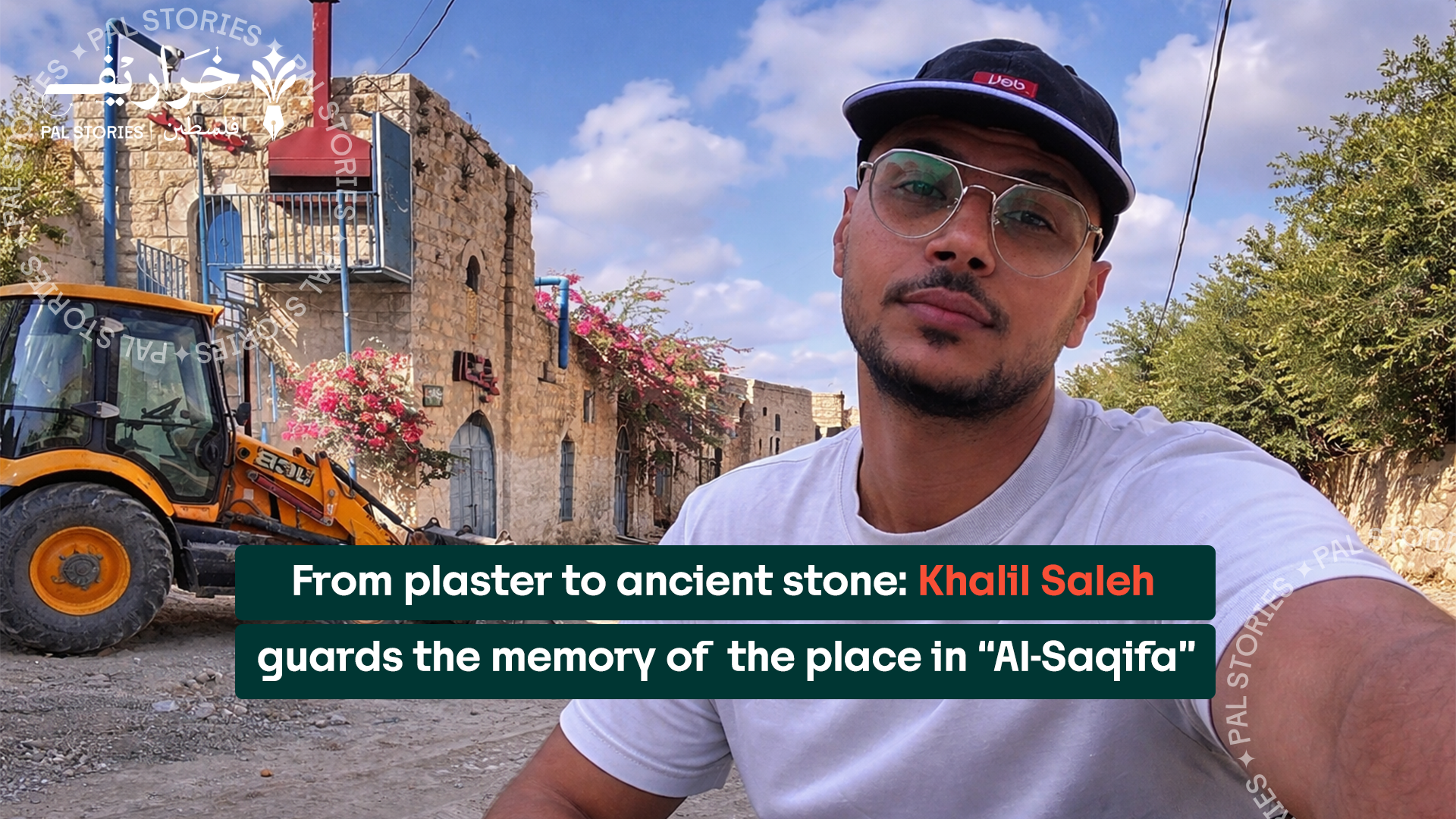
“My father used to tell me that under these houses there is a ‘Badd’, which refers to a Roman olive press, and that I would find it if I dug. One day, while we were working on the site, he pointed with his cane and said, ‘Dig here.’ I dug and found the press right where he said it would be.”
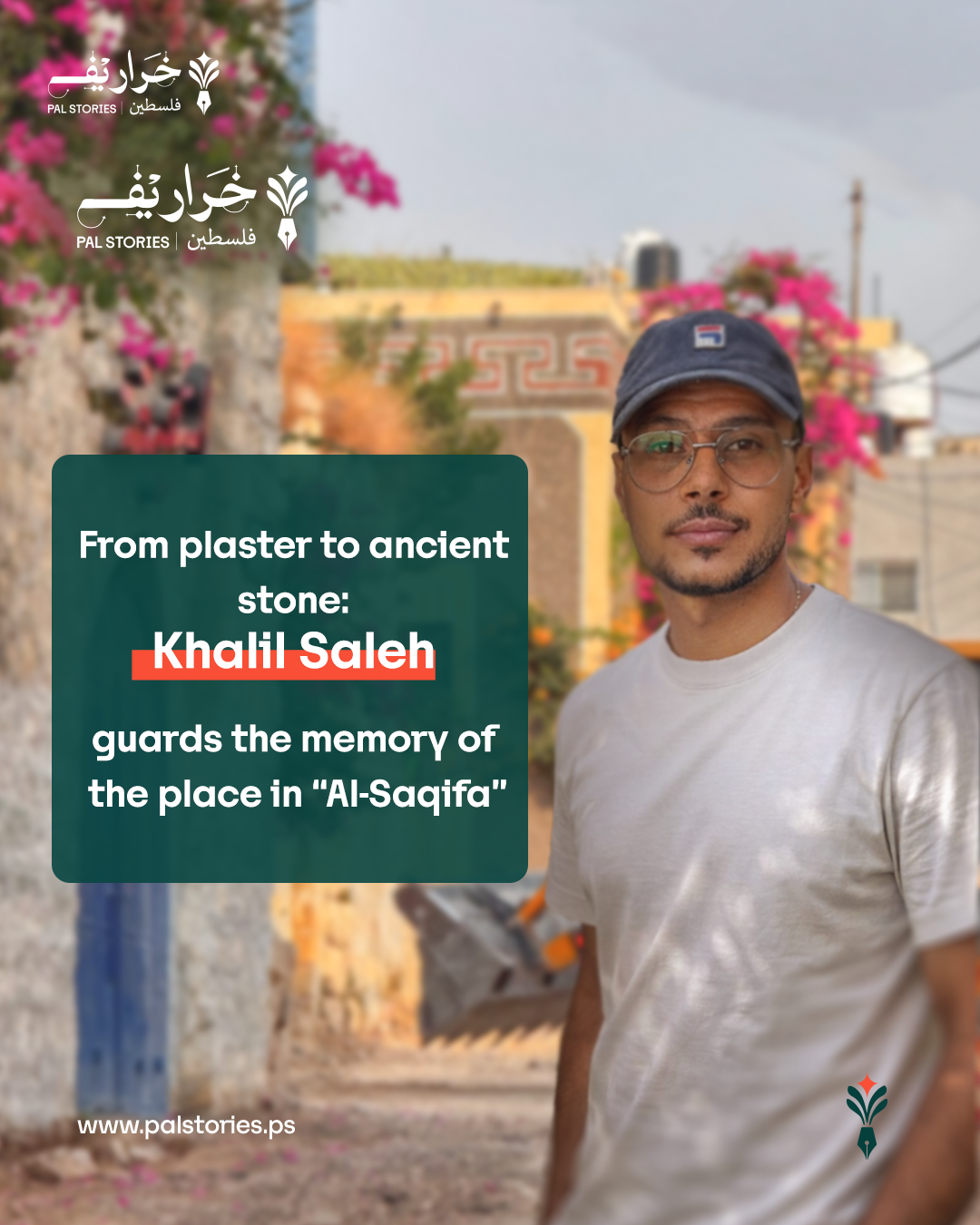
Khalil, 32, describes his shock at finding the Roman press, estimated to be more than a thousand years old, in a cave said to date back to the Byzantine era, beneath the houses on which “Al-Saqifa” was built.
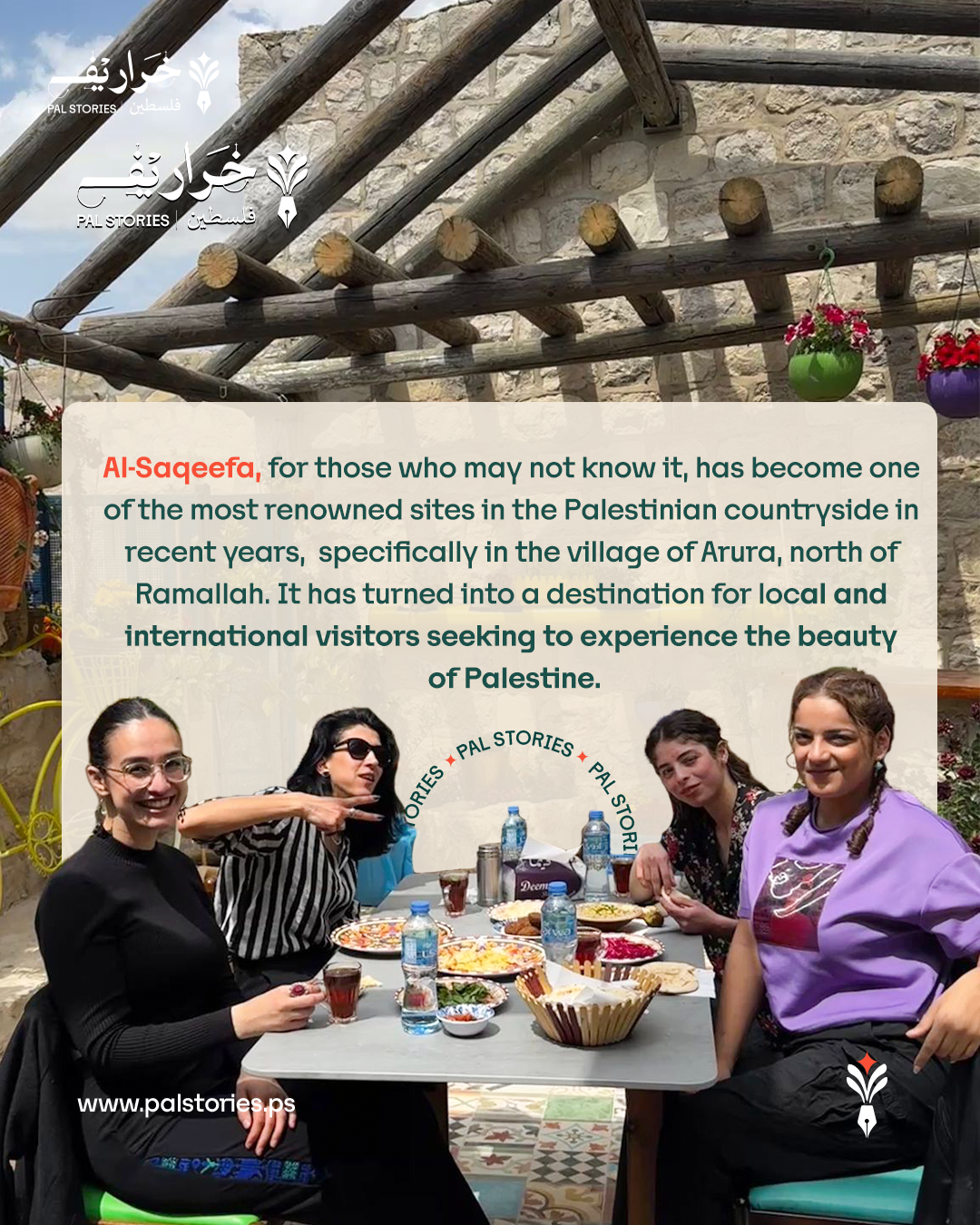
Al-Saqeefa, for those who may not know it, has become one of the most well-known places in the Palestinian countryside in recent years. Its videos and photos have traveled the world, offering a powerful visual expression of Palestine’s beauty, authenticity, and deep-rooted history. Images we find ourselves longing for today, especially amid the constant scenes of bloodshed and the daily crimes of the occupation in Gaza.
Al-Saqeefa was an old, abandoned house for nearly fifty years, located on the land of the village of Arura, north of Ramallah City. That was before one of the village’s young men, Khalil Saleh, transformed it into a heritage site that went far beyond being a restaurant or a youth economic project. It became a true embodiment of identity and national belonging, of love for the land, and of a deep attachment to Palestine: its sky, its water, and even the stones of its homes.
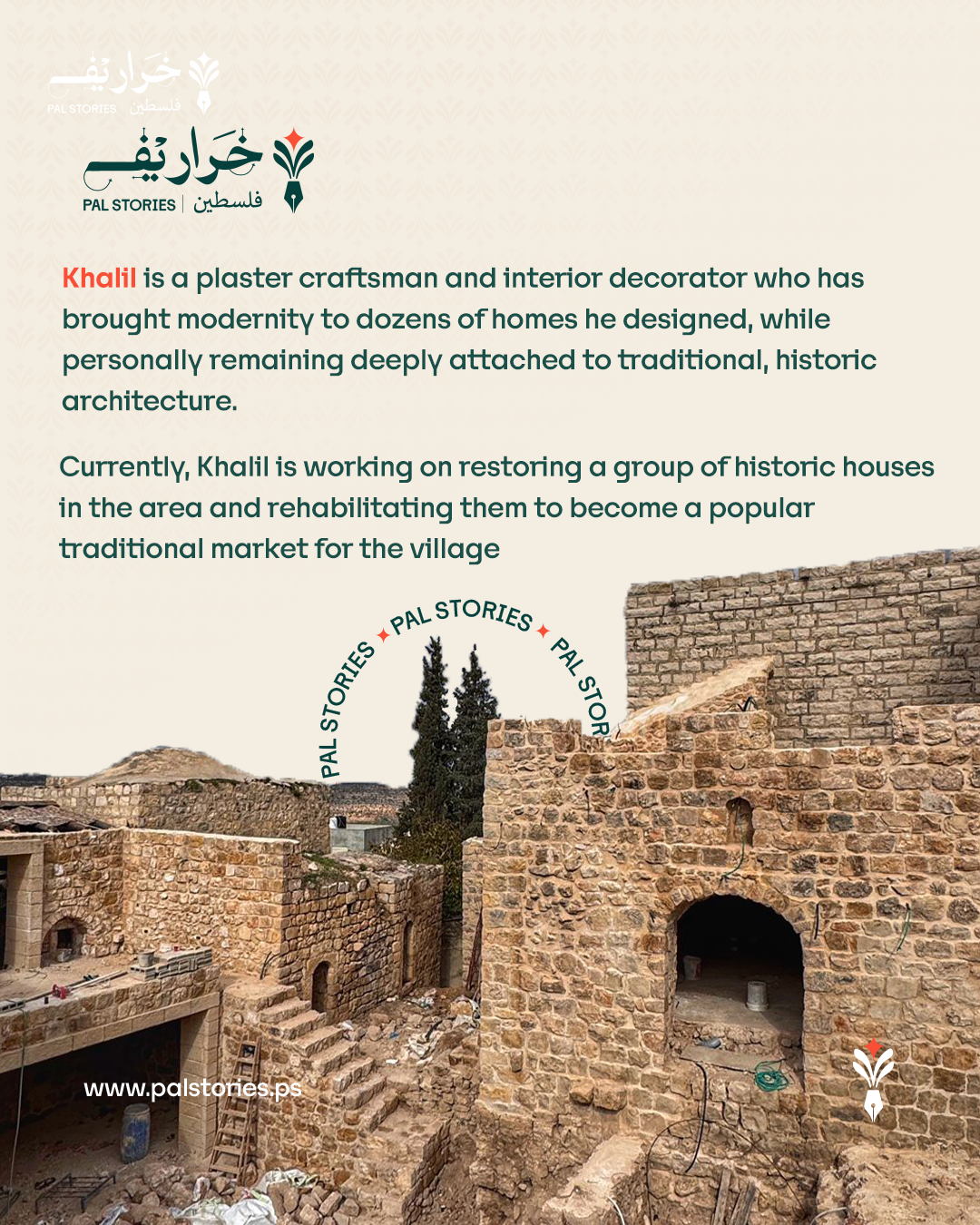
While Khalil, through his work as a plasterer and interior decorator, has brought modernity to dozens of houses he has designed and worked, turning them into beautiful, fashionable homes in line with global trends, he himself remains deeply attached to all that is old, precious, and traditional.
He explains: “What brings the two together is my attention to detail. I love details, and I love the touches of beauty in things. In my work in decoration, what has always distinguished me is my attention to detail. When I reached Al-Saqeefa in its current form, I was pursuing the places of beauty in my homeland.”
It was very convincing. Anyone who knows the details of beauty in our ancestors’ homes, from the arches to the beautiful colors in their glassware, to the clay jars made from the stones of the house itself, knows how much beauty our ancestors created with their own hands in these homes.
If we want to give credit where credit is due, we must mention that Khalil opened Al-Saqifa project as a place for young people to play video games, which was only a small part of what the project currently encompasses. Then economic circumstances and the need to provide employment for a relative and friends prompted him to consider expanding the project to include a popular falafel restaurant.
The owner of the place suggested that Khalil also rents the upper floor, which had been “abandoned for fifty years.” Although the site needed a lot of maintenance and development, Khalil did not refuse. On the contrary, he was even more enthusiastic about the place’s heritage and authenticity.
The project, which was launched two years ago, was not spared the economic impact of the war. Nevertheless, it has been visited by foreign delegations, young people, and delegations from historic Palestine. Some local initiatives have even organized trips to Arura to visit the restaurant and enjoy the beauty of the Palestinian countryside, its greenery, and its fresh breeze, spending quality time with their loved ones, friends, and families.
Most importantly, this archaeological site did not remain just a restaurant and a place to play video games. The dream grew over time, and Khalil and his friend acquired some of the old houses adjacent to Al-Saqifa and entered into agreements with the owners of other houses in the area, which were granted to them on a guarantee system so that they could restore and renovate them.
Khalil says: “We could have asked for help from institutions that support the renovation of old houses and archaeological sites, but what prevented us from doing so was that these institutions wanted to use the houses and turn them into public places (sports clubs, youth clubs, etc.), while we, as young people, need job opportunities. For this reason, we preferred to work on the project ourselves so that we could benefit from it and benefit the people of the village later on.
Khalil aspires for Al-Saqifa to be a popular shopping center, with a café and a pastry shop, and a place to sell oil, olives, Nablus olive soap, pickles, and everything else that the people of Arura make with their own hands, as well as open spaces for cultural and youth events that promote belonging and raise awareness of the heritage of beloved Palestine.