Do you remember the coronavirus pandemic? How the country came to a complete shutdown? How people’s lives were disrupted in all areas? How many lost their livelihoods?
We saw the pandemic as a nightmare, waiting impatiently for it to end, as if the wheel of time had suddenly stopped turning. The world suffered billions in losses in all areas, and it was not easy to overcome the situation and return life to normal.
The strange thing is that recently, whenever I meet an entrepreneur and ask them how they came up with the idea for their project, they either tell me that the idea was born during the pandemic, or that their project flourished during the coronavirus pandemic. As our ancestors used to say, “One man’s misfortune is another man’s fortune.”
In fact, it seems that some people needed to brainstorm amid all the daily stress we live with in order to stimulate their creativity and come up with innovative ideas that benefit us all.
If I am not mistaken, Samer Al-Beitawi is one of those people who needed that space to bring out their creativity.
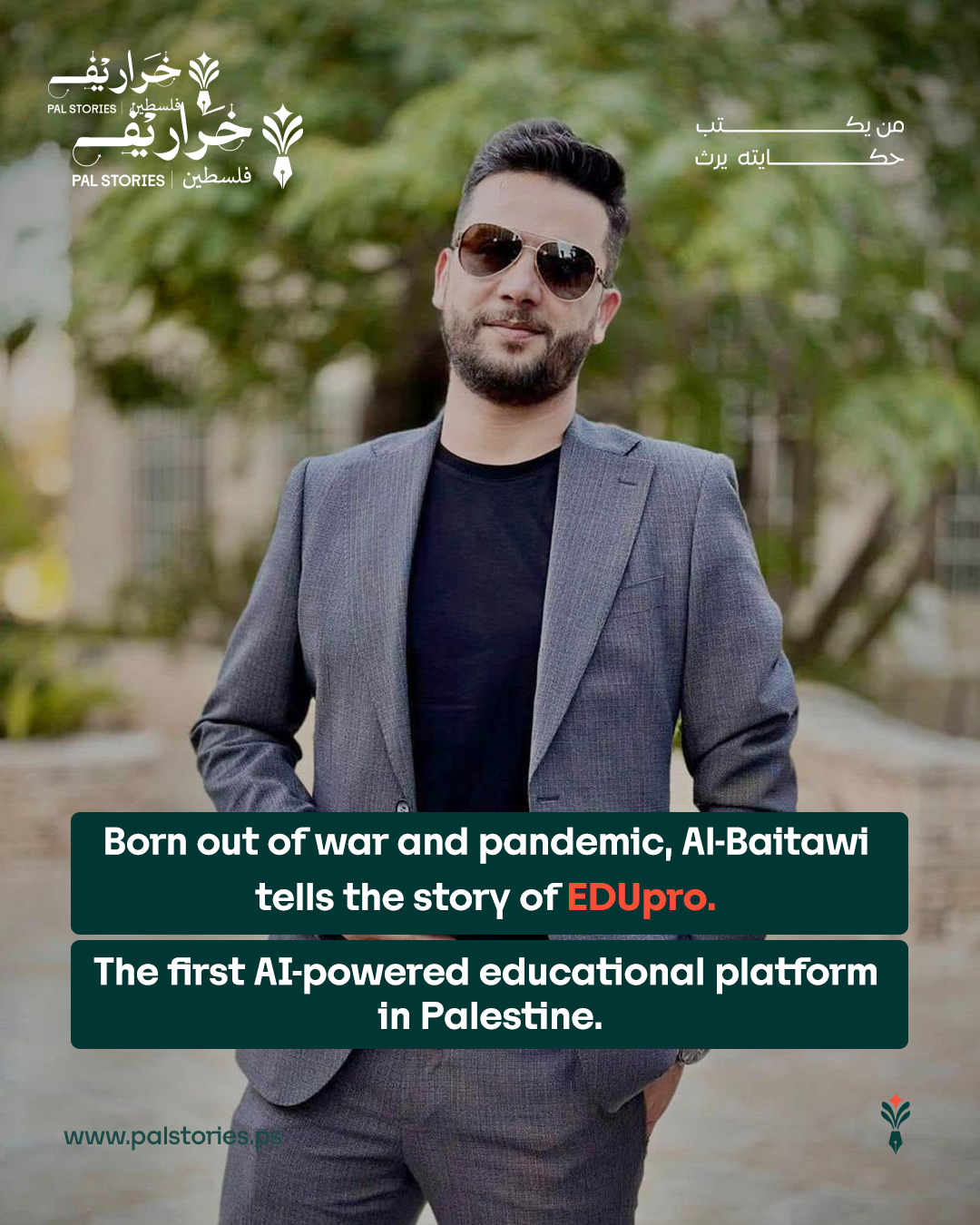
He is a Palestinian entrepreneur who noticed the significant impact of the coronavirus pandemic on education and how school students were affected by the disruption to face-to-face learning, so he began to develop the idea of using artificial intelligence in education.
Introducing artificial intelligence into education: it seemed crazy
The idea seemed crazy. “How can artificial intelligence teach students?” Al, Beitawi says, noting that his idea was not accepted by all parties involved in the educational process at the time.
But with the start of the war on Gaza and the loss of more than a million Palestinian students’ seats in schools, Al-Beitawi’s conviction and belief in this idea grew, because there was “no educational process in Gaza” to begin with. What harm could there be in placing our trust in artificial intelligence to compensate for some of what was lost?
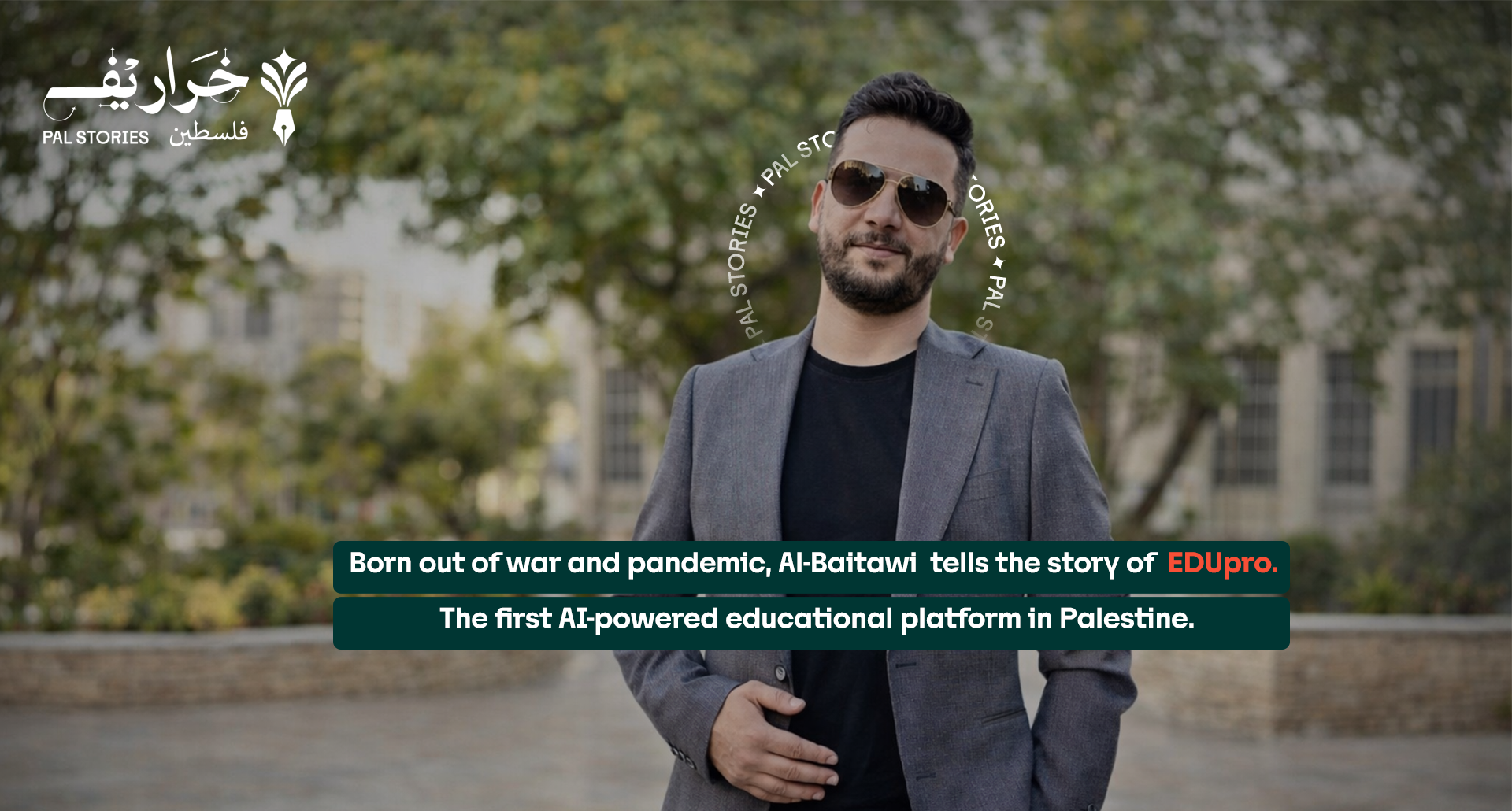
This serious threat, I mean, the loss of students’ right to face-to-face education, prompted Al-Beitawi to establish and launch the first AI-based educational platform in Palestine, called EDUpro, which is entirely dedicated to the official Palestinian curriculum.
He says: “We started the experiment with high school students (Tawjihi), and it was successful, so we expanded to other grades.”
Al-Beitawi explains to Pal Stories that the idea behind the platform is simple but profound:
“We train artificial intelligence solely on the Palestinian curriculum so that it understands the material, examples, and theories and is able to explain them to students in multiple ways.”
He continues: “Over time, we faced challenges because artificial intelligence, by its very nature, can go off track if it is not controlled. So, we introduced concepts such as quality assurance, continuous training of systems, and monitoring the accuracy of educational content, until we arrived at a comprehensive educational platform.”
It cannot replace the teacher! Contrary to what many believe, that this educational platform has come to replace the teacher, the platform’s owner emphasizes that it cannot replace a real teacher. It helps explain lessons to students, provides an unlimited number of examples, and answers students’ questions, especially in the complete absence of teachers, as is the case in Gaza, for example.
However, it cannot create the human interaction that occurs in a traditional classroom.
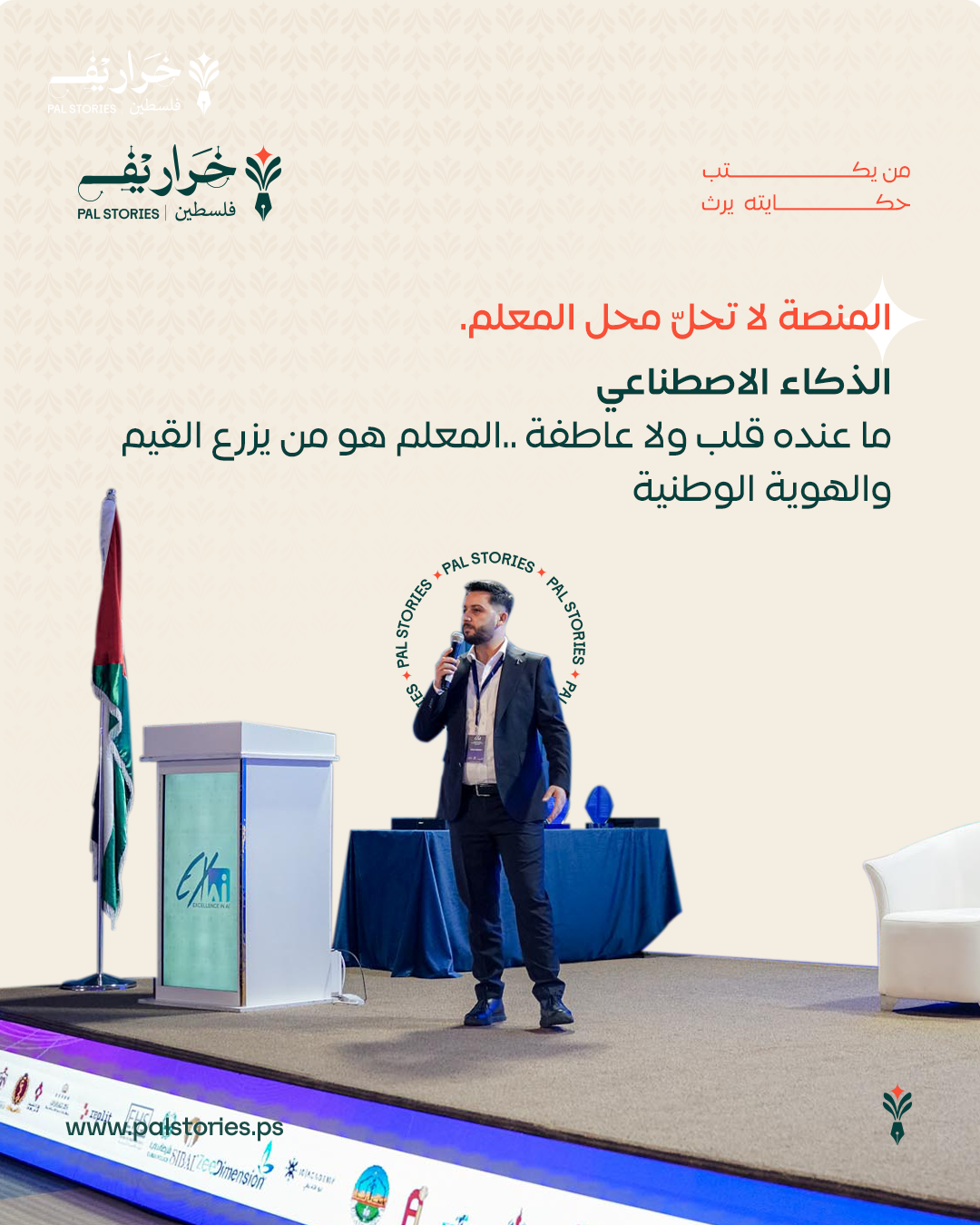
“Artificial intelligence has no emotions, no heart, and cannot interact humanely. The role of a real teacher is not only to explain the subject matter, but also to reinforce values, national identity, and instill principles. Therefore, artificial intelligence is nothing more than an educational aid.
Regarding the fundamental difference between the EDUpro platform and other artificial intelligence platforms, and why Al-Beitawi decided to launch a platform specific to the Palestinian curriculum, when ChatGPT, for example, could answer students’ questions.
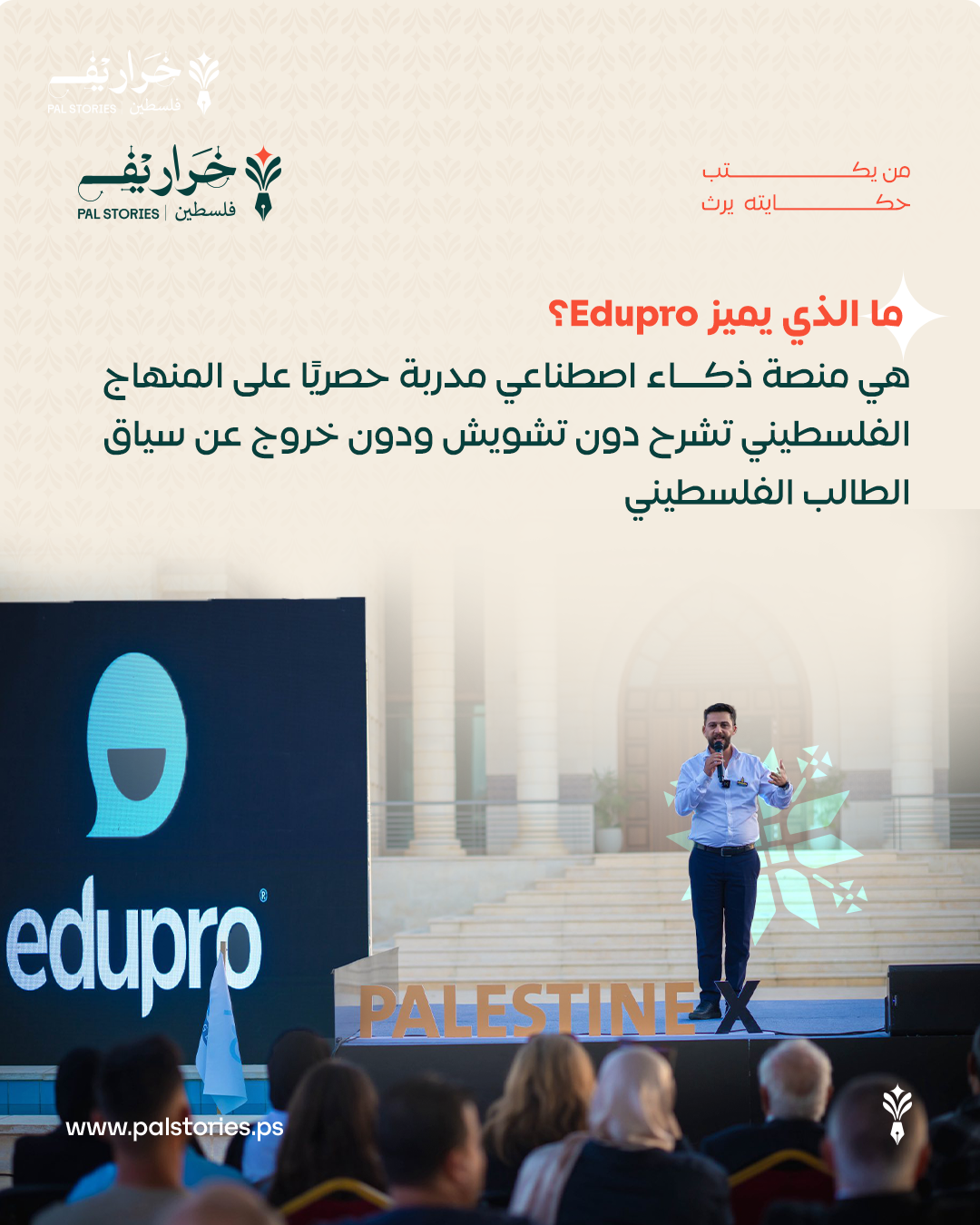
Al-Beitawi says that different AI platforms rely on billions of pieces of general information, while his platform is trained exclusively on the Palestinian curriculum, which is very important because if a young student asks a question, they will not receive any answers from outside their curriculum or answers that are inappropriate for their age group.
He emphasizes: “We want accurate, unambiguous information that respects the context of Palestinian students.”
The platform: a focus of Arab and international interest
Regarding the platform’s reach and student engagement, Al-Beitawi explained that, in a very short period of time, from October 2025 until today, more than 5,000 students have used the platform, and there has been Arab interest in the platform from other countries, such as Kuwait, Jordan, and Saudi Arabia. Discussions have also begun with international bodies, including UNESCO, on how to extend its benefits to the largest number of students.
This Palestinian achievement, which was born out of war and pandemic and came to meet the students’ need for a reliable alternative in the complex contexts in which we live, was nominated for an international award in the field of education and artificial intelligence and won first place in Jerusalem among 60 training projects.
Free for Gaza students and will remain so!
Perhaps one of the reasons to be proud of this platform, as a purely Palestinian achievement, is its owner’s insistence that it was established to be completely free for Gaza students and will always remain free for them, while pointing out the biggest challenge, which is the weakness or interruption of the internet in Gaza.
Contrary to what many parents believe, Al-Beitawi believes that preventing children from using artificial intelligence is a big mistake. “The same thing happened with the internet and electricity in their early days. They were fought against, but today they are part of our lives,” he explains.
He points out that artificial intelligence is no longer a luxury, but a necessity, but the most important thing is awareness, especially for parents and children.
He dedicated his knowledge to the memory of his martyred brother
On the other hand, behind all this creativity and pioneering thinking, Samer seemed very affected by the martyrdom of his brother Alaa a few months ago. He did not talk much about it, but the pain was clear in his voice as he told me that after Alaa’s martyrdom, he began offering free online awareness sessions on artificial intelligence in schools and universities, trying to raise awareness about its dangers and how to use it safely and ethically.
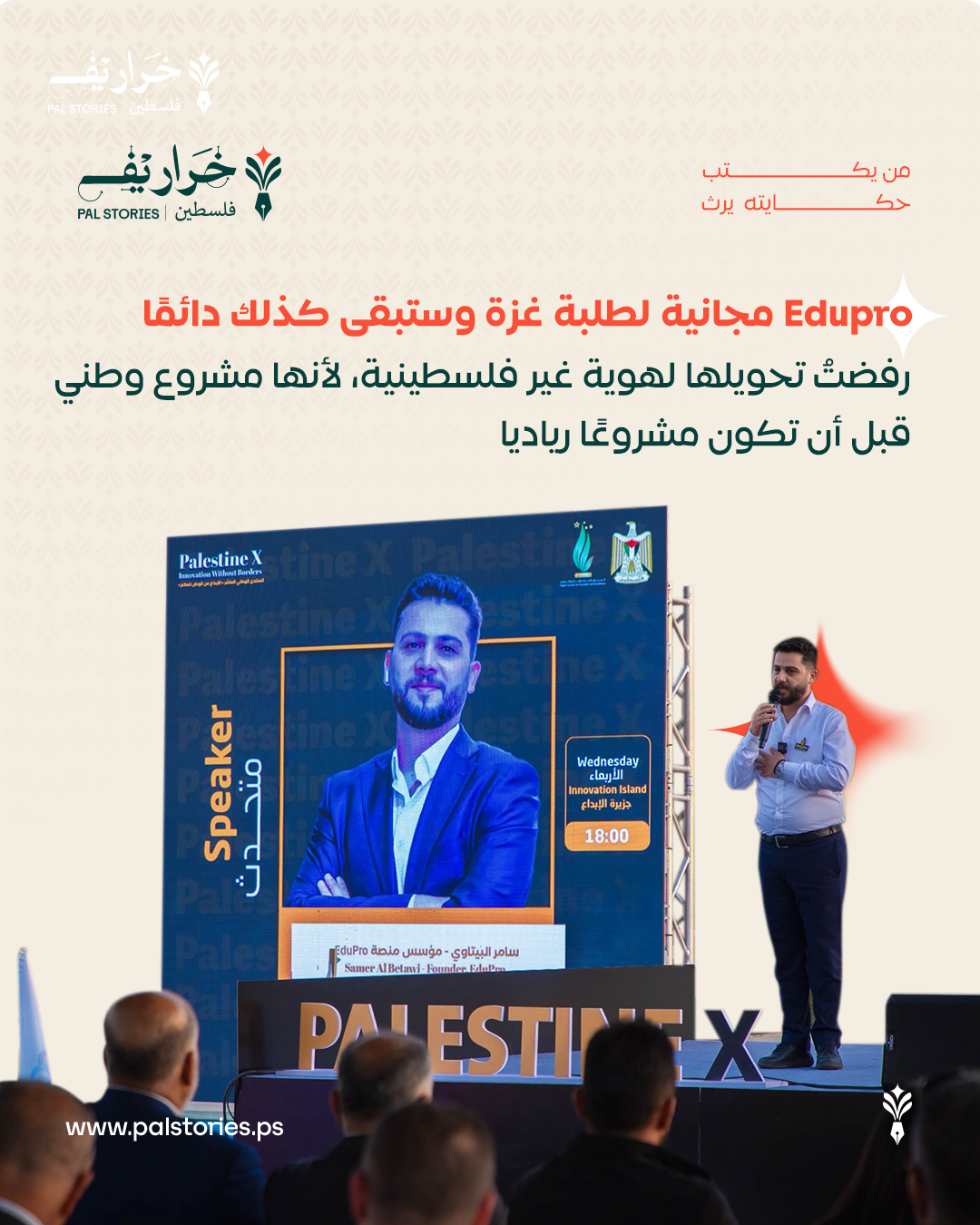
Samer rejected numerous offers the platform received from other countries to adopt it because these offers sought to transform the platform into non-Palestinian educational identities. He says, “The most important thing for me is that it remains a Palestinian platform with a Palestinian identity. This is a national project before it is an entrepreneurial project, and it will remain so.”