“I remember that day. I was sitting with my aunts and my grandmother, and they were crying over the land that was taken. It was a very sad day, as if we had lost a member of the family.”
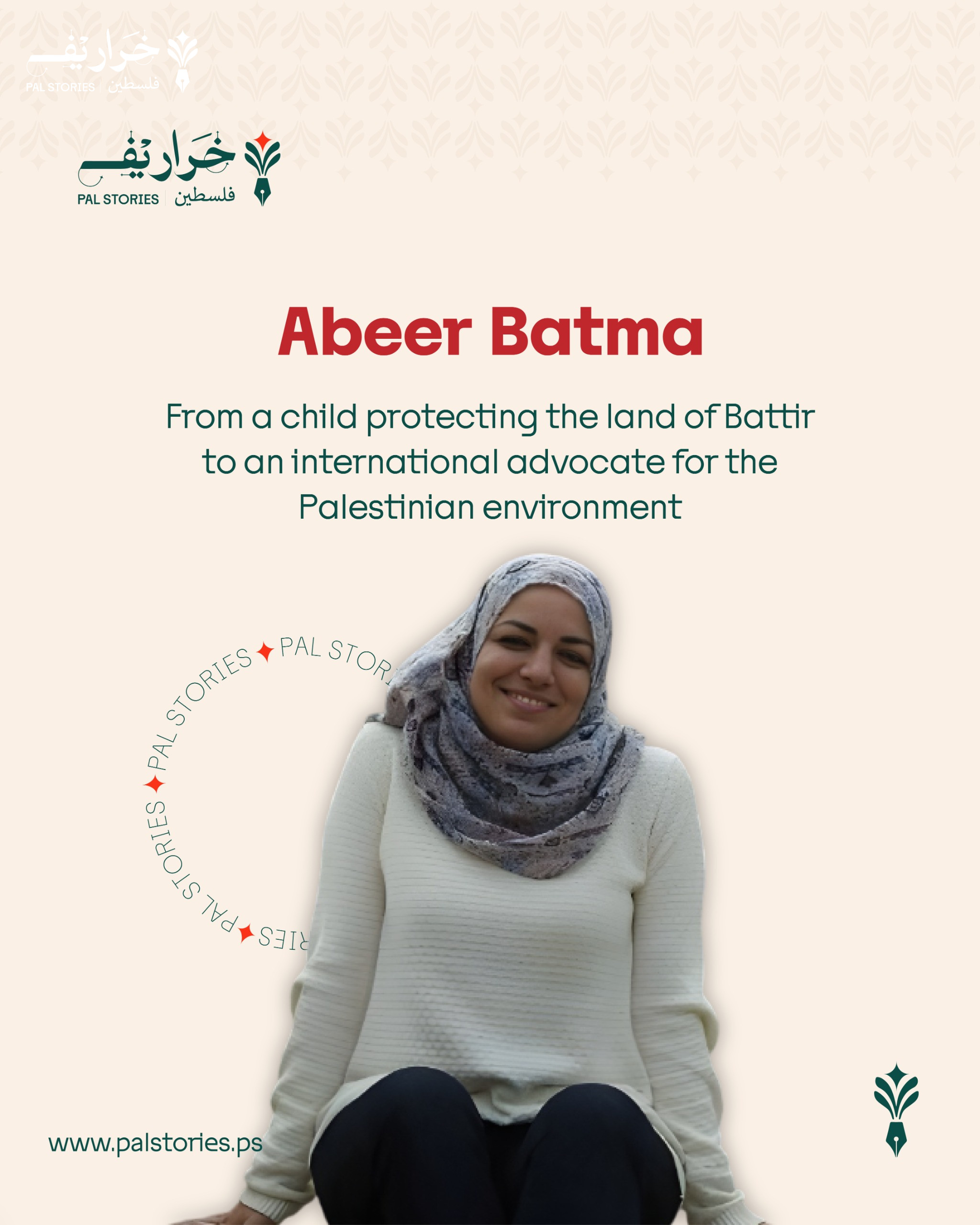
Abeer describes the day the occupation forces took control of the land behind the railway in Battir to open bypass roads. The land belonged to her aunts and grandmother. In 1987, it consisted of vast groves of grapes and apricots, olive trees, and around the spring, plots planted with parsley, mint, and Battiri eggplant, like a piece of paradise.
The memory of the “baby” olive tree that was uprooted that day could not be erased from the mind of five-year-old Abeer. She says sadly: “It was only one week old.”The beautiful features of Battir carved an unforgettable image in Abeer Batma’s childhood, making her more attached to the land. Even when she was still a schoolgirl, she would spend her summer vacation planting, caring for, watering, and pruning roses. It was her favorite hobby.
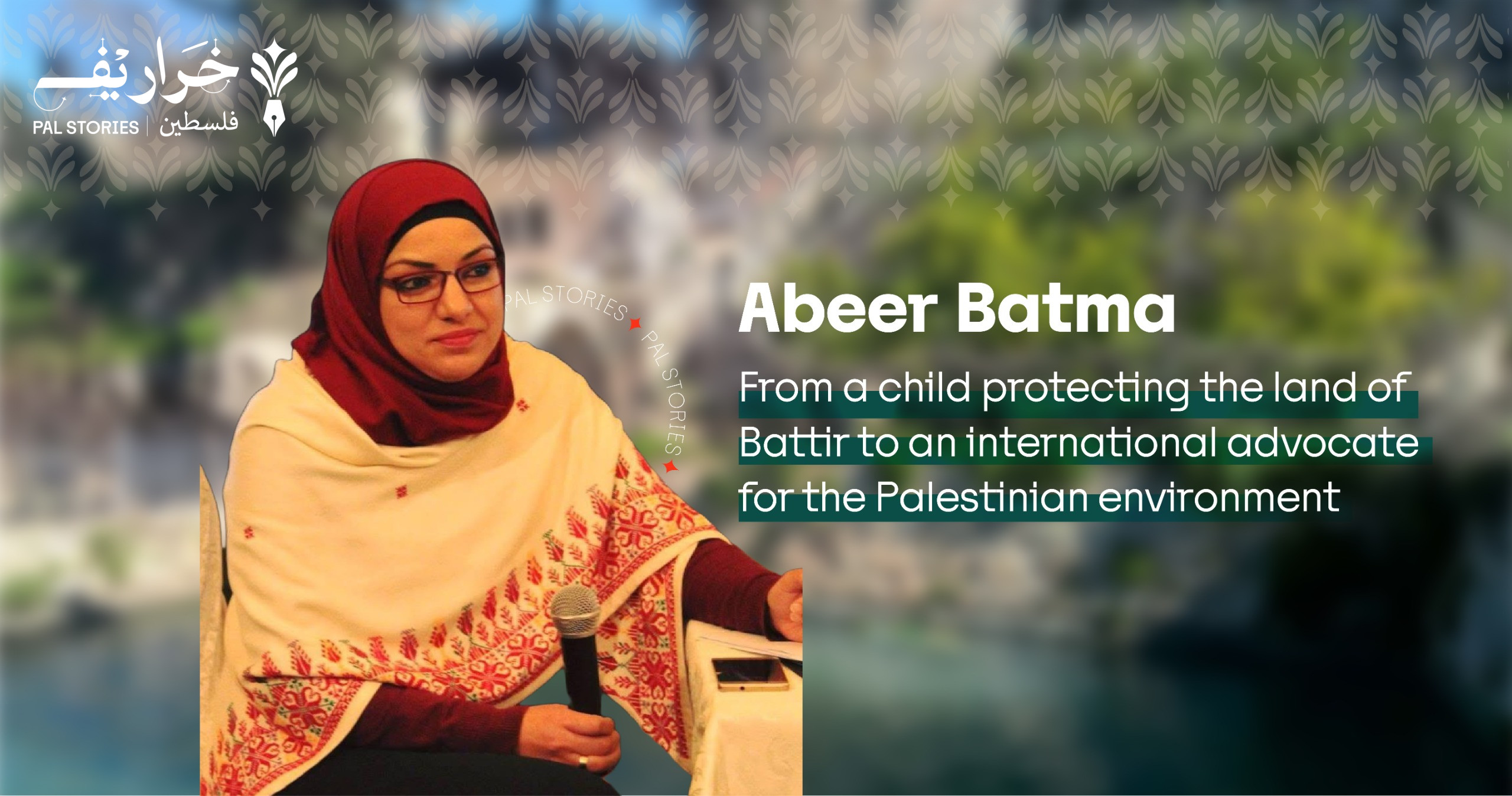
It was no surprise that she chose civil engineering, specializing in water and the environment, to study at Birzeit University, which enabled her to stay close to nature. She later became the coordinator of the Palestinian Environmental Network and spent most of her life protecting the environment.
Through her work, Batma leads environmental awareness campaigns, lobbying and advocacy campaigns, and tries to influence environmental policy and public opinion. She believes that all of this is necessary and very important in Palestine.
Batma also tries to work with communities to reduce environmental violations and minimize their impact on different groups, especially in marginalized areas. However, the most difficult part of her work is having to spend long hours on the road between Nablus, “where she lived after she got married,” and Ramallah, “where she works.”
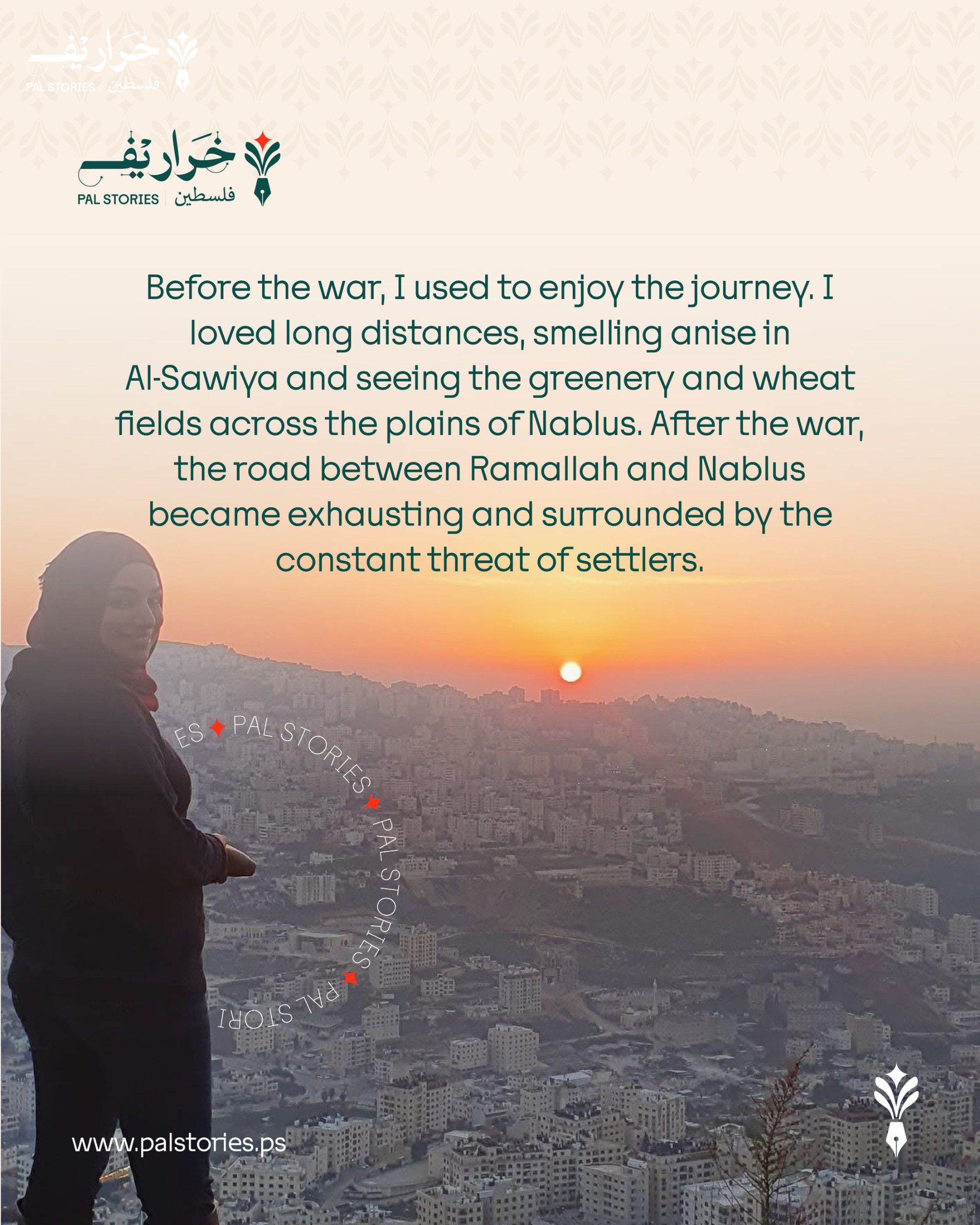
She says: “Before the war, I enjoyed the road. I loved long distances, open spaces, mountains. The morning drive gave me energy, and the return trip relieved my fatigue. I could smell the anise in the fields and see the greenery and wheat in the plains of Nablus.
But year after year, the expansion of the settlements was evident, and after the war it increased and accelerated at an alarming rate.
She continues: “What makes me endure the road and the fatigue is my great love for my work. The network has given me the opportunity to work in all areas of the environment: water, agriculture, renewable energy, and environmental rights.
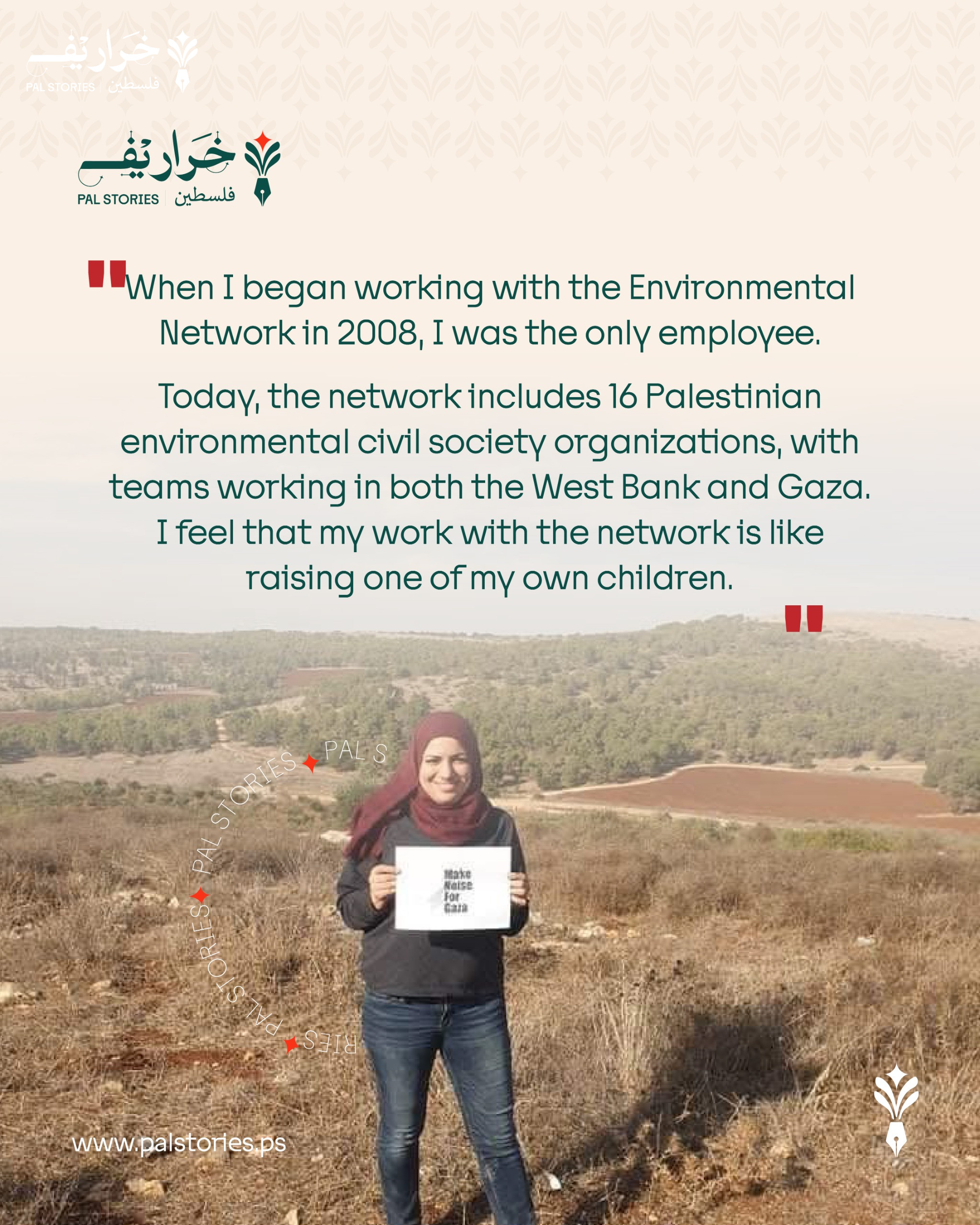
Batma has been working with the network since 2008. When she started, she was the only employee, whereas today the network includes 16 Palestinian environmental organizations and a team of employees in the West Bank and Gaza. She says: “I feel that my work with the network is like working with one of my children. I have a great sense of belonging and loyalty to it, because I actually built it step by step with the members.”
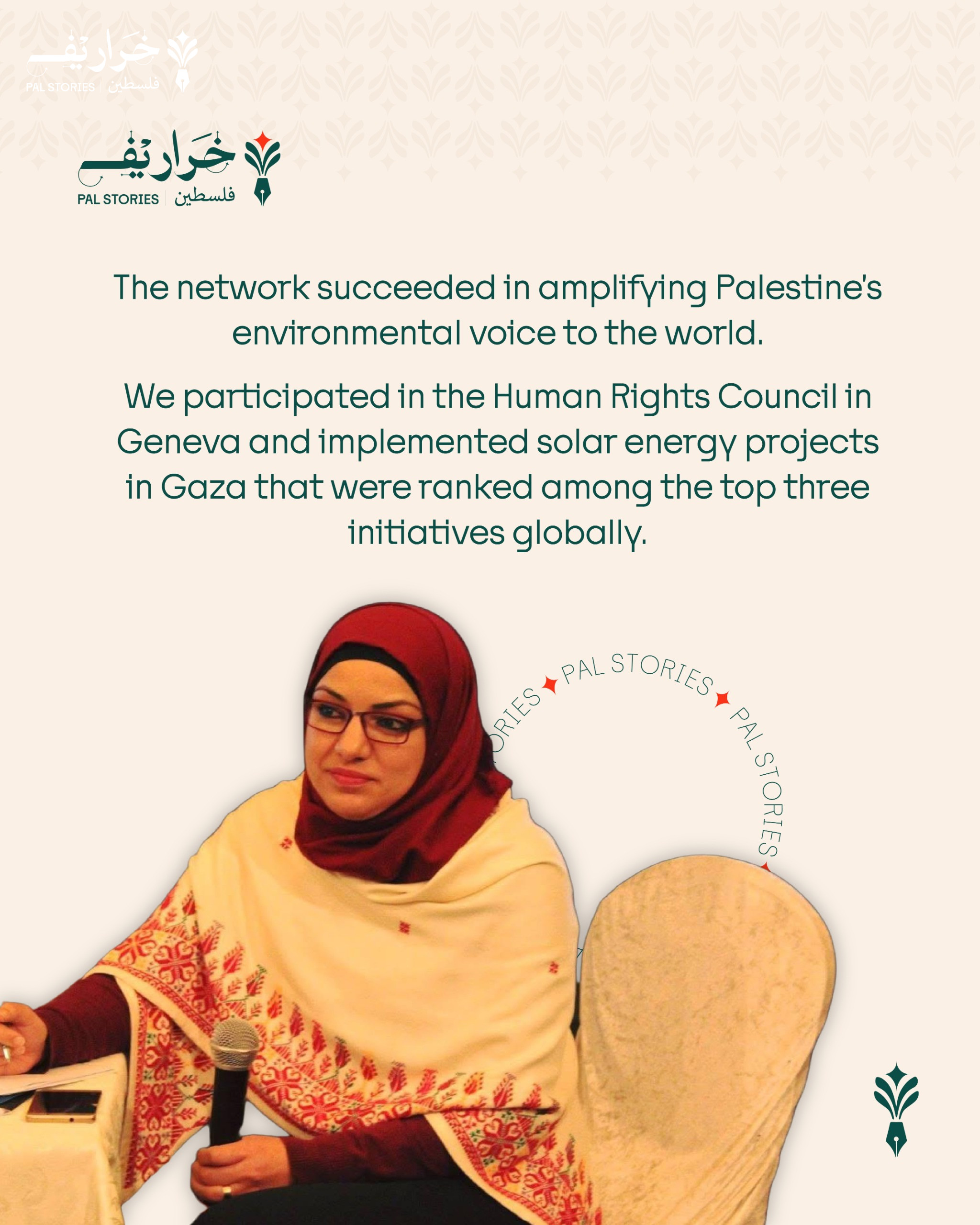
One of the network’s most important achievements is that it has been able to monitor environmental violations caused by the occupation in Palestine and raise awareness about them in international forums. The network is a local partner of the Environmental Quality Authority and an international member of Friends of the Earth International, which has enabled it to participate in many international forums, including the Human Rights Council in Geneva.
In addition to its role in implementing environmental initiatives in the West Bank and Gaza, the network successfully implemented several solar energy projects in Gaza before the war, which were ranked among the top three environmental initiatives globally… Abeer sighs: “Today, unfortunately, most of them have been destroyed by the war.”
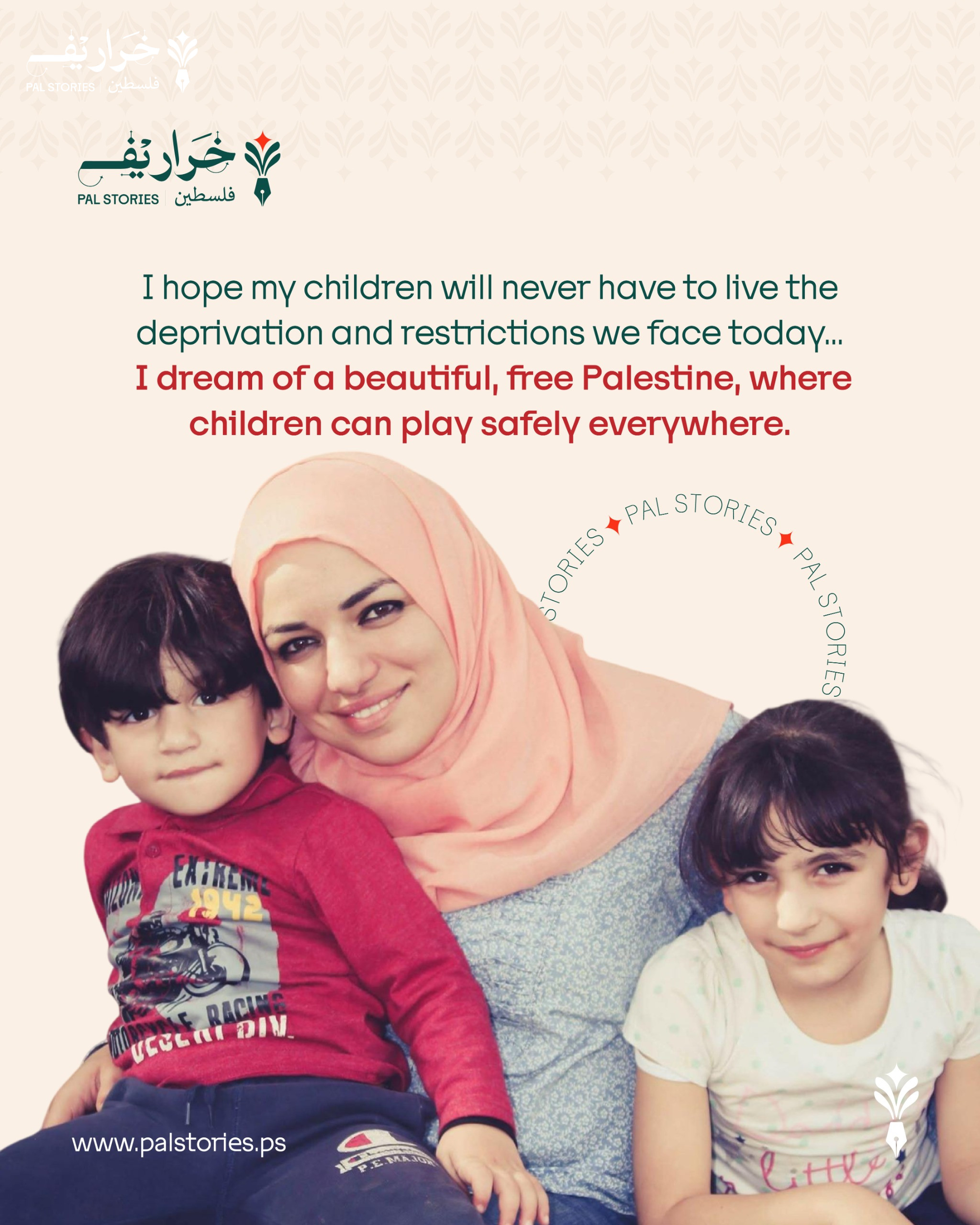
Abeer has a daughter (14 years old) and two sons (11 and 6 years old), who have been greatly influenced by her work and have become more loving and attached to nature. Abeer dreams of seeing Palestine in a better state, and that her children will not experience the deprivation and restrictions on our freedoms that we live with today. She dreams of a day when they will enjoy the beauty of Palestine and move around freely and safely without feeling like they are in an open air prison.