Facebook’s algorithm seems to know my weakness: anything made by Palestinian hands. From time to time, it places an advertisement in front of me, a handmade product, an invitation to pause. Recently, one image made me stop scrolling. It was a cup, adorned with the icon of a girl wearing a Palestinian thoub, like a small artwork shaped from clay. Quiet, delicate, and deeply familiar.
Curious, I clicked!
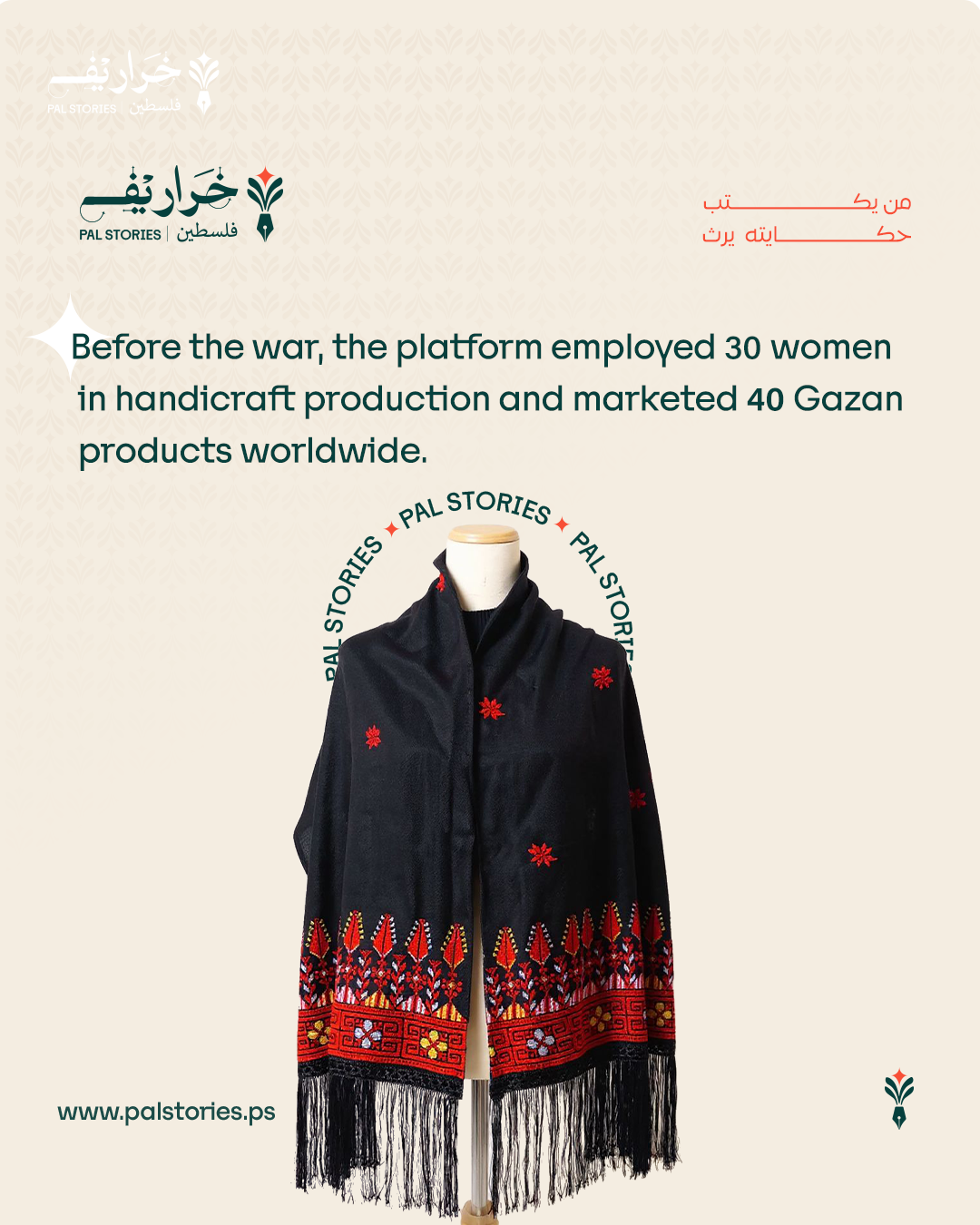
The website revealed a world of handmade pieces crafted with care and intention. A space where heritage meets contemporary design. There were no Thoubs/traditional dresses on display. Instead, there were embroidered T-shirts and finely stitched bag handles, designed to replace ordinary straps with ones carrying the language of Palestinian embroidery.
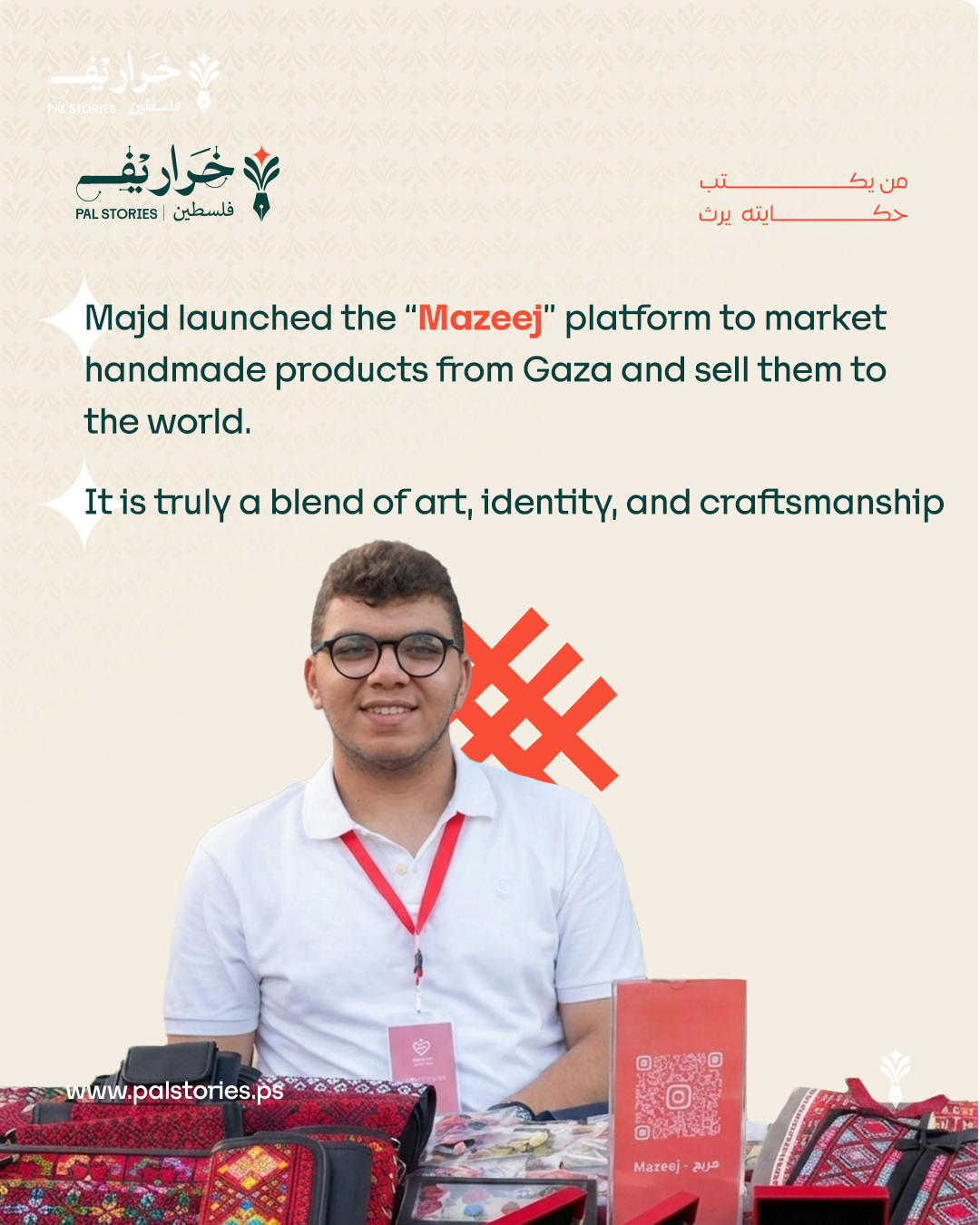
The platform was called Mazeej (Blend). And it lived up to its name: a thoughtful blend of art, identity, and handicrafts. I couldn’t move on without asking who stood behind this beauty. When I reached out, I didn’t expect the answer. In that moment, I stopped being a customer and became a journalist, searching for the story behind the work.
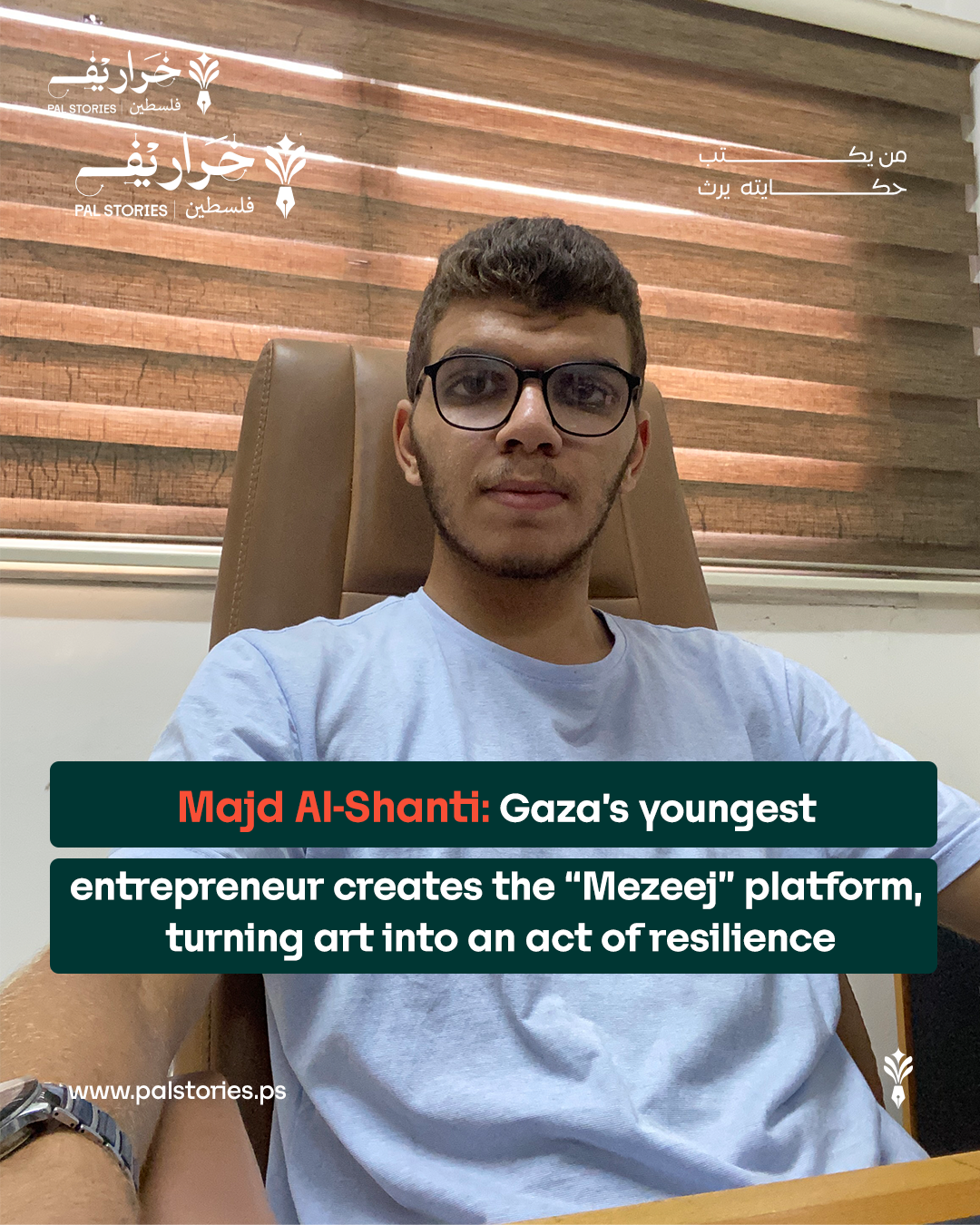
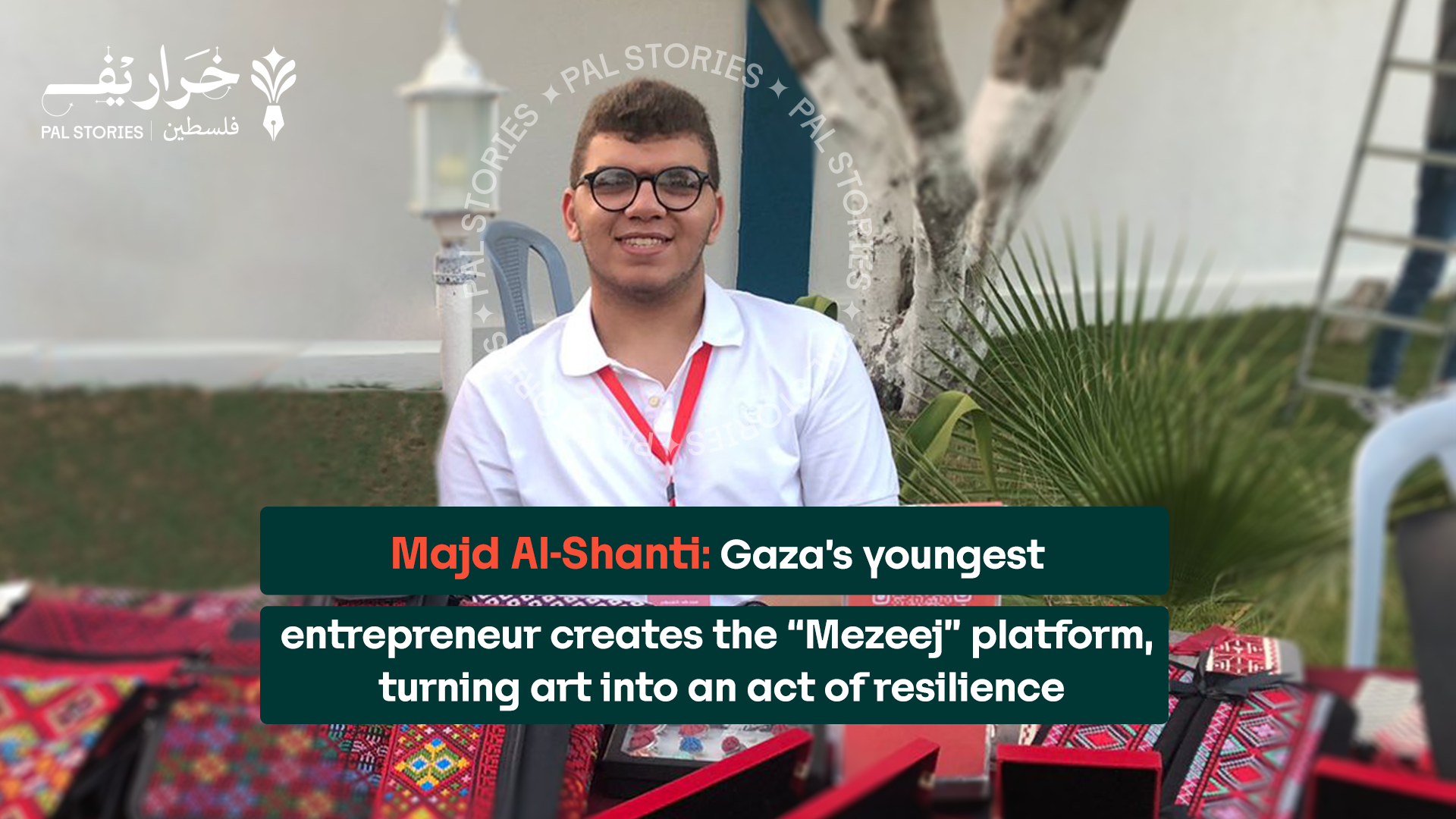
I assumed the creator would be a woman, as we often are the ones drawn to such details. But it wasn’t. It was Majd Al-Shanti, a 21-year-old from Gaza.
The answer surprised me! How could someone so young, from a place so besieged and isolated, be promoting heritage products across the West Bank? Gaza had just emerged from a devastating war, and its people were still deprived of basic goods blocked at crossings. And yet, Mazeej existed.
The story began earlier than I expected. Majd launched the platform in 2022, when he was only 17 years old. His vision was to create a marketing space for the handmade products of Gazan women. Women who, throughout years of war, had developed their own tools of resilience to support themselves and their families.
Majd’s journey echoes the early stories of global platforms like Amazon, though rooted firmly in Gaza’s reality. He is a graphic designer by training, having studied digital marketing at one of Gaza’s universities. Even before high school, he was already working remotely with European companies, sending them his designs. This is how Gaza’s youth continue to surprise the world, with creativity born under constraint.
Before Mazeej took shape, Majd worked with just three handmade products, promoting them through social media. They were inspired by three crafts: painting on cups, embroidery, and crochet. Over time, the idea grew into a platform that could showcase a wider range of handmade products and connect them to markets inside and beyond Palestine.
Before the war, Mazeej promoted around 40 handmade products and worked with 30 women in Gaza. Majd purchased their goods and sold them to the world, both wholesale and retail.
He also built a system that allowed these products to reach the West Bank. Through partners working with him there, the goods crossed checkpoints and arrived every few days, distributed according to customer orders placed through the online platform. With minimal delivery fees, the process felt almost unreal. Many customers struggled to believe the products truly came from Gaza, that they had crossed barriers designed to separate and isolate, and reached homes across the West Bank without delay.
Mazeej was never just a bridge between producer and consumer. Majd also took responsibility for production itself, working closely with the women artisans to refine each product. Quality mattered deeply. As he often says, Gaza sends nothing to the world but beauty and creativity.
The path was far from easy. In its early stages, the project lost money as Majd insisted on raising standards. At times, he even provided raw materials himself, ensuring that final products met the expectations of local and international markets.
By 2023, Mazeej had begun to expand. Products reached shops in the West Bank, Jerusalem, inside the 1948 land, and even beyond Palestine. Quality control was uncompromising: any flawed item was returned and replaced.
Then the war broke out, silencing the momentum. At least 30 families, three young people managing the platform, a marketing company, and partner in the West Bank were suddenly left without income.
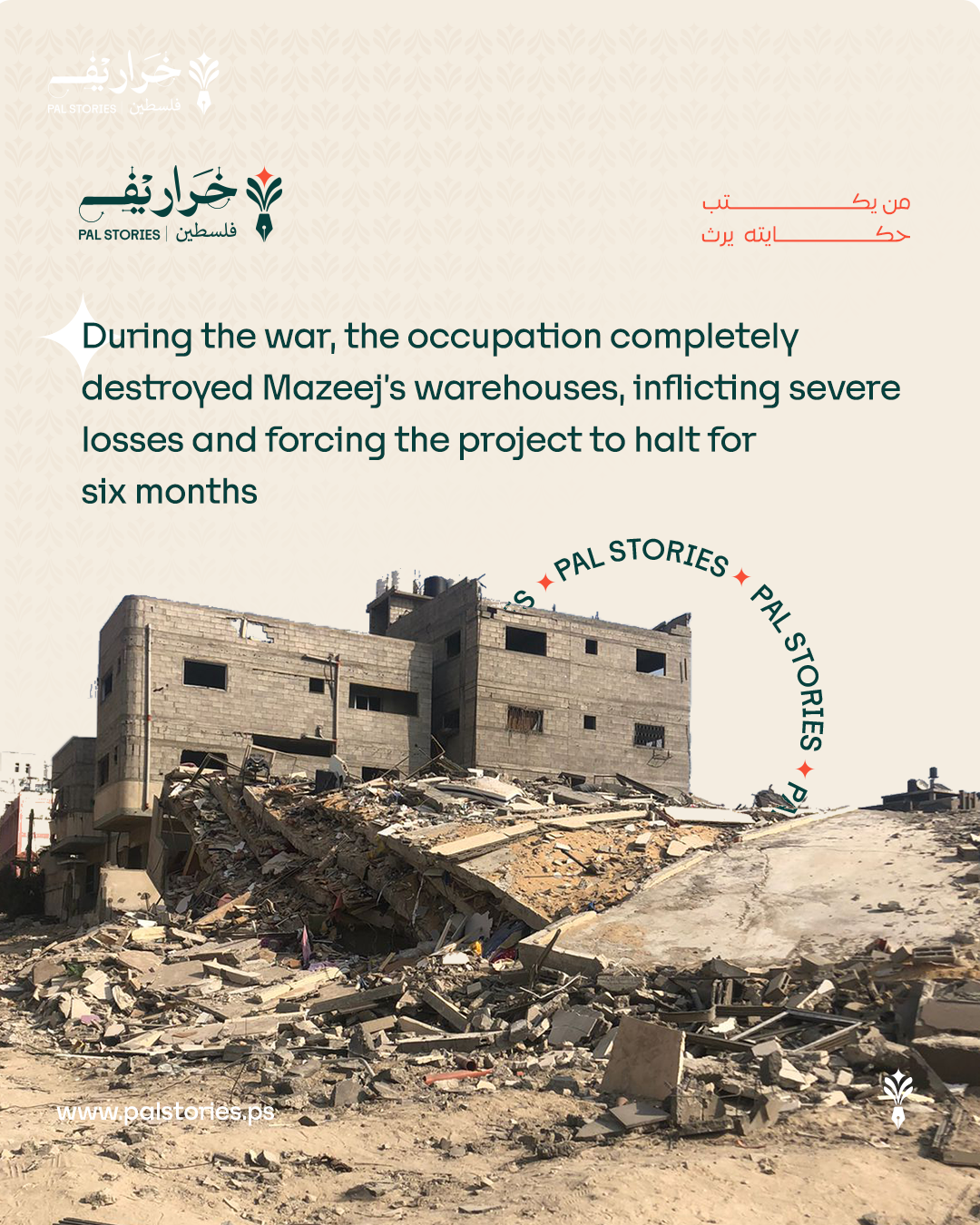
By April 2024, the project had come to a complete halt. Production fell to zero. Worse still, the warehouses where Mazeej’s products had been stored and displayed inside Gaza were destroyed, along with the surrounding residential blocks.
During the war, Majd lived with his family in northern Gaza, an area subjected to some of the most intense destruction. Overnight, he was no longer an entrepreneur, but a young man trying to survive fire, hunger, and fear. For long periods, he was cut off from the world, without internet or communication, focused solely on keeping his family alive.
For twelve days, Majd and his family were trapped near Al-Shifa Hospital, without sufficient food, sleep, or connection. He lost loved ones and endured repeated moments where survival felt uncertain. Still, he survived.
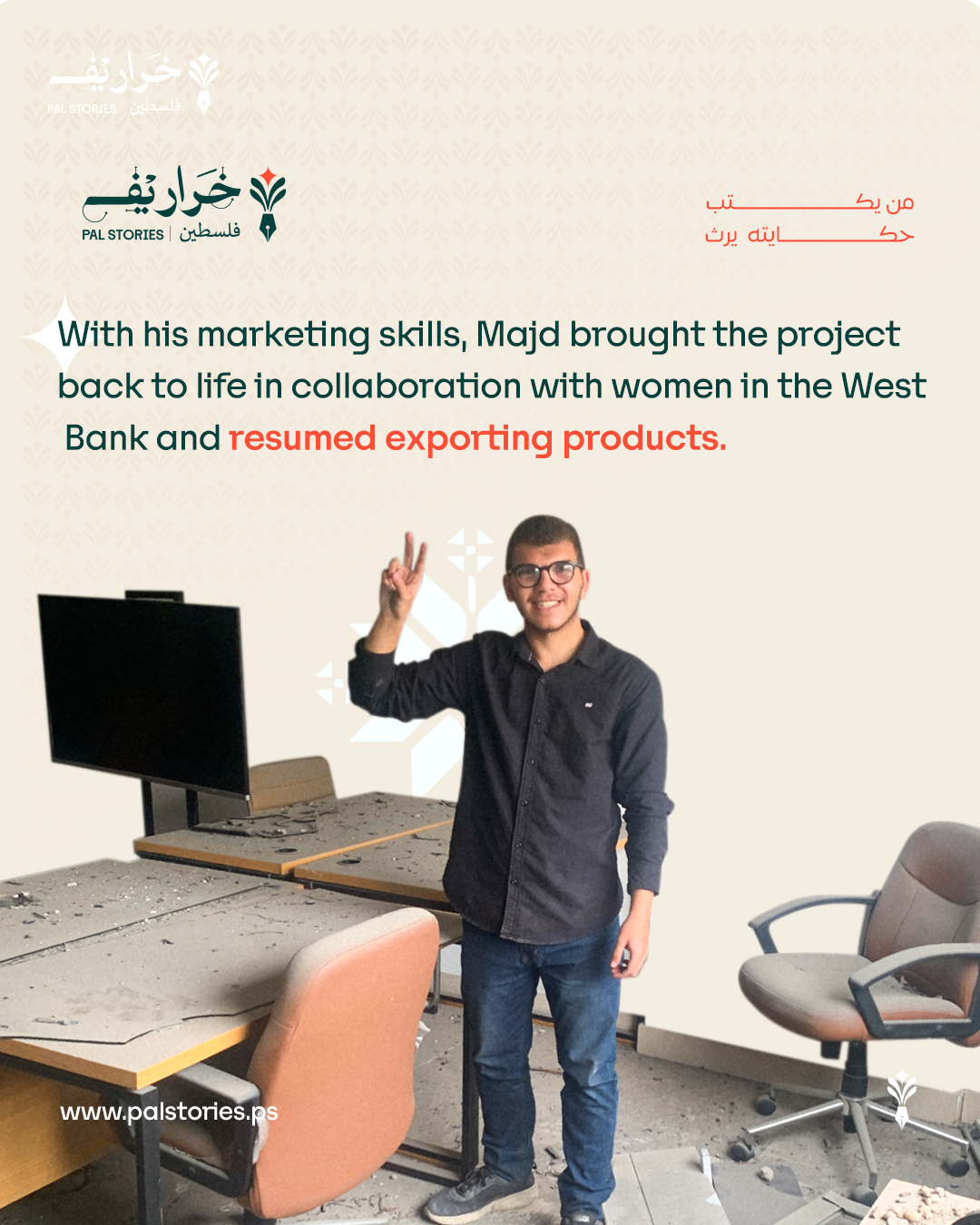
Six months later, Majd finally managed to reconnect. With SIM cards in hand, he slowly revived Mazeej, reaching out once again to customers in the West Bank and abroad. With Gaza still under fire, hope had to be held onto. This time, the project resumed through collaboration with women in the West Bank. Mazeej set the standards; they carried out the work. From there, the products once again made their way to the world.
Today, the entire operation runs remotely, by necessity, not by a choice. The losses were immense, but so was the responsibility Majd felt toward the women in Gaza who depended on the project. What had once been a rapidly expanding platform is now an effort to endure, made even harder by the deteriorating economic conditions in the West Bank.
Still, Mazeej persists. The platform manages its own communication, production, and marketing. It now has more than 20,000 followers on Instagram, and a single post can attract new collaborators. Some come with their own independent projects, and Mazeej welcomes them. Its primary audience lies outside Palestine, and it works with international stores through wholesale partnerships.
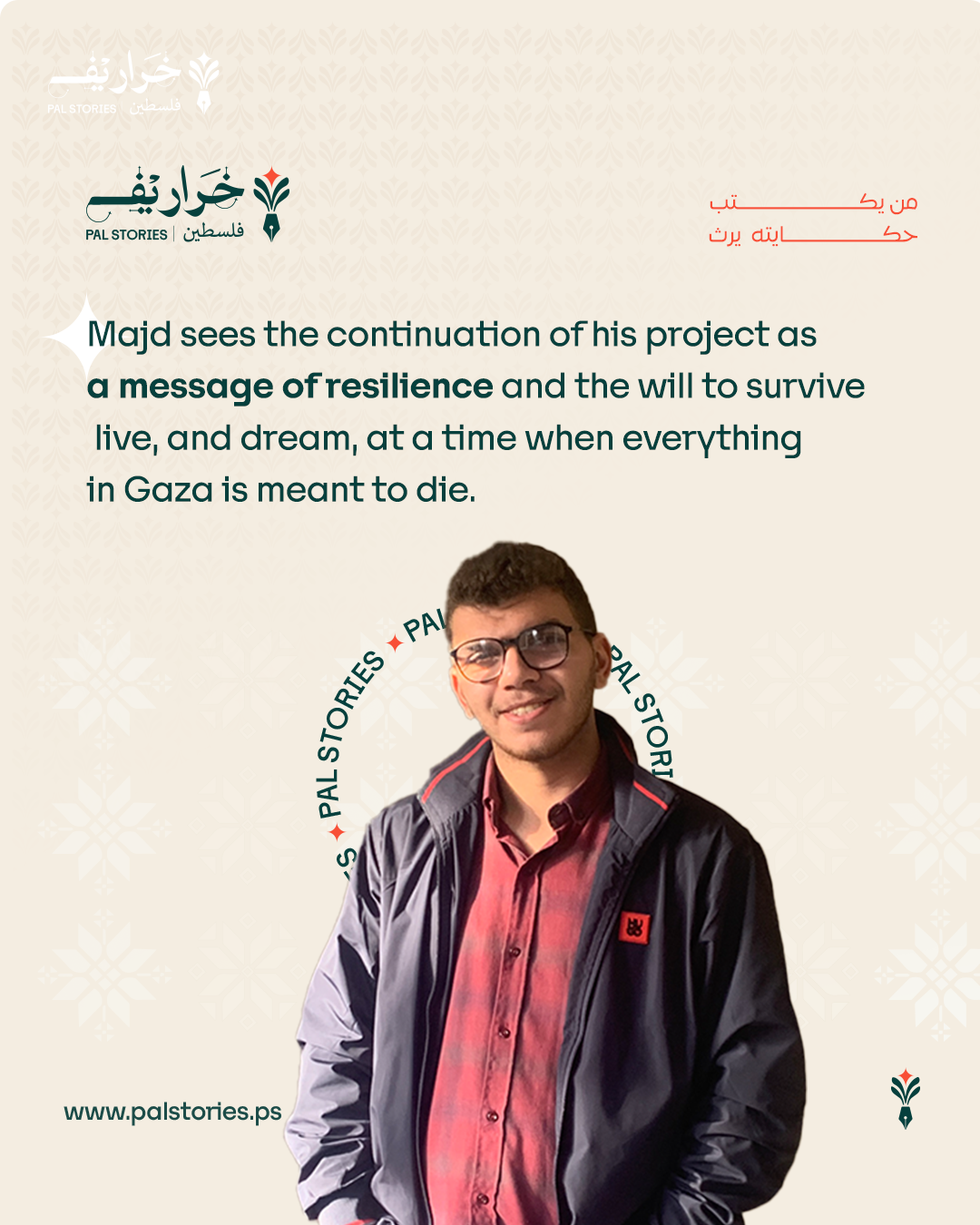
Mazeej is not just an atart-up or a marketplace for handmade goods. It is a young Gazan’s attempt, at only 21, to transform art into survival, and to keep production moving in a time when all forms of life in Gaza are being forced toward silence and surrender.