Gaza: Mervat Aouf
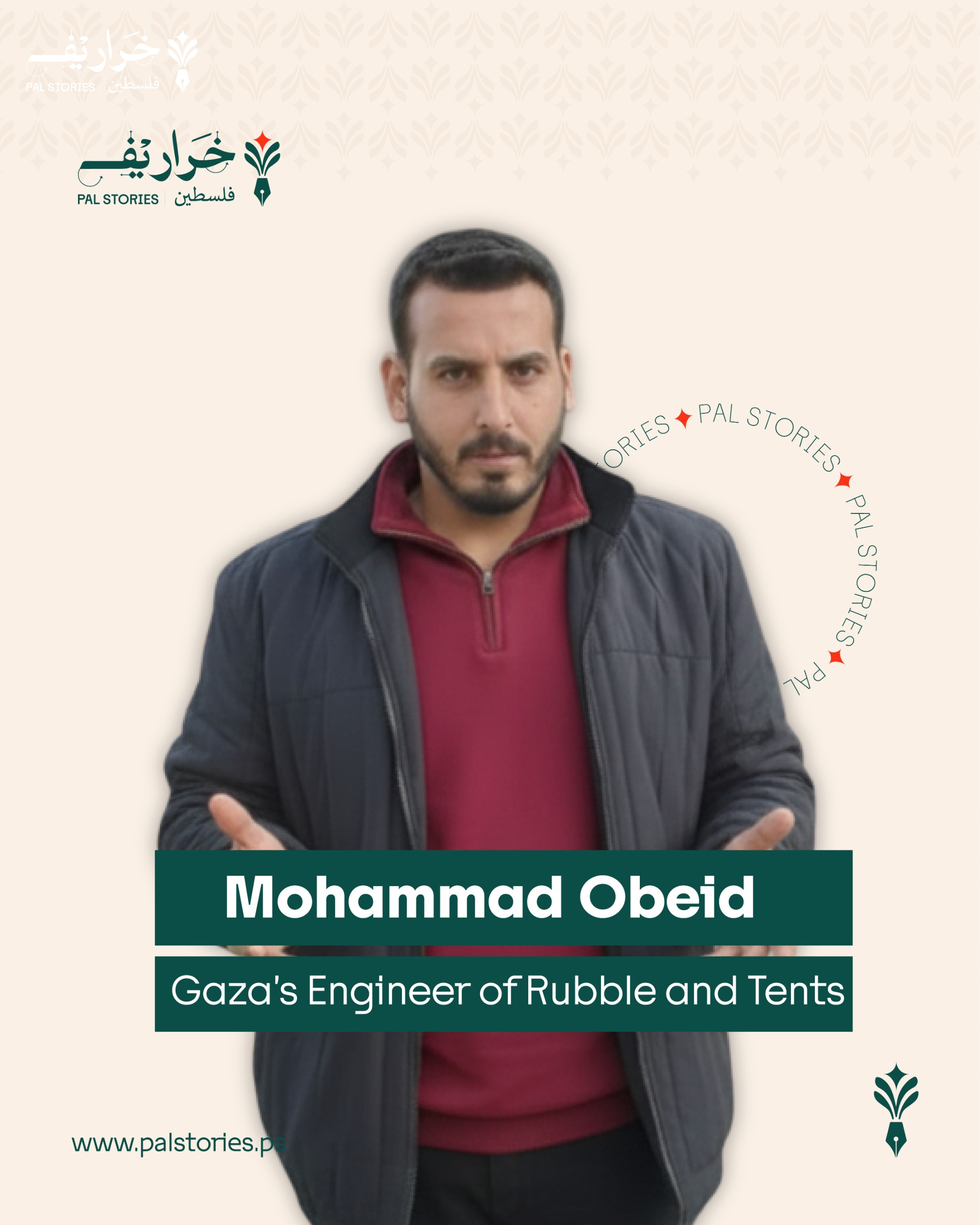
In the alleys of Al-Shati camp (west of Gaza City), civil engineer Mahmoud Obeid wanders in search of a compelling photography angle for the content he is preparing, amid the ruins of the camp whose homes were destroyed by occupation forces during the recent war on Gaza. As he does so, a stranger in his thirties stops him eagerly and gratefully, saying, “We saw your video about the sounds of collapse. And indeed, when we heard the sound, we moved immediately. An hour after we left, the house collapsed completely.”
It was a moment of great gratitude and appreciation for Obeid, who became more confident in the importance of his work in saving families from certain death. But he pauses for a moment, then tells the storyteller of “Pal Stories” in a voice that mixes humanitarian duty with the bitterness of reality: “It would be shameful to describe it as joy. But ‘whoever saves one life saves all of humanity.’”
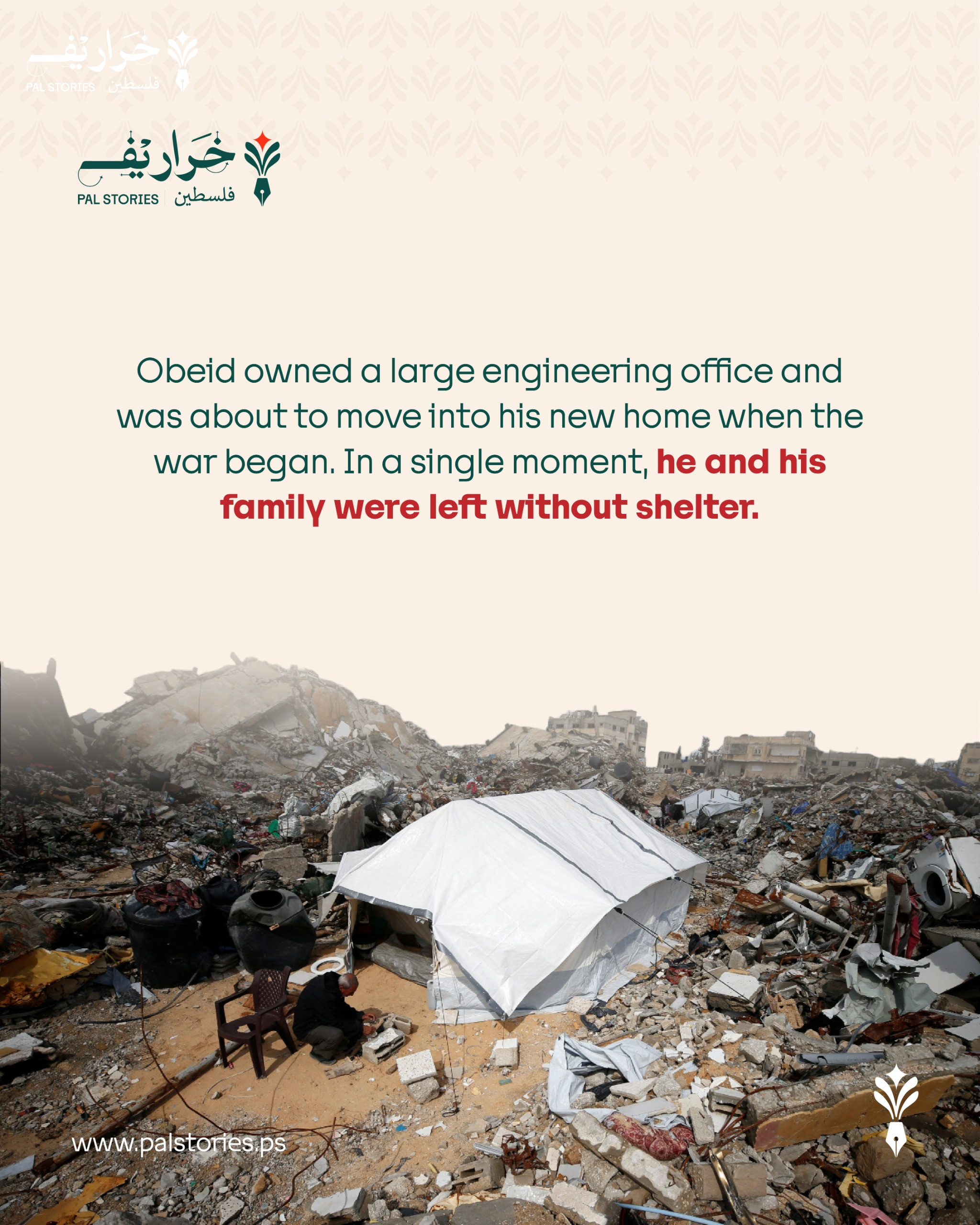
Mahmoud Obeid’s story carries a painful irony. The engineer, who for many years built people’s homes and brought them joy, lost his home, his engineering office, and his equipment in the early days of the war. He says: “I was going to move into my new apartment in October, when the war broke out, but it was destroyed in the same month, in the early days of the war.” He adds: “In an instant, we were left homeless, looking for a place to live and food for our family.”
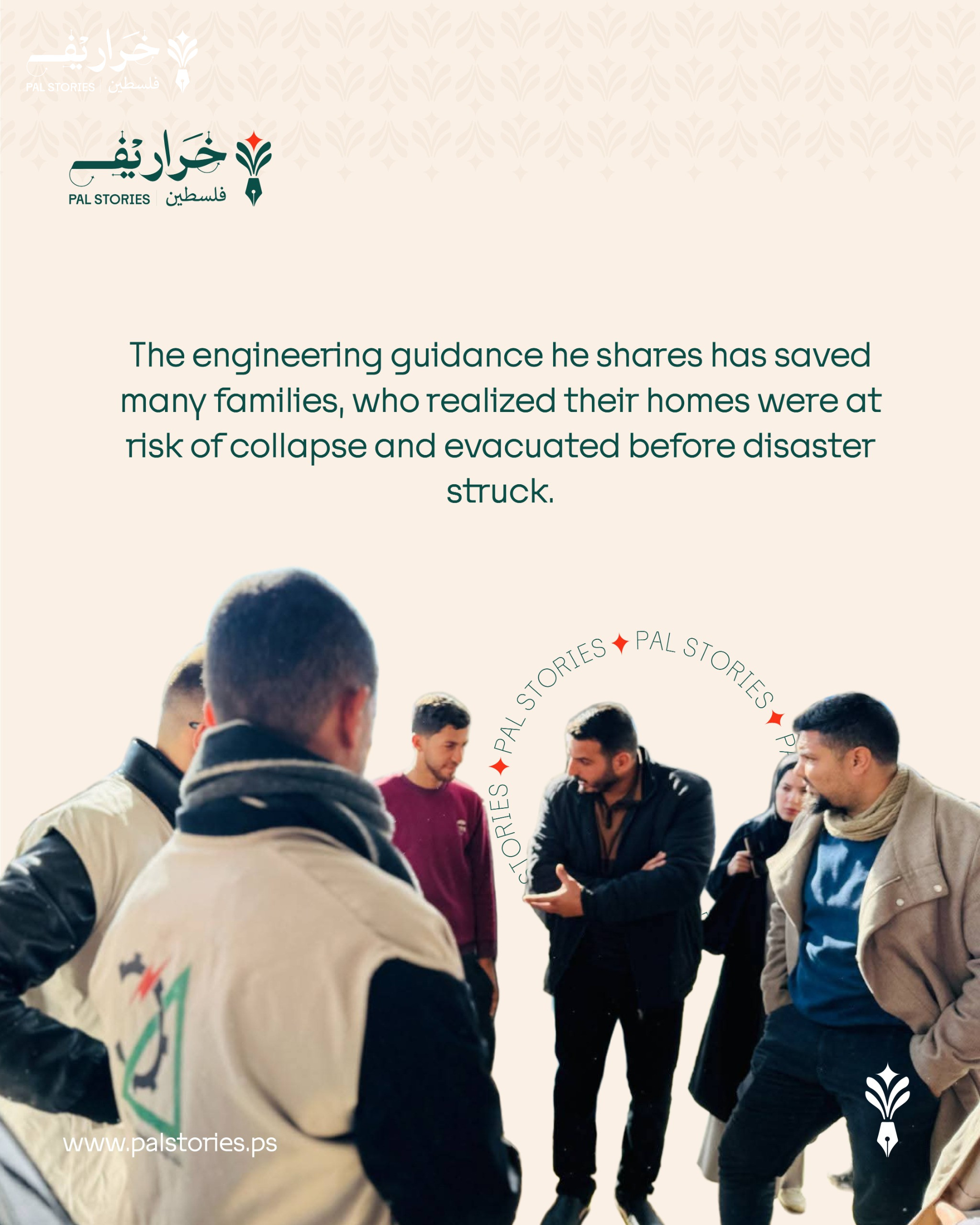
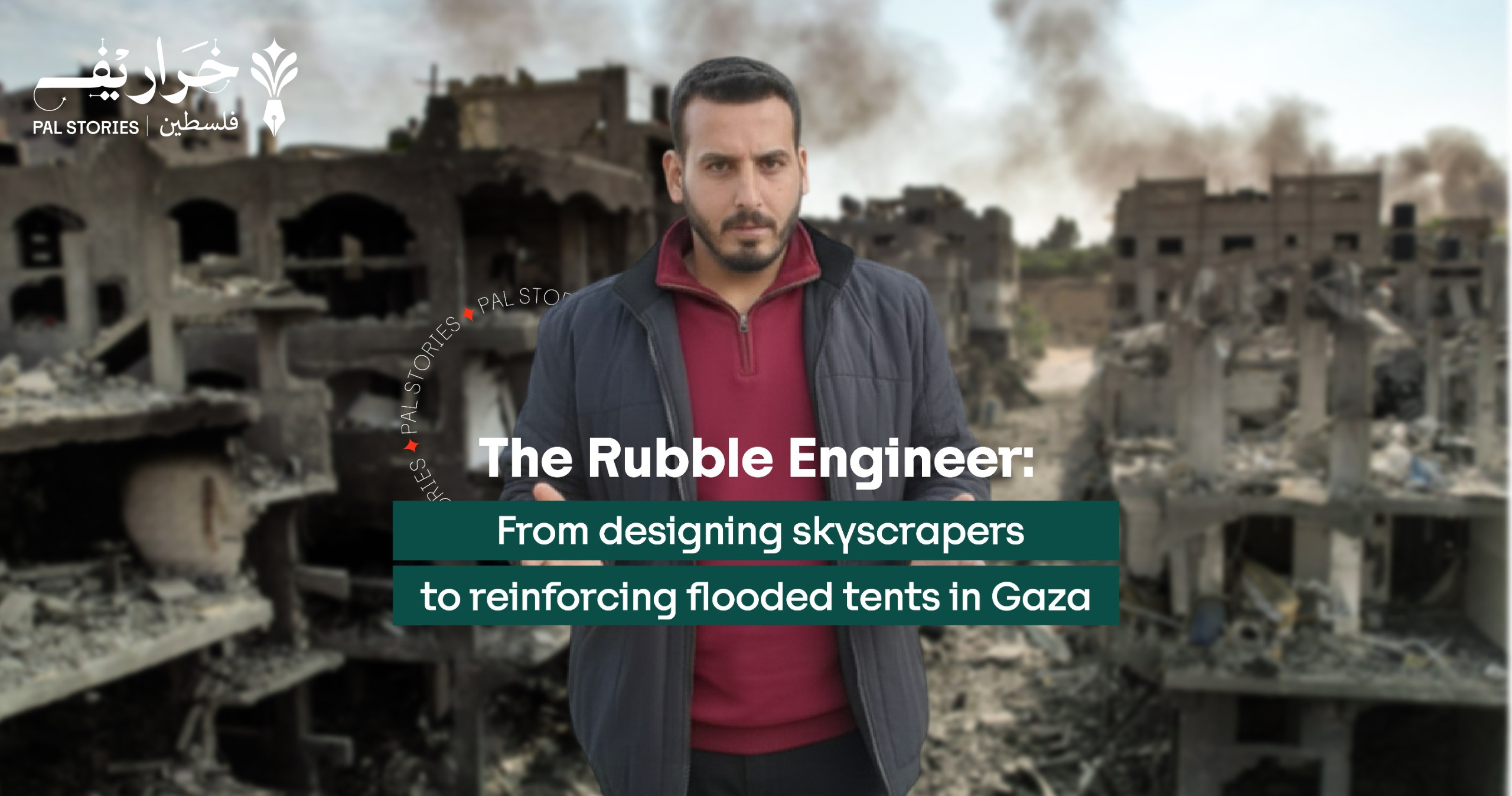
Today, Obeid is working on providing practical and vital guidance to displaced persons based on his engineering experience. He talks about how to assess the safety of cracked buildings and avoid the risk of collapse, as well as the best engineering methods for building and reinforcing tents to withstand rain and wind. Obeid has gone from being an engineer of skyscrapers to an engineer of rubble, or an engineer of survival, so to speak.
Before the war, he used to talk about the construction of ten or seven-story buildings and huge institutional buildings, but now he is trying to be useful even after all the destruction that has taken place in Gaza, where demolition is currently the norm in Gaza Strip, not construction.
That is why Obeid talks about the danger of buildings that are about to collapse, about the possibility of living in a burned-out apartment, for example, or about building a tent at a certain angle so that its inhabitants do not drown.
In the aforementioned clip, entitled “A Sound None of Us Wants to Hear,” Obeid talks about the common features of bombed buildings that are about to collapse.
Obeid says that a building in danger communicates with its owner visually, as new cracks are a serious warning, and also audibly, as warning sounds are a final alarm requiring immediate evacuation.
This is because most of Gaza’s buildings were designed after 1995 according to American and British codes that provide for a “safe collapse” mechanism.
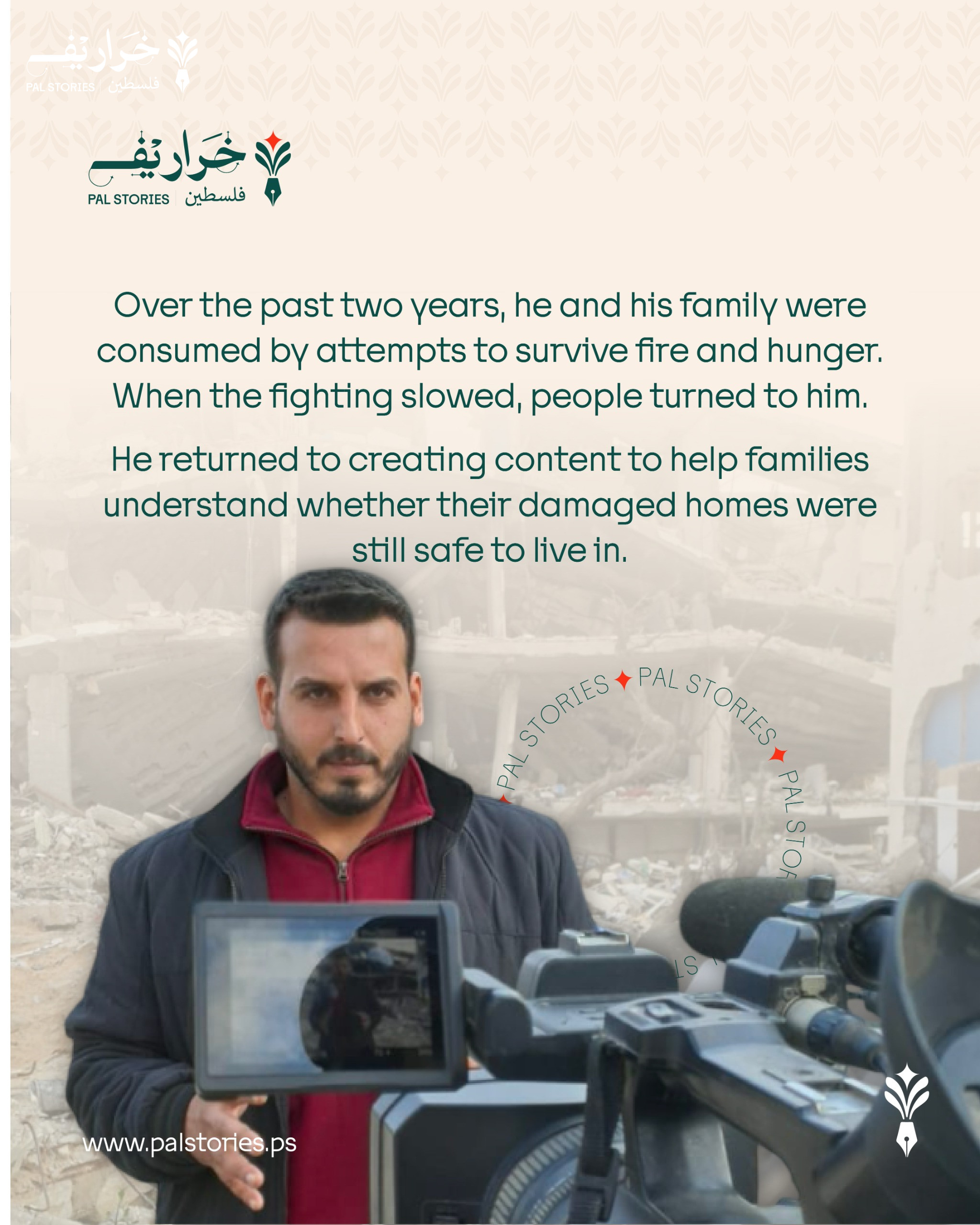
Although Obeid was involved in content creation before the war, providing civil engineering students with professional guidance that is difficult to obtain from the university curriculum, he was only able to resume his content creation when the war ended completely in January 2025. At that point, he began to provide content appropriate to the dire situation imposed by the war on the residents of the Gaza Strip. He may have been right in choosing the timing of his return, because construction and reconstruction are impossible in light of all the bombing and destruction that Gaza witnessed during the war. Therefore, his return is like rising from the ashes, just as Gaza is now trying to do.
Obeid’s return to content creation was, at most, a humanitarian response to the citizens’ need for guidance. When the displaced returned to northern Gaza, they found some buildings still standing but cracked as a result of direct or indirect bombing.
Obeid was inundated with calls for help to “escape” from buildings that were about to collapse, and the questions were repeated with concern: “The wall is cracked, the roof is open, the building is on fire… What should we do?” Obaid tells us that the overwhelming number of calls made it impossible for him to respond to everyone, explaining: “People were desperate for information that could be life-changing.”
In another video, Obaid explains to the people in the tents how a tent with a double-sloped roof is much better than a single-sloped roof for draining rainwater. He says: “It is extremely painful for me to move from talking about constructing buildings to explaining the best way to build a tent that protects from the rain, but this is the reality, and we have to adapt to it.”
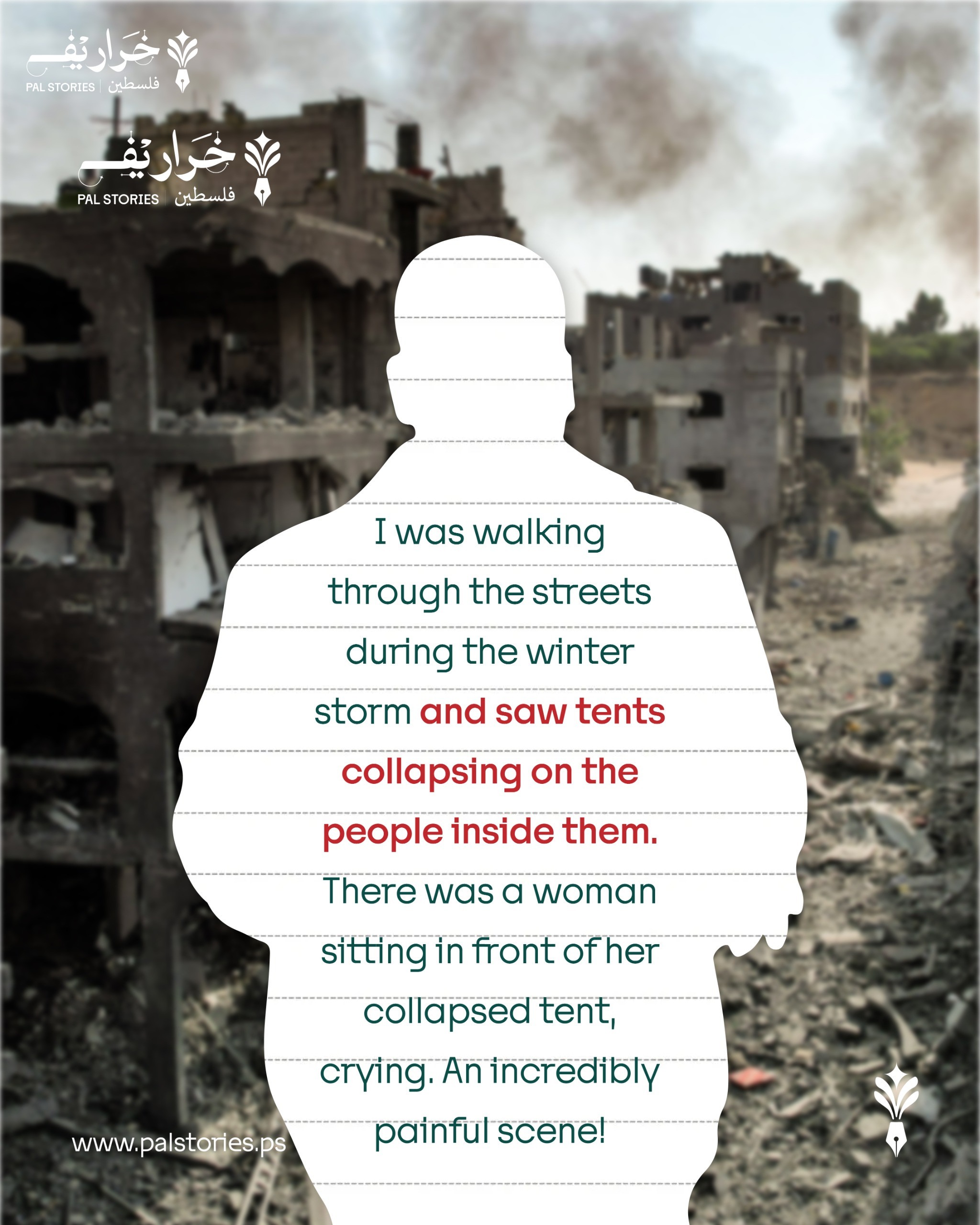
Obaid tells us that the content he provides about building tents did not come out of nowhere, but from the heart of the painful daily scenes he witnesses. Obaid recounts: “I was walking down the streets during the storm, and I saw tents that had collapsed on their inhabitants, and a mother sitting in front of her collapsed tent, crying, in a scene that broke my heart.”
Obeid’s memories that he shares with “Pal Stories” go back to before this war, to the most beautiful moments of his career, when he was overseeing the construction of new homes for people whose houses had been destroyed in previous wars on Gaza.
He tells us that on one occasion, a woman swore to him that her joy at her new home was greater than her joy at her first home, which had been destroyed by the occupation forces.
Obeid explains this deep feeling to us by saying, “When you rebuild, you have the opportunity to correct everything you didn’t like before and acquire everything you dreamed of.”
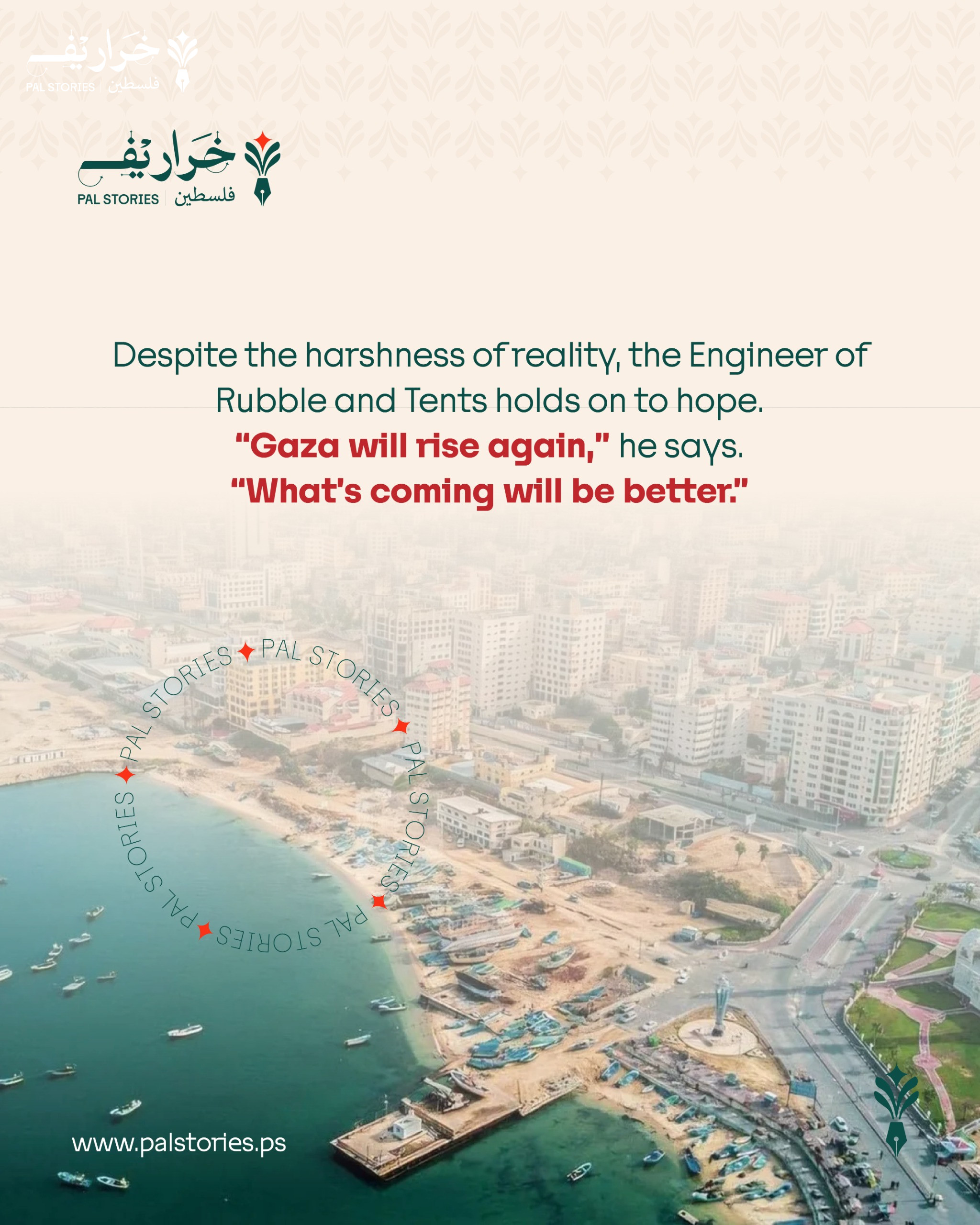
“Obeid recalls this moment not merely out of nostalgia for the past, but to draw hope from it, believing firmly that Gaza will rise again, in a state better than it was before. With deep conviction, he says: ‘What is coming is better, God willing.’