“I am my mother’s making”
This is how Falasteen introduced herself, as if she summarized her entire life in just two words: “I am my mother’s making”.
The phrase was shocking and took me back to my childhood. One of the things that stuck in my mind since childhood was the term “so-and-so was raised by a woman.” I heard it a lot, and I was surprised, even as a child, that some of us would tease others that their mother raised them! I always wondered: what is wrong with being raised by a woman?
To this day, I have not found the answer. I mean, I have not found the reason why “being raised by a woman” is a subject for bullying…
But in my mental dictionary, it is “automatically” classified as one of the most unjust, discriminatory, and disparaging phrases about women’s abilities.
If these phrases are used in every country in the world, in Palestine specifically, using them can be classified as a social disaster, yes, a disaster!
Can you imagine how many families were left fatherless by the Gaza war, for example? And that’s not even counting all the other wars and uprisings we’ve been through! Do you realize how much work and effort thousands of women in our country put into caring for their families and raising their children alone, without any support or help after losing their husbands?
We are a people in which every family has at least one martyr, wounded person, or prisoner. All these circumstances have made women the primary and sole caregivers in the family. How can we be so unfair to them? And even unfair to their children!
For all these reasons, I will consider the phrase “I am my mother’s making,” which Falasteen said in a moment of pride, as an apology to all those women who were labeled as incapable while raising their children.
Falasteen’s mother is a great Palestinian woman who lived years of patience and responsibility, raised her children alone, and instilled in her daughter a simple but profound idea: women are not the shadow of the home, but its pillar, capable of creating life and hope even in the darkest times.
If we understand this, we will not ask why Falasteen was given this name. Not only that, but she took her strength and beauty from Palestine, which is why we chose her to be one of the women who we tell you about.
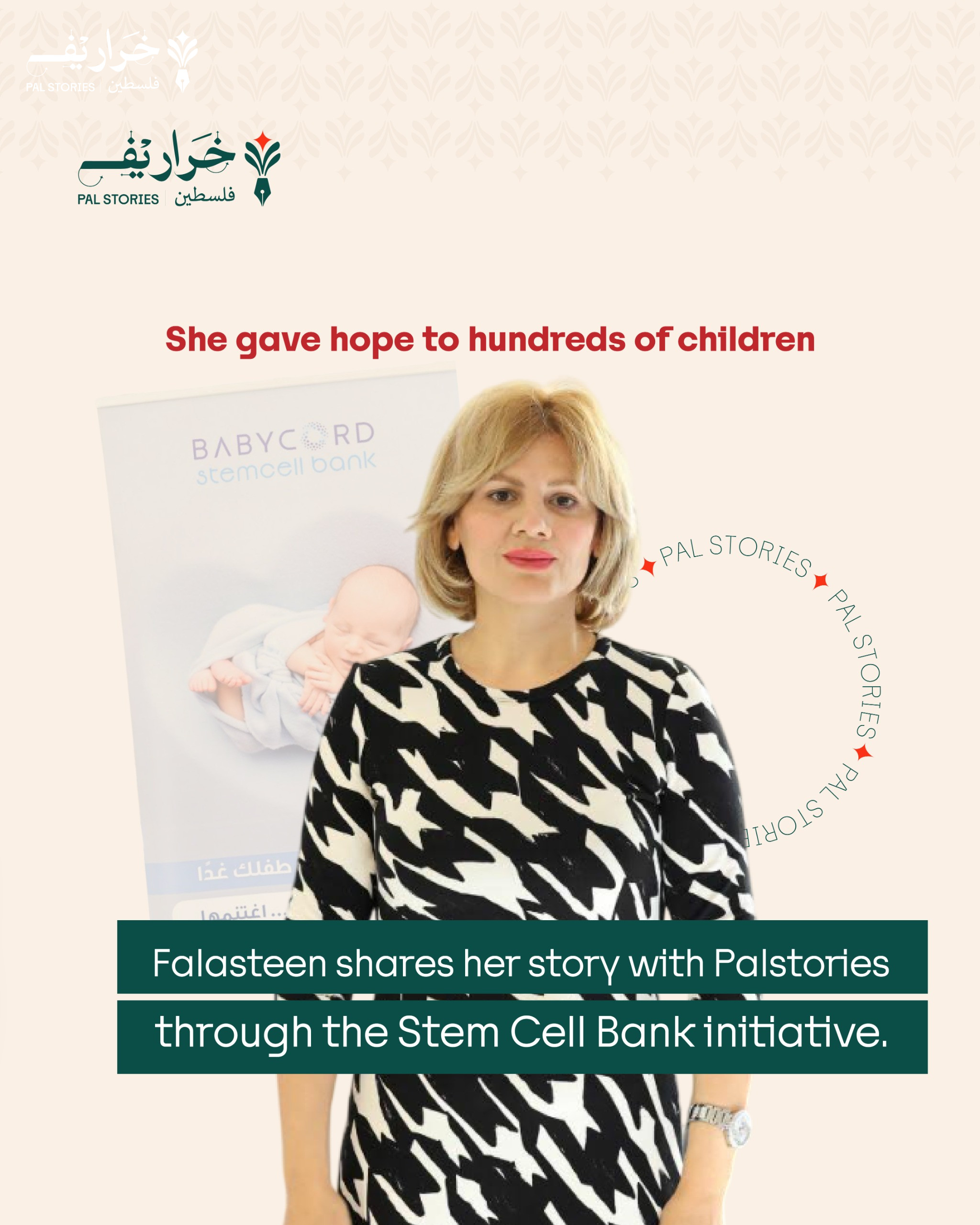
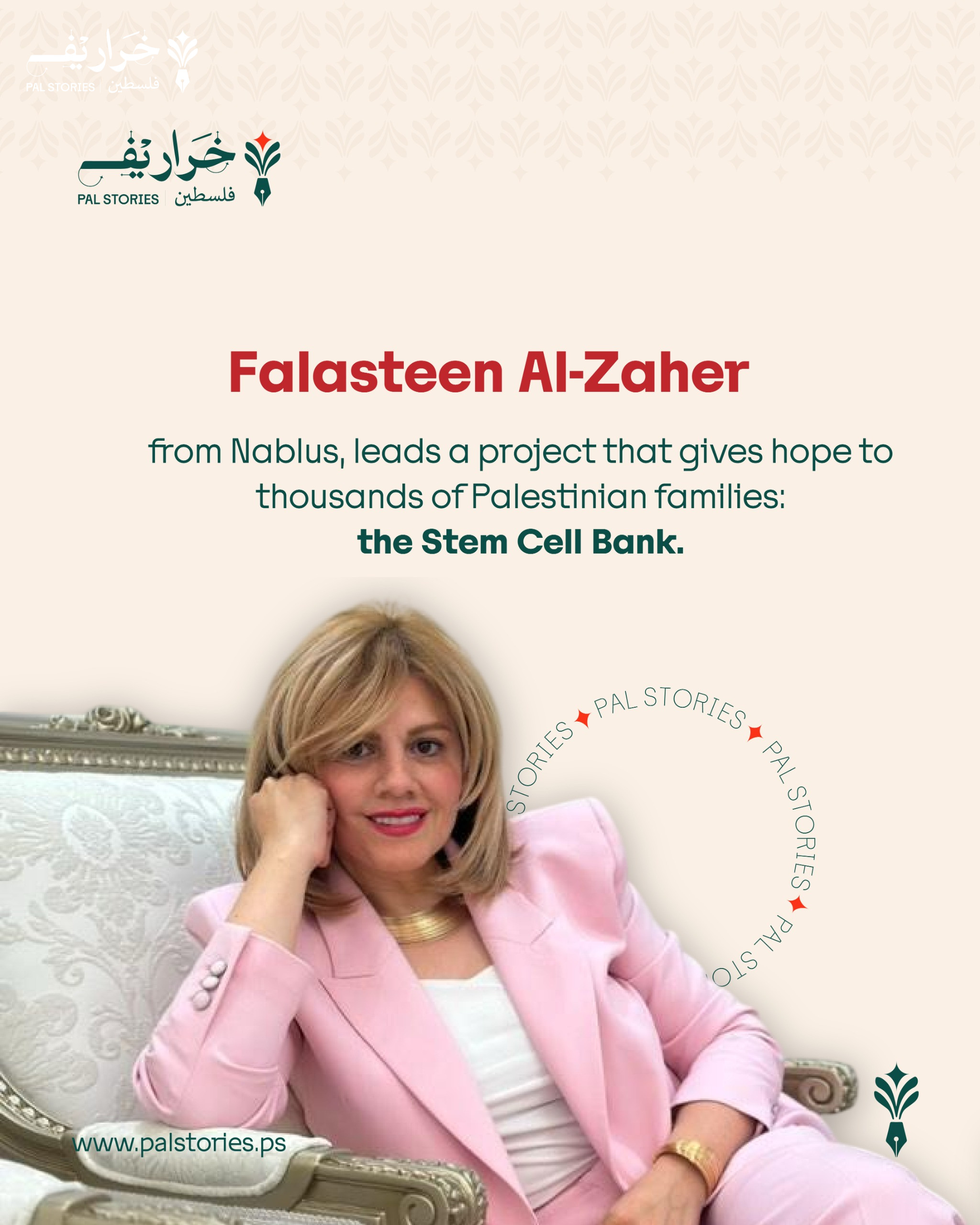
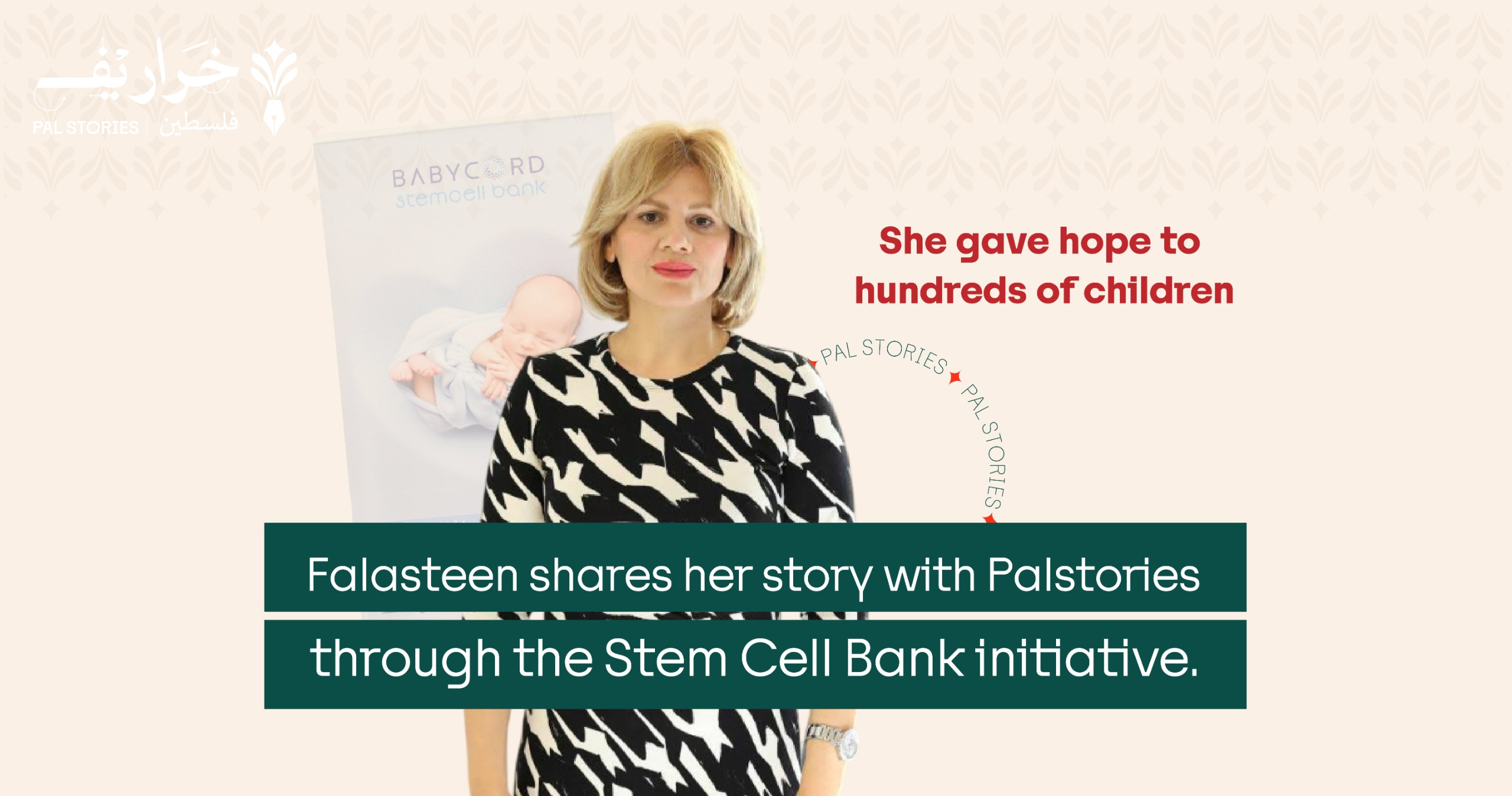
Falasteen, originally from Nablus, leads a project that gives hope to thousands of Palestinian families: the Stem Cell Bank, which stores cells taken from the umbilical cord of newborns for up to 45 years. These cells are scientifically capable of transforming into different types of cells according to the body’s needs. They have been scientifically proven to treat 80 diseases so far, while research continues to test their effectiveness with other diseases, such as autism and cancer. In addition, not only the child himself can benefit from the cells, but any family member who is a match.
Falasteen’s story with the stem cell bank began shortly before the coronavirus pandemic, when she was working in the health insurance department of a company in Ramallah. The stem cell project was a form of health insurance that she was working on in direct collaboration with the board of directors of the stem cell bank in the United States, which was not common at the time. The parent company decided to terminate its operations in our country.
However, Falasteen did not give up and insisted on leading the initiative and maintaining the work of the stem cell bank in Palestine due to its human and national importance. She was able to convince the bank to take over the management of the project locally. The task was not easy at all. It faced legal and procedural challenges with the Palestinian Ministry of Economy, especially with the complications imposed on companies with foreign ties.
Falasteen did not think about the matter from a financial perspective at the time. She saw it as more than just a job, in a country where people live on the brink of constant danger and need any glimmer of hope for life amid death.
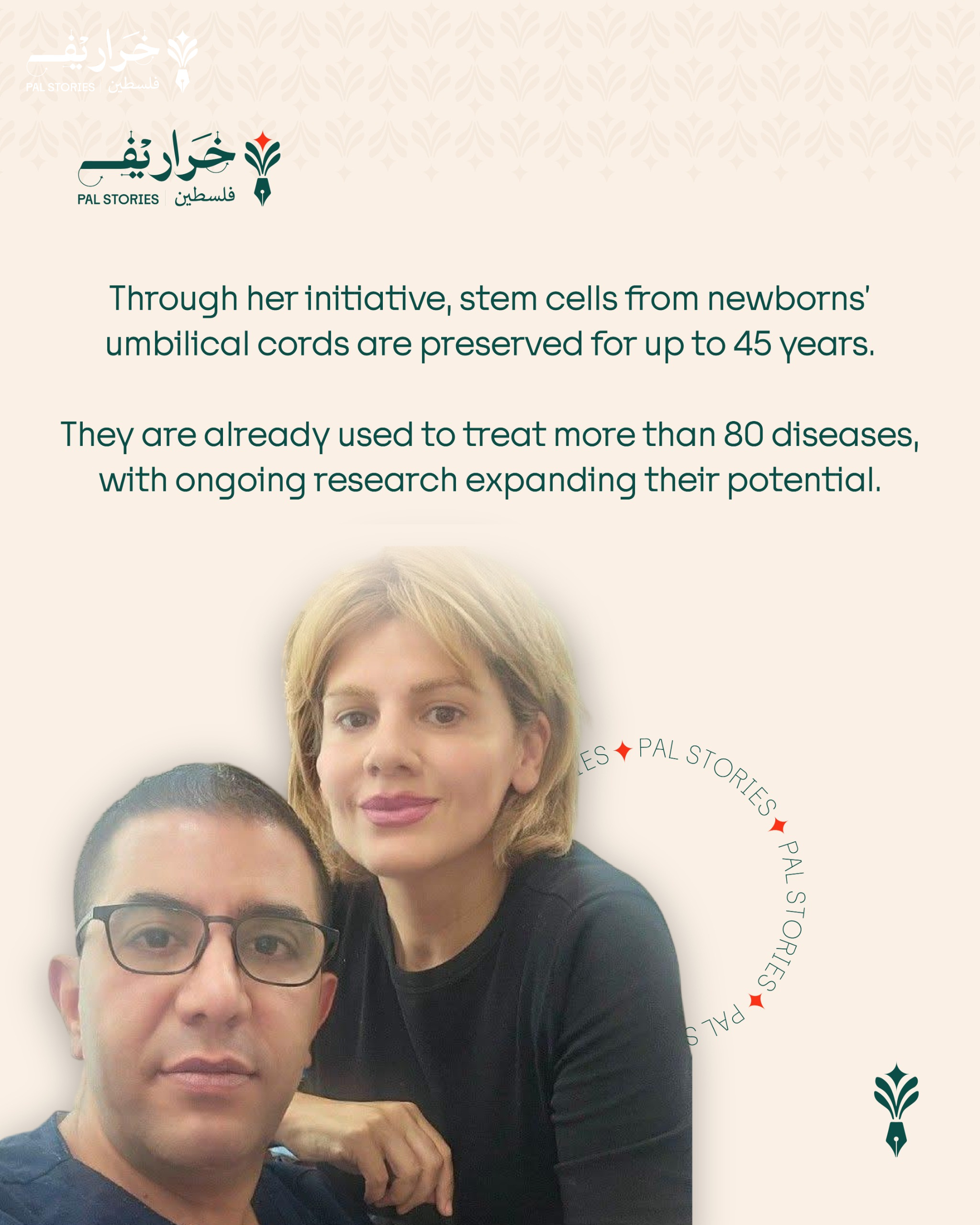
Just as there are men in our society who criticize someone for being “raised by a woman,” there are husbands who are proud of the roles their wives play. Falasteen’s husband is one of them. As a doctor, he was able to support her and stand by her side as she took on this big task.
Falasteen runs the Palestine branch in direct cooperation with the stem cell bank in Jordan, where the necessary logistical and material resources are available. A strategic location was chosen for the bank, close to the airport and border crossings, to ensure that samples can be transported quickly and safely.
Samples are received from Palestine and neighboring countries, with strict adherence to cooling and storage procedures in accordance with precise scientific conditions, ensuring that samples are stored and transported correctly.
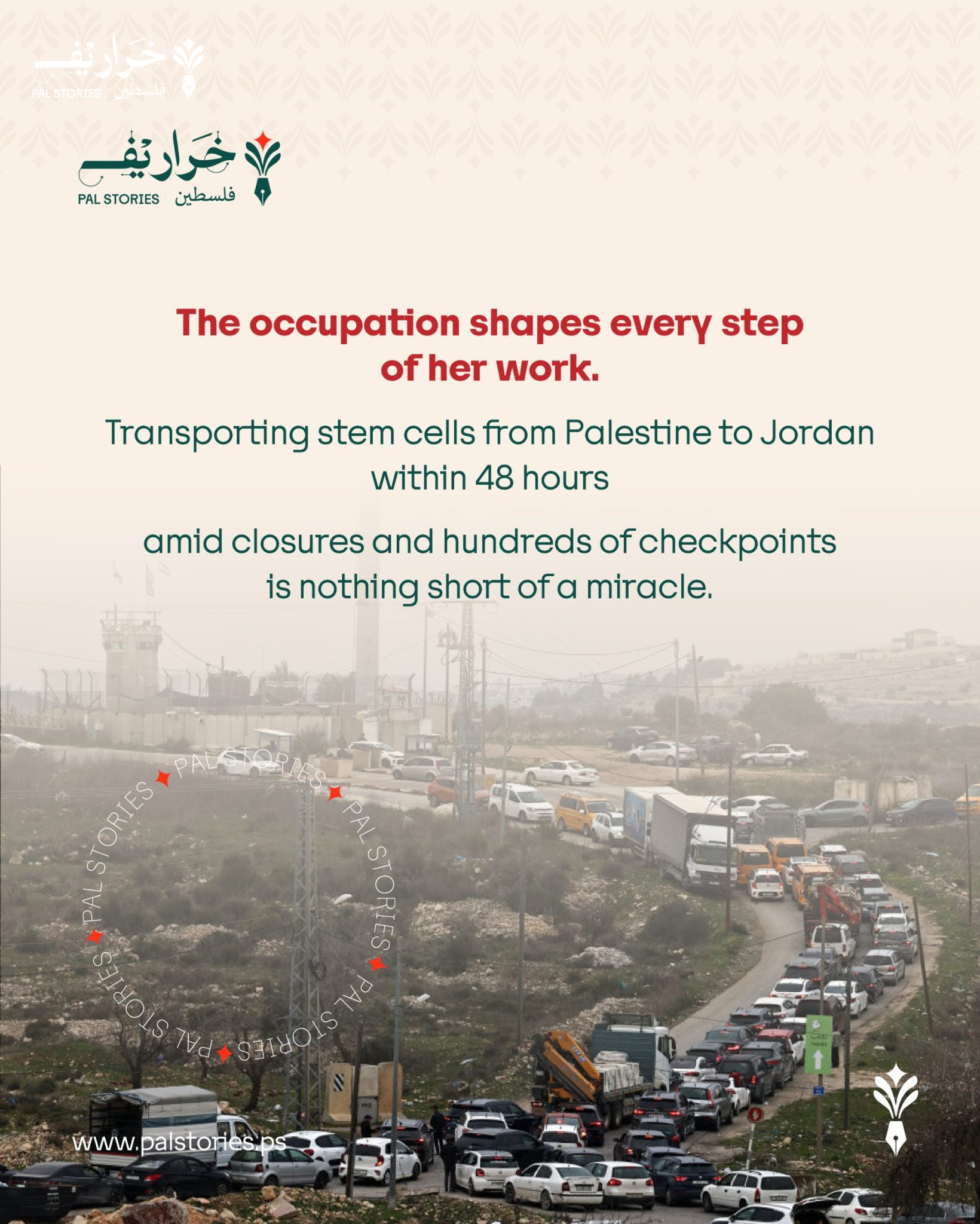
However, working in Palestine is unlike anywhere else in the world. The occupation is present in every detail, and transporting stem cells from a newborn baby from Palestine to Jordan within 48 hours, amid closed bridges, 900 checkpoints in the West Bank, and sudden closures related to security incidents, is nothing short of a miracle.
Falasteen says: At times, transporting the samples was a race against time, yet the team managed to overcome these obstacles and fulfill their commitments within the required time frame.
Falasteen considers the stem cell bank initiative to be like her own child, nurturing it with all her might. It is the product of love, hard work, and long nights, most importantly, it is the fruit of hope, giving a chance at a new life to everyone whose stem cells were stored at birth, and sometimes to some of their compatible family members. She says that what gives her the most strength and will to continue is the desire of parents to give their children a longer life, amid a reality full of death and daily threats.
The bank works in coordination with hospitals in all West Bank governorates to ensure that samples are collected and stored according to the highest scientific and medical standards, whether the birth is natural or by C-section. Instructions are also given to the pregnant mother herself, in case she gives birth unexpectedly and there is no prior arrangement with the doctor or hospital. The mother learns how to take the sample herself, to increase the chances of storing the cells.
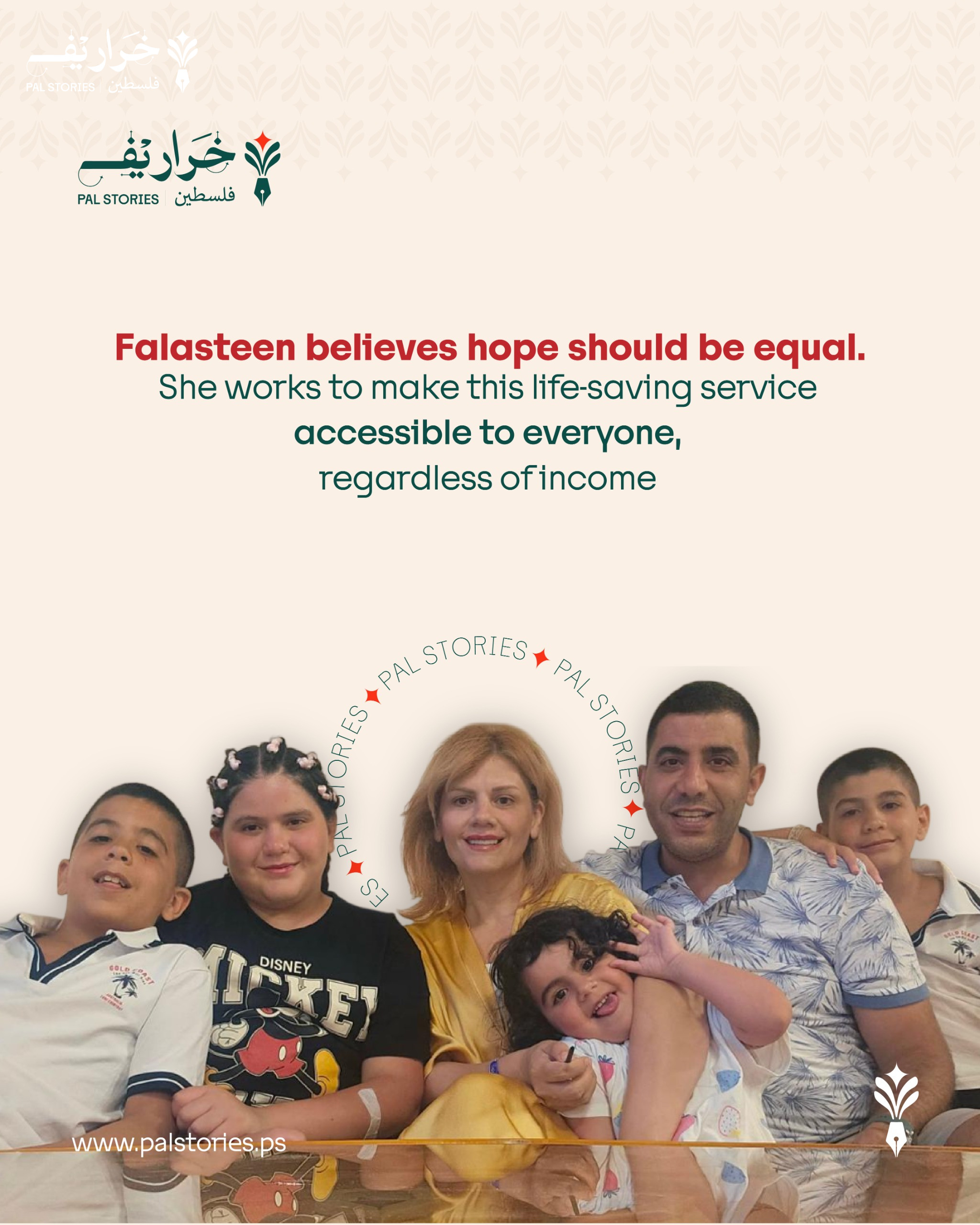
Falasteen and her team are keen to spread awareness about the importance of storing stem cells in an informative and voluntary manner, away from commercial marketing. They strive to ensure that parents are fully aware of the service and the installment options available to them, so that the poor, like the rich, have a chance to survive diseases, as she says. She strives with all her strength to make this service accessible to everyone, regardless of income level.
Falasteen emphasizes that the number of families who have decided to store stem cells is constantly increasing, especially with the growing awareness of its importance. For Falasteen, it is an act of resilience, survival, and clinging to life of a different kind, and a determination to create options for hope in a country where death is imposed on her every day.
In Palestine, life is not easy, but as Falasteen learned from her mother, it is made… even in the most difficult circumstances.