
By: Wafa Arouri
Fairuz’s voice accompanies me every morning on the way from home to work. I know most of her songs by heart, and I enjoy singing along with her. Every time I reach the top of the hill on which the village of Ajjul is built, I am struck by the beauty of the place, as if I were a tourist or a visitor, not someone who has lived here for 32 years (in three days, it will be 33).
I open the car window every day and shout at the top of my lungs: “Good morning, Palestine!”
“Mom, just how much oxygen I’m breathing in through this open window—and how much love I’m expressing,” but anyway… that’s not our topic.
Today, in particular, I was thinking along the whole road: how is it that Fairuz’s songs resemble us so deeply? I told myself: maybe this is why her songs became so famous. Of course, Fairuz’s voice itself is nothing short of a miracle, but the words of her songs also mirror our own lives and feelings—childhood, love, longing, and the homelands we came from. All of this carried her songs far and wide.
The songs I love most are: Ya Mirsal al-Marasil, Sallimli Alayh, Nassam Alayna al-Hawa, Ya Jabal Elli Ba‘id (“Behind you are our loved ones”), Sa’alouni al-Nas, Habbeitak wa Nseet al-Nawm, Ehkileh Ehkileh ‘an Baladi, Tiri Ya Tayara, and the verse:
“If I return, I’d go mad, and if I leave you, I’d suffer.
I’m not able to go on, and I’m not able to stay—
from ‘if only’ to ‘if only not.’”
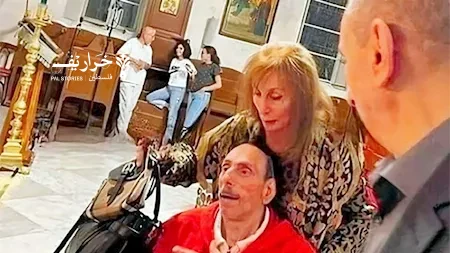
Personally, I believe that this love and deep connection people have with Fairuz cannot be separated from the fact that she is a woman and a mother who spent 90 years of her life caring for her son “Hali,” who had a disability and passed away just two days ago.
Fairuz, whose songs are sung by millions around the world, held Hali in her arms from the moment he was born until the moment he passed away. She even sang to him Sallimli Alayh, Boosli ‘Eneih—a song she also wrote herself.
Fairuz showed us that art and motherhood do not contradict each other, that success and hardship can coexist, and that fame does not oppose humility. She resembles us—real in a time when so much around us has become fake.
Perhaps that is why we loved Fairuz the human being before we ever fell in love with her voice.
Long life to you, our beloved.