At the entrance to the village of Nabi Samuel, northwest of Jerusalem, visitors are not asked where they are going, but rather: Do you have a house here? Without owning a house, there is no entry, even if all your ancestors lived and grew up in the village. Home ownership alone determines the right to enter Nabi Samuel.
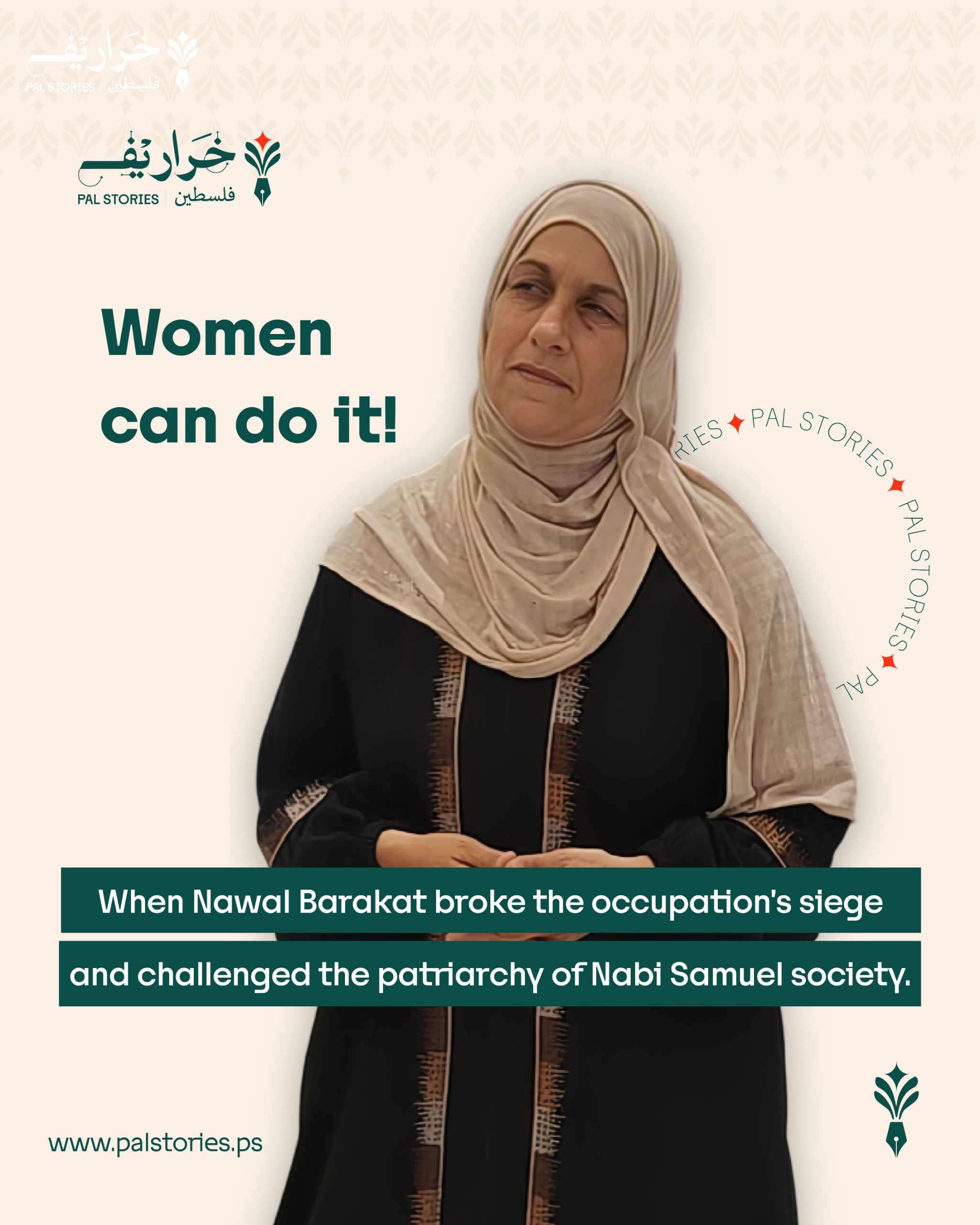
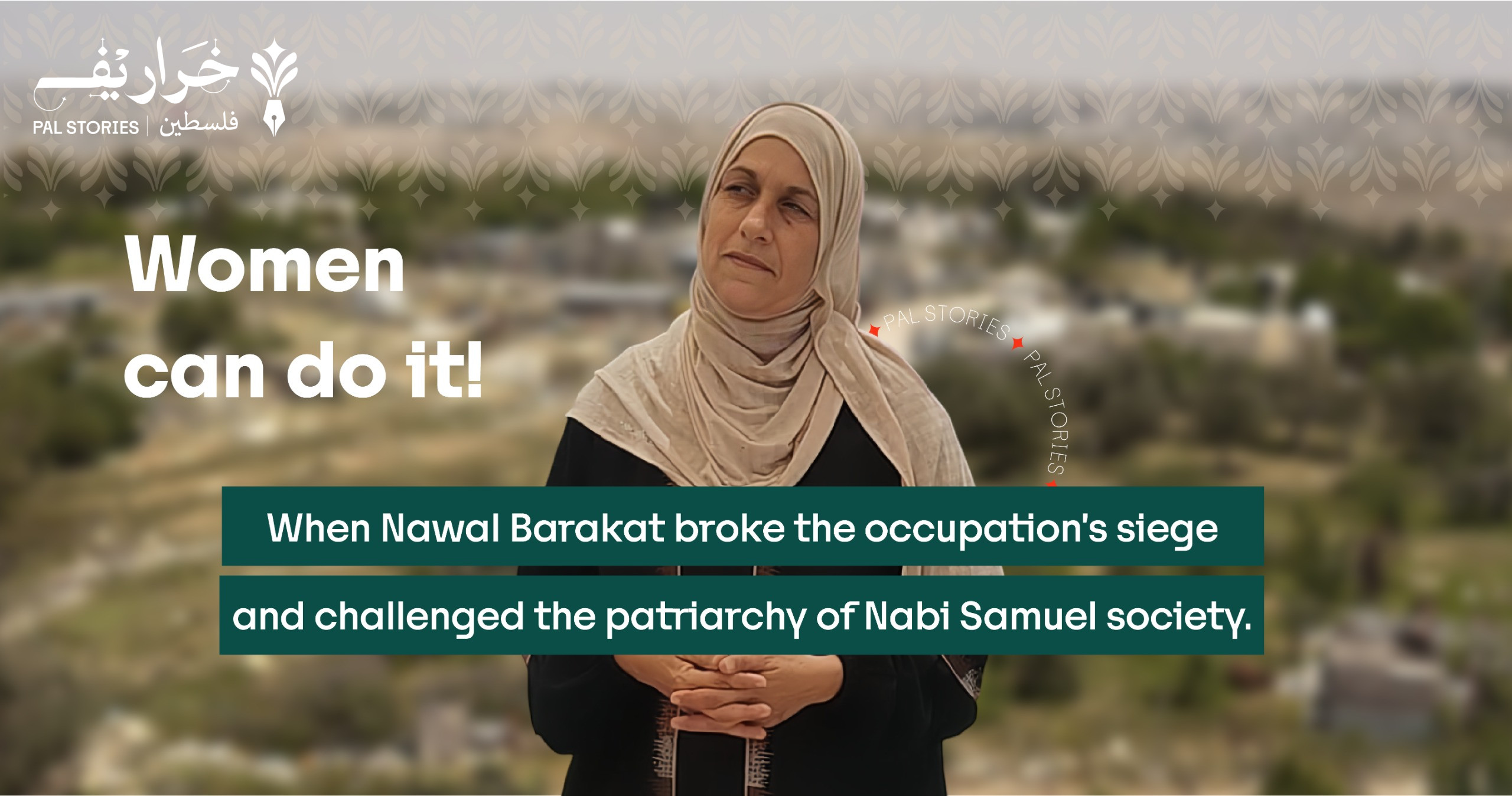
In this besieged village lives Nawal Barakat, a feminist and community activist.
Although she is originally from Nabi Samuel, Nawal was born and raised in Jordan, where she lived until the age of 25. After getting married, she returned with her husband to her homeland. She recalls:
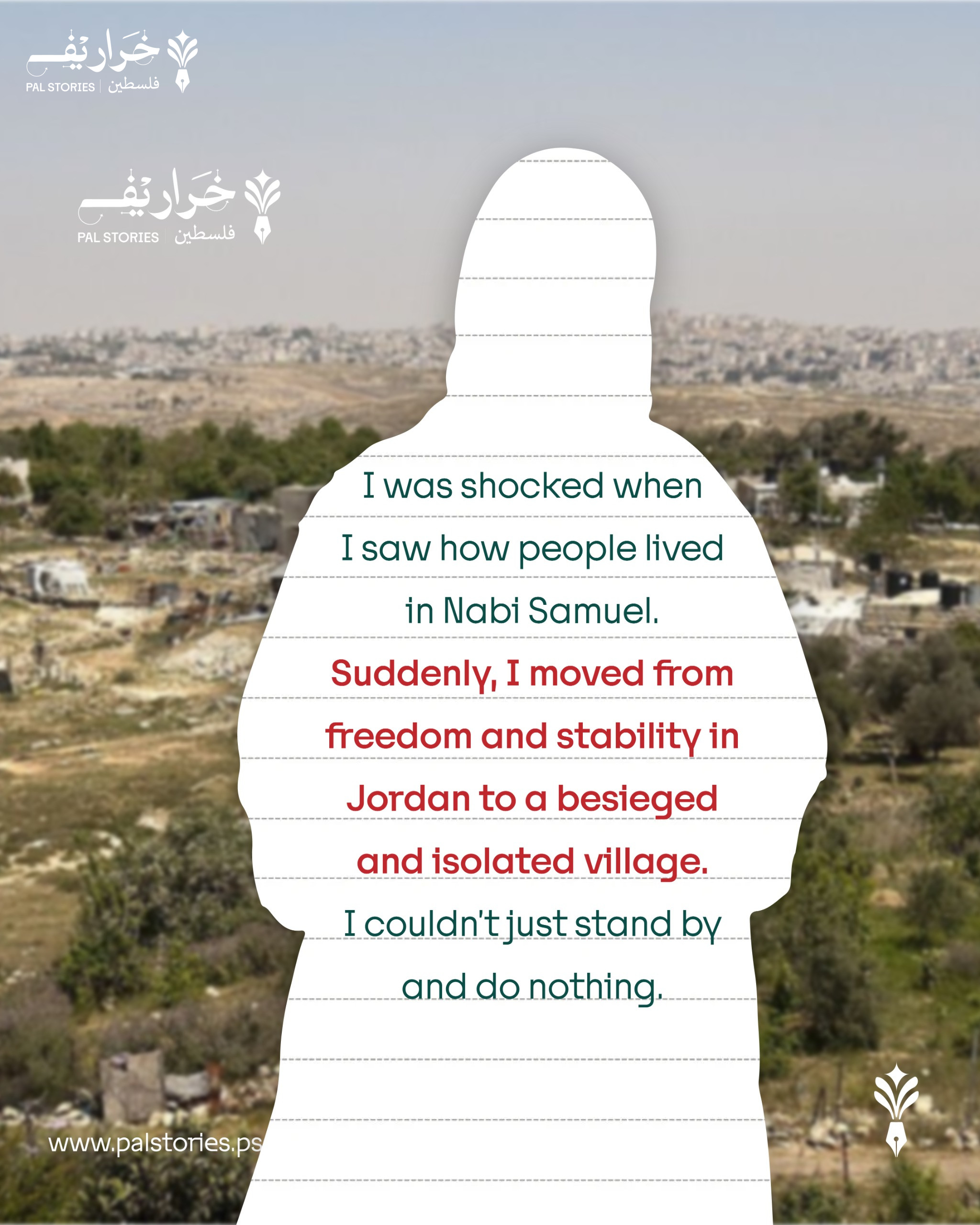
“I was shocked when I saw how people lived in Nabi Samuel. I had spent my entire life in Jordan with safety, freedom, and independence. Suddenly, I found myself in a village that was besieged and isolated from the world. I couldn’t just stand by and do nothing.”
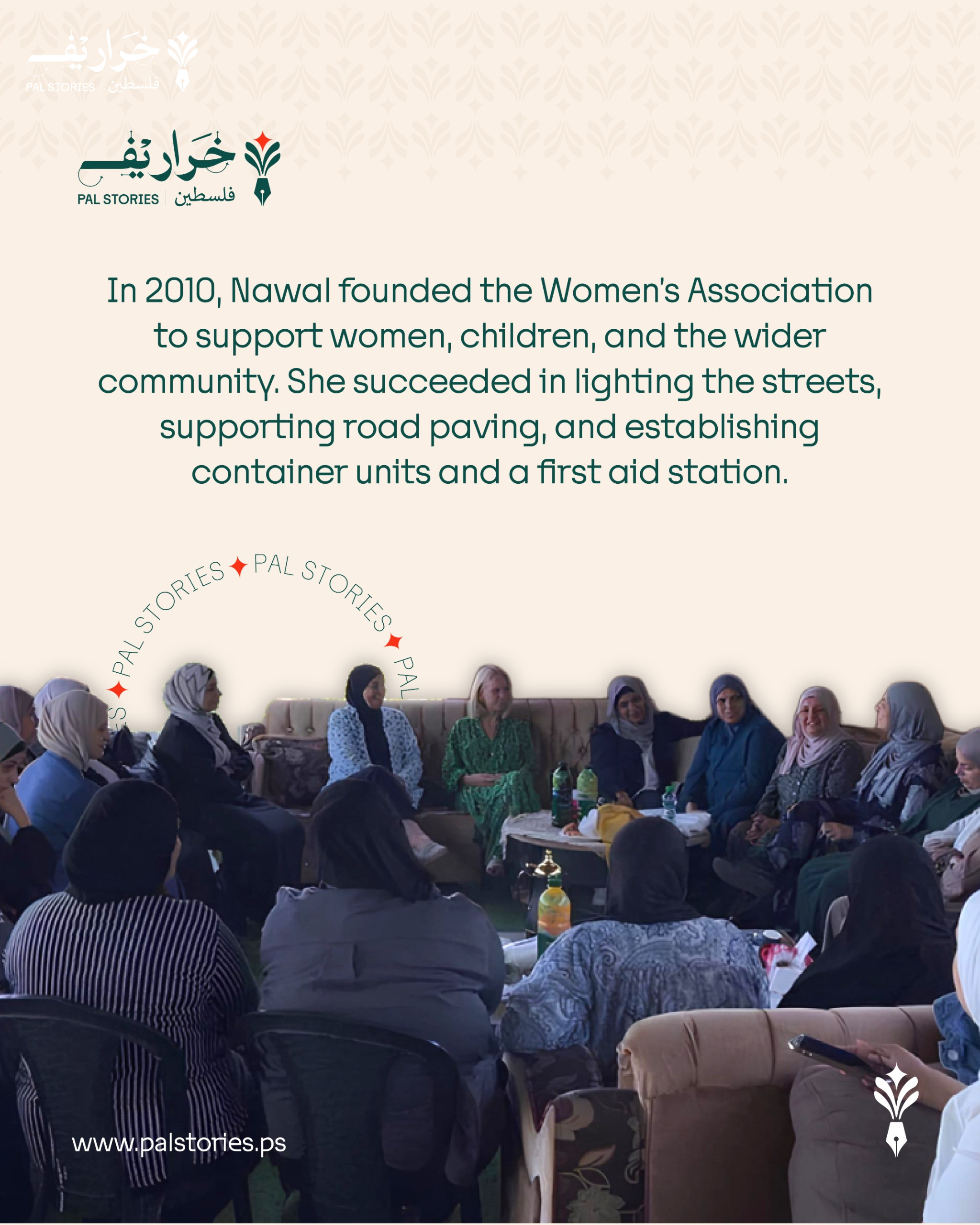
Driven by the belief that she could make a difference, especially for women deprived of their most basic rights, Nawal founded the Women’s Association in Nabi Samuel in 2010. The association emerged as a natural response to a harsh reality lacking even the most basic necessities of life: no permanent clinic, no sewage system, too few shops, and no safe spaces for children. As Nawal explains, the association was a necessity, not a luxury:
“Children need space to express themselves, and women need someone to listen to them.”
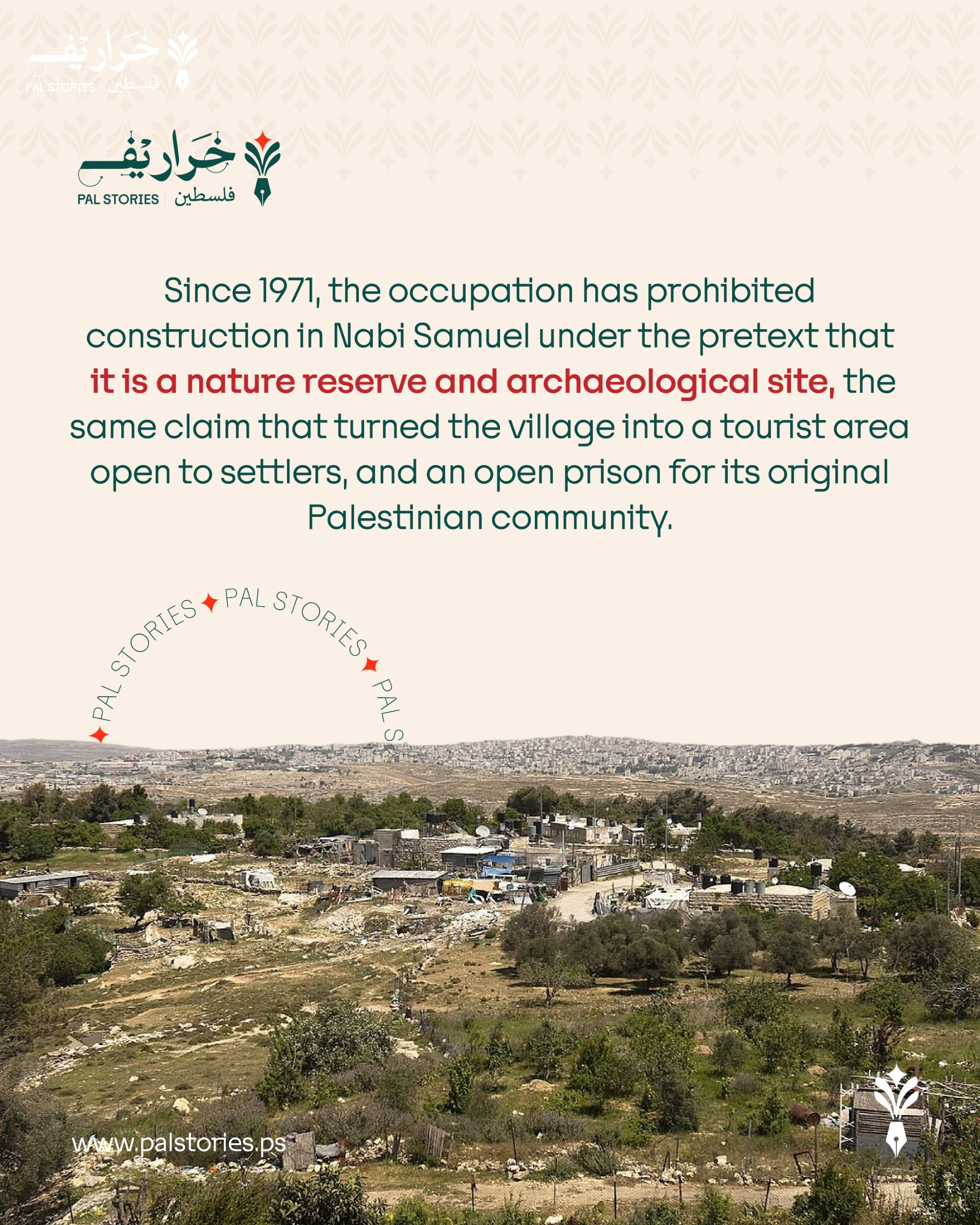
Since 1971, the occupation has prohibited construction in Nabi Samuel under the pretext that it is a nature reserve and an archaeological site. This same argument has transformed the village into a tourist destination open to settlers, while turning it into an open-air prison for its original Palestinian residents.
As a result, homes in the village are extremely old and dilapidated, built mostly of zinc and stone, with rainwater leaking inside. Residents live under a policy of “temporary residence” to avoid losing their right to remain. Nawal’s own home has been demolished three times for allegedly lacking a permit, as have many others in the village.
A Woman Confronting a Patriarchal Society
Nawal acknowledges that feminist work in a society like Nabi Samuel is far from easy. The village council, she explains, includes women’s names on its list merely for formality, while denying them the right to attend meetings, participate in activities, or influence decisions.
Yet she notes that her tangible achievements over the years, installing streetlights, supporting road paving, building storage facilities, and providing direct assistance to residents, eventually compelled the council to listen to her and allow her presence both in the field and in meetings.
“I wasn’t strong at first,” she says. “But the nature of society and its exclusion of women made me strong. Today, my voice is heard, even within a local council that has no real female representation.”
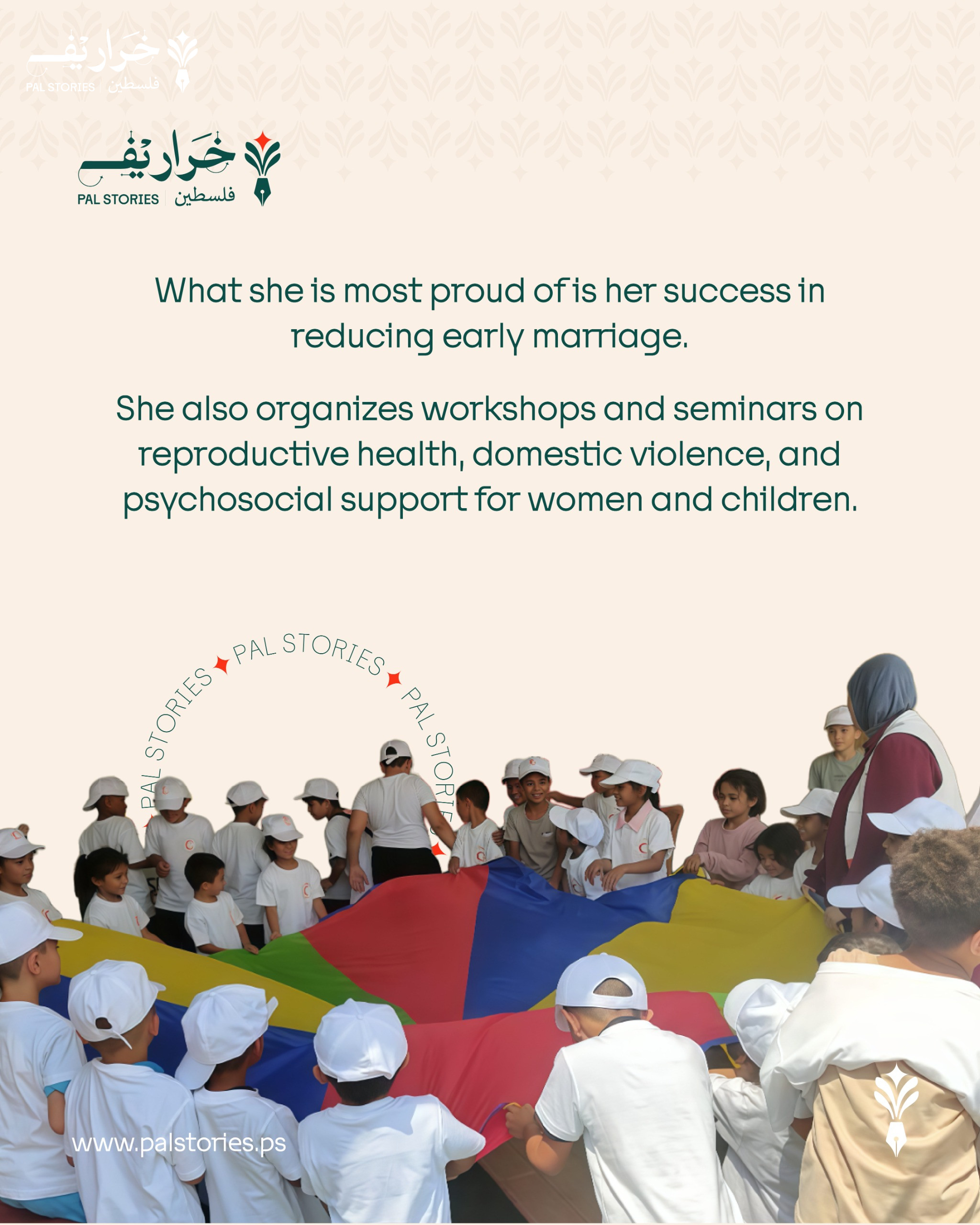
One of Nawal’s proudest achievements is her role in reducing early marriage in the village. She was deeply shocked by how widespread the practice was when she first arrived, with girls marrying at very young ages. Through continuous awareness campaigns, workshops, and community seminars organized by the association, early marriage has now become almost non-existent, an accomplishment that brings her the greatest sense of fulfillment.
A Rare Model
Among feminists and community activists, Nawal’s model is rare. Feminist activism is seldom found in isolated and besieged villages; most activists are based in urban centers. While some feminists work in remote areas, they often do so under the protection of large institutions that provide security and institutional cover. Feminist and community work requires engagement with all segments of society, something conservative communities often resist.
For a woman in an isolated village to establish an active community organization, raise awareness about domestic violence, reproductive health, bullying, and early marriage, offer training courses such as first aid, encourage women to take initiative and support others, and integrate women and children into psychosocial activities is highly unusual.
This is especially true in a village that has been besieged and cut off from surrounding communities for decades, reduced to fewer than 400 residents, with entry and exit restricted exclusively to its inhabitants. For this reason, Nawal is widely regarded as a courageous feminist role model, striving to improve village life and break the siege through community action.
No Celebrations, No Mourning
Under this long-standing system, relatives from outside Nabi Samuel are unable to visit, and neither weddings nor funerals can be held within the village. Demolitions continue due to the occupation’s refusal to grant building permits. In many cases, residents’ names are removed from official records if they leave the village even briefly, intensifying the sense of imprisonment.
Nawal explains that this reality has even affected marriage prospects:
“Many families are reluctant to marry their daughters to young men from the village because they are besieged.”
Even basic supplies are restricted. The occupation controls the entry of food, including chicken, meat, and other necessities. Nawal recalls an incident when she invited relatives for lunch and brought larger quantities of food than usual. She was detained at the village entrance for more than three hours.
“Even chicken needs security clearance to enter,” she says.
The Demolition That Hurt the Most
Nawal vividly remembers the painful days of 2016, when the association’s headquarters was demolished despite persistent legal efforts to stop it. Today, she works from a tent reinforced with wood and glass to prevent further demolition.
“We’ve learned how to maneuver around construction restrictions,” she says.
What hurt her most was not the material loss, but the children who used the space for summer camps and activities:
“What broke my heart was seeing the children and their sadness after the demolition. That’s when I decided to continue and not give up.”
After the demolition, activities moved to her home. Children came to play football or simply find a space that made them feel life was still possible, until she later set up a tent to resume activities.
From a tent, she continued to achieve the impossible
Even from within a tent, Nawal continued her work. She established a first-aid point after training village women in emergency care, compensating for the absence of a health clinic. Women learned how to treat minor injuries at home to protect their children, while more serious cases are transferred to hospitals outside the village after passing through checkpoints.
Nawal is currently working to establish a playground and garden for children after convincing a donor to fund this urgent need. Children now play in her yard. To avoid demolition, she plans to simply landscape the land, install fencing and a basketball hoop, and designate a running area, minimizing risk to the association.
Like other residents of Nabi Samuel, Nawal does not hide her fear of displacement, especially as occupation harassment has intensified following the war on Gaza. Israeli expansion plans at the village entrance have increased, and legal objections submitted by residents have been rejected.
A Quiet Reproach to Palestinian Institutions
Nawal directs a quiet reproach toward official and non-official Palestinian institutions, as well as the media, noting that Nabi Samuel has been largely forgotten and marginalized, along with its suffering and even its value as a historical and archaeological site.
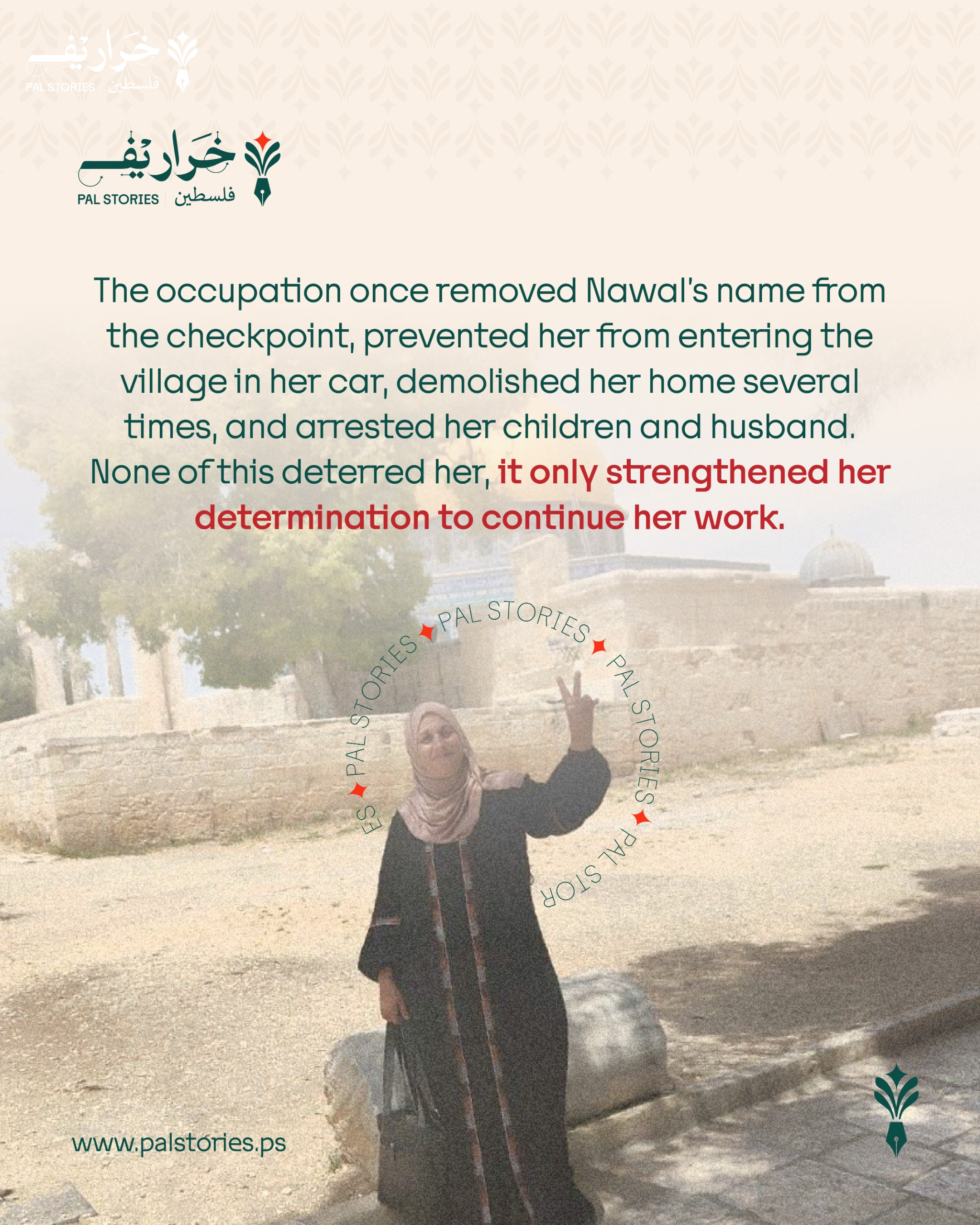
Despite the arrest of her husband and children, the removal of her name from crossing records, and restrictions on entering the village with her car, before her name was reinstated after great effort, she insists that none of this has deterred her. On the contrary, it has strengthened her determination.
Although all her relatives live in Jordan, Nawal says firmly:
“Nabi Samuel is my hometown, and I will continue to serve it.”
Nawal Barakat represents a Palestinian woman fighting with all her strength to keep life alive in her village, while the occupation tightens its grip, attempting to suffocate and suppress her as part of an increasingly clear plan of displacement.