Gaza: Mervat Aouf
Director and visual artist Mohammed Harb arrives at the Artists’ Shelter carrying a plastic bag, from which he takes out a tea kettle and a coffee pot. From another corner of the bag, he pulls out papers and paints that he brought for his students.
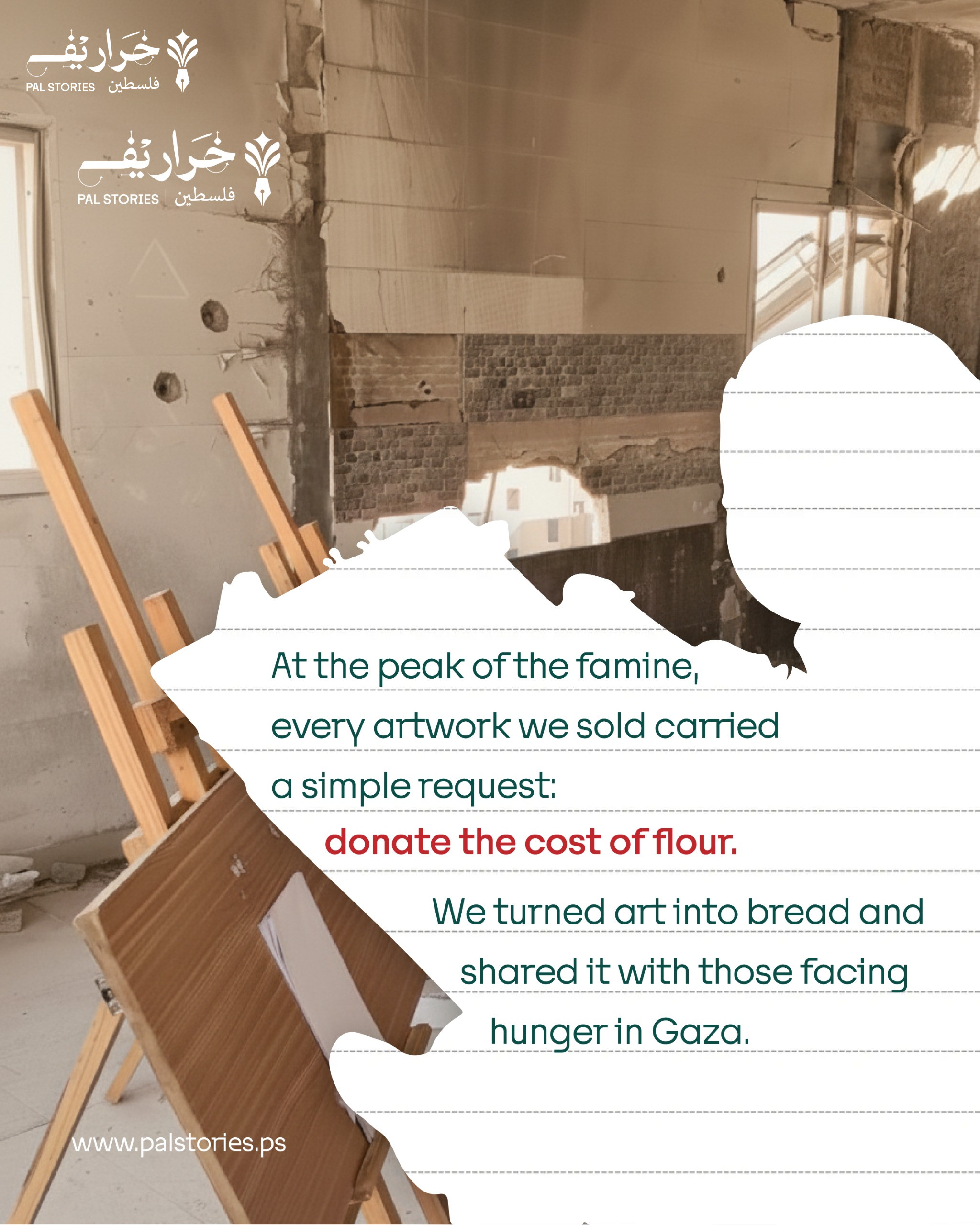
Here on the seventh floor of the “Al-Awda 5” building, the traces of the recent bombing are visible in every corner, on the floor where shrapnel has torn the silver marble, on the cracked walls, and even on the leather chairs that were salvaged from under the rubble.
Nevertheless, the shelter, with its group of Gazan artists, appears as a unique space for creativity that emerged amid war to become a safe haven for visual artists in Gaza. Here, visual artists reclaim their lives, come together to practice their passion, express their feelings, and document reality through their paintings and sculptures.
It is a story about the will to create in the face of destruction, and how art can create a space of freedom and hope even in the harshest of circumstances.
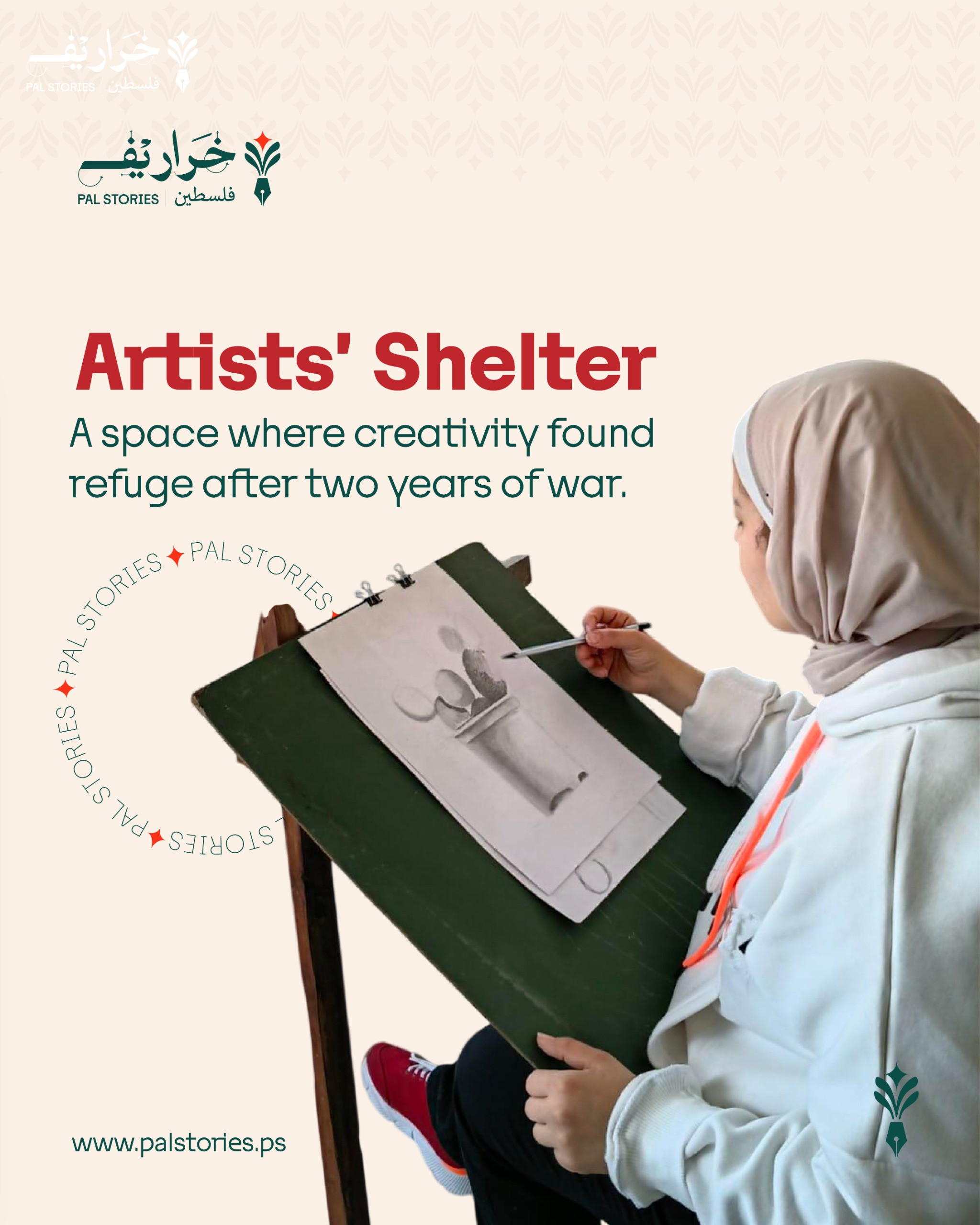
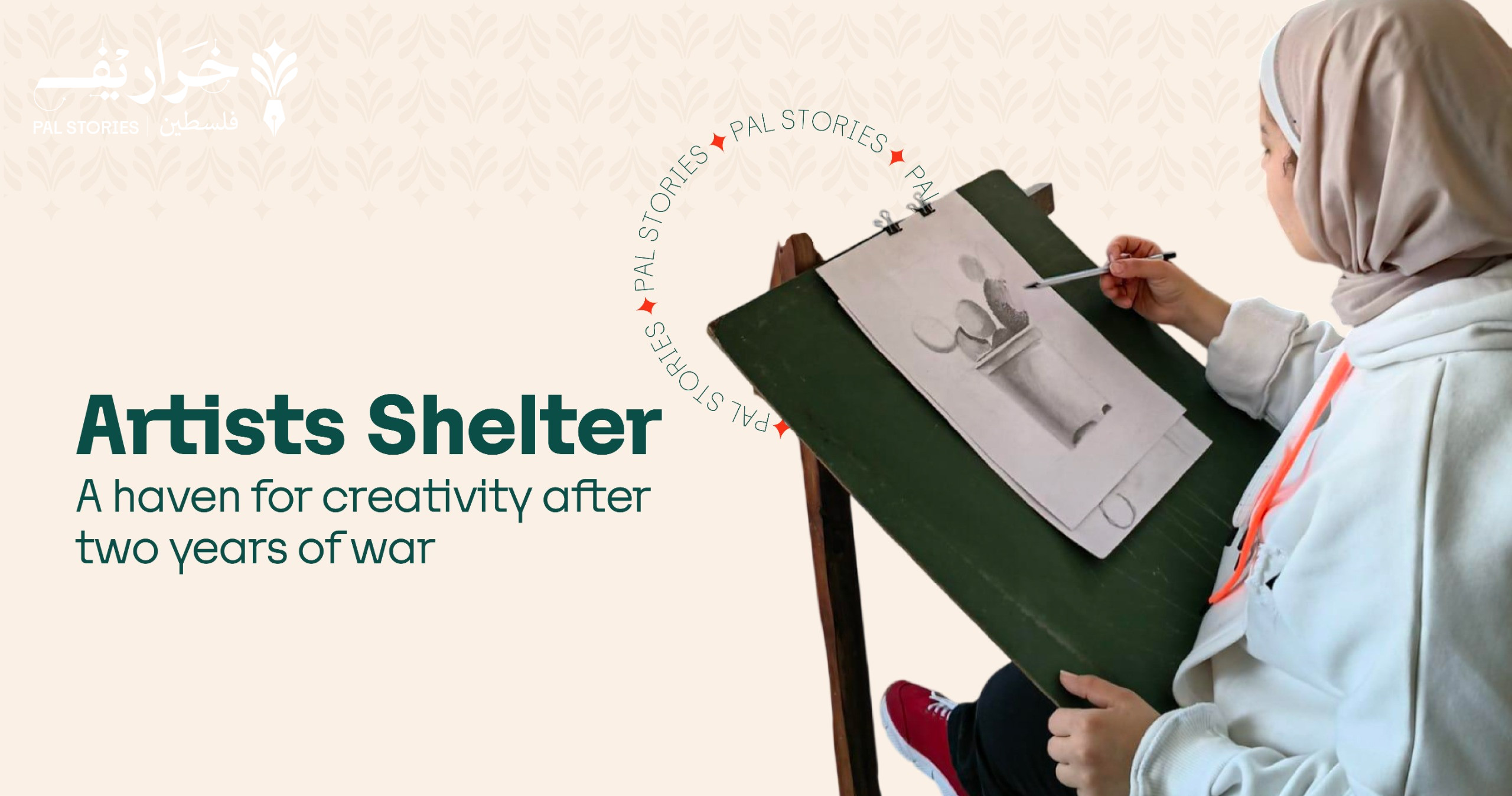
Fine arts student Lana takes some time before the narrator of “Pal Stories” begins her interview with the founder of “Artists’ Shelter.” She shows her teacher, Harb, some of her drawings. The artist looks closely at her work, praising one and pointing out mistakes in another.
Meanwhile, Lana and her fellow artists are preparing to participate in the “Art Under the Rubble” workshop, in which the shelter trains participants on how to write their art projects in preparation for an art festival to be held at the end of January, the first art exhibition to be launched after the war thanks to the efforts of Artists’ Shelter.
Before the war on Gaza, Palestinian artist and director Mohammed Harb took his first steps toward finding a place to bring together his colleagues and students who are visual artists. However, before the space was fully furnished, the devastating war on Gaza broke out, making escape from death the first and last priority for everyone living in the Gaza Strip or “how to survive above all else,” as he tells us.
The first time the war stopped (January 2024), the occupation did not give Harb and his fellow artists much time to start over, as the war quickly returned, bringing with it all the heartbreak.
Harb tells us about the timid attempts of some artists who took artistic initiatives during the war. He says: In the second year of the war, some people realized the importance of doing something for Gaza. He personally launched “A Story in a Tent” initiative, which documents life in tents, suffering, and destroyed buildings through videos and photos, followed by “A Painting for Every Rocket,” which came as a reaction and rebellion against the aggression, and then the initiative “A Painting for a Bag of Flour,” which was at the peak of the famine. For every painting purchased, the buyer donated the price of bags of flour, which Harb and his colleagues then distributed to the starved in Gaza.
However, last October, when the war stopped again, Harb and his fellow artists resisted their difficult psychological circumstances in order to start over. The majority of visual artists lost their paintings, studios, and tools during this war, and suffered everything that the people of Gaza suffered.
At first, Harb and his colleagues thought that the idea of the shelter would not be popular with many artists who had not yet recovered from the war, but they were surprised to find that it was the first step in the psychological recovery of the visual artists who flocked to the shelter’s events and even attending when there was no occasion to do so, considering the shelter a place where colleagues could meet to restore their psychological health and hope for a better tomorrow.
Harb says that nothing is separate from that war, even the name chosen for the place, “Artists’ Shelter,” is an expression of the displacement that everyone in Gaza suffers from. He adds, “Many were surprised to find a place that still embraces art, despite everything we have experienced during these two years.
We have seen a great deal of interest, especially from artists who are at the beginning of their careers and who see the shelter as a safe space that offers them some respite from the tents and difficult conditions of displacement.”
Visual artist Yahya al-Shuli catches his breath after arriving at the shelter on the seventh floor, as there are no working elevators in Gaza. He then shares his thoughts on the shelter as one of its founders, telling us that he expected only a limited number of artists to seek refuge there, but was surprised that everyone who heard about the shelter’s establishment was willing to travel the exhausting distance to reach it, given the difficulty of transportation in Gaza.
Al-Shuli says, “I am here in Gaza and I know how exhausting it is for everyone living in the city to provide for their daily necessities, but we found that there are those who want a moment to themselves to practice their hobby or work… Here, space is a priority for a large group of artists.”
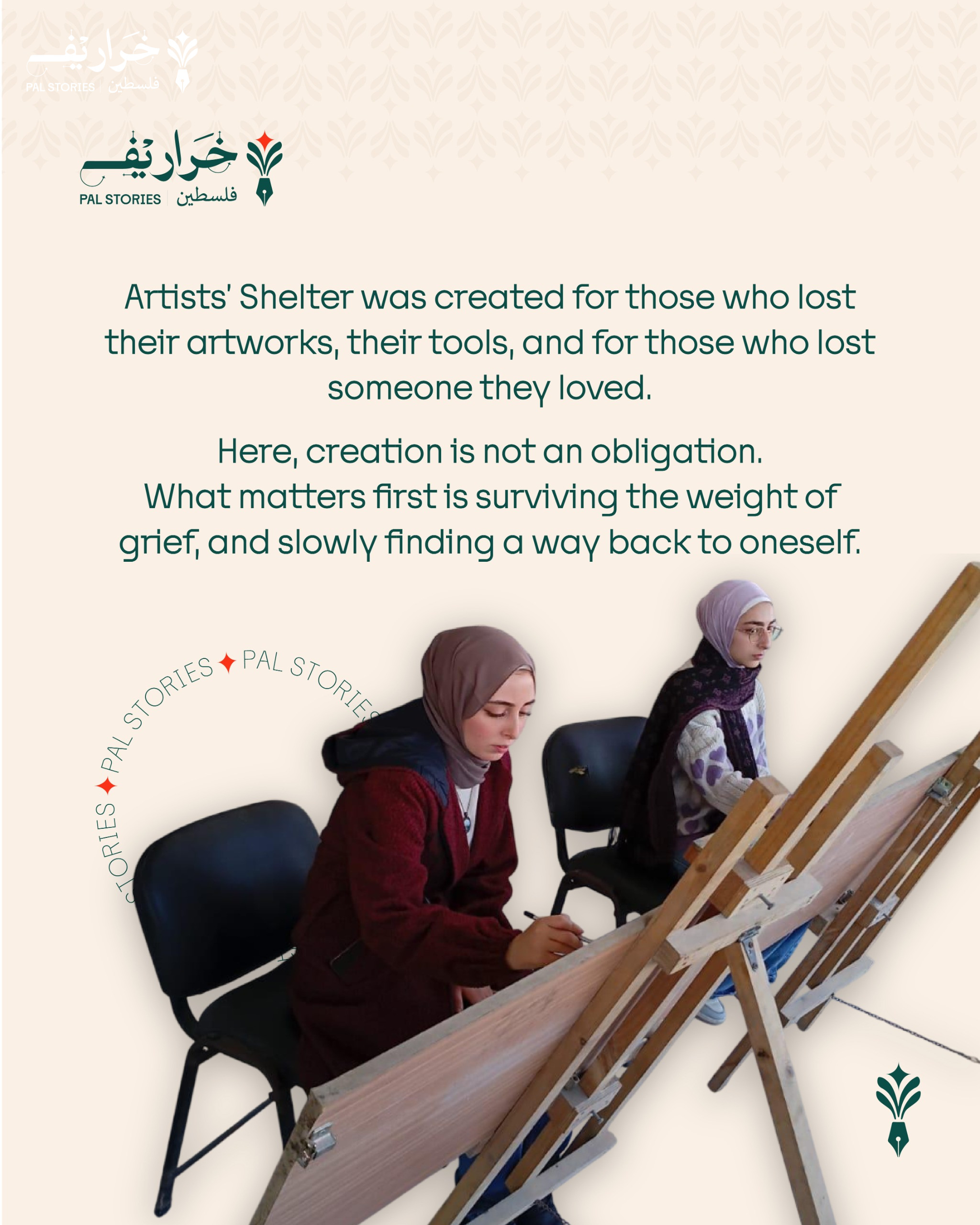
At the Artists’ Shelter, the conversation revolves around ideas, projects, dreams, and where to start and connect with the outside world. This happens while the artists sit together and draw with whatever pens and colors they have available, depicting survival, hope, and pain in Gaza.
Here, too, the gap that Harb’s generation experienced at the beginning of their careers between the new and veteran generations is narrowing, as the shelter has worked to bridge this gap. Here, all generations are on the same wavelength of hope and pain.
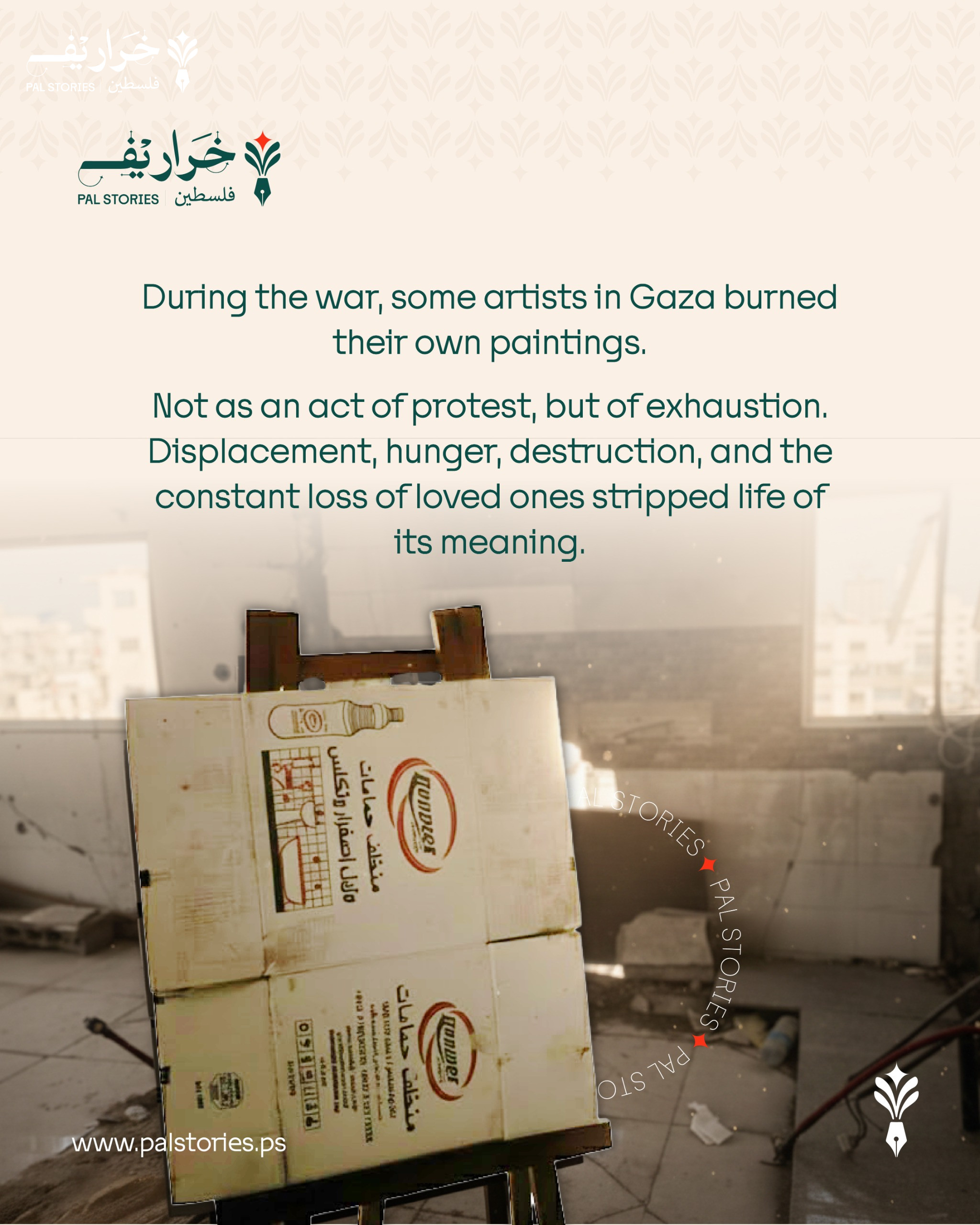
Harb says, “At the shelter, we are not concerned with production as much as we are with helping the artists overcome their psychological traumas. Here, there are artists who burned their paintings during the war, despairing of ever returning to their art. They started coming before the workshop began and leaving after it ended.”