
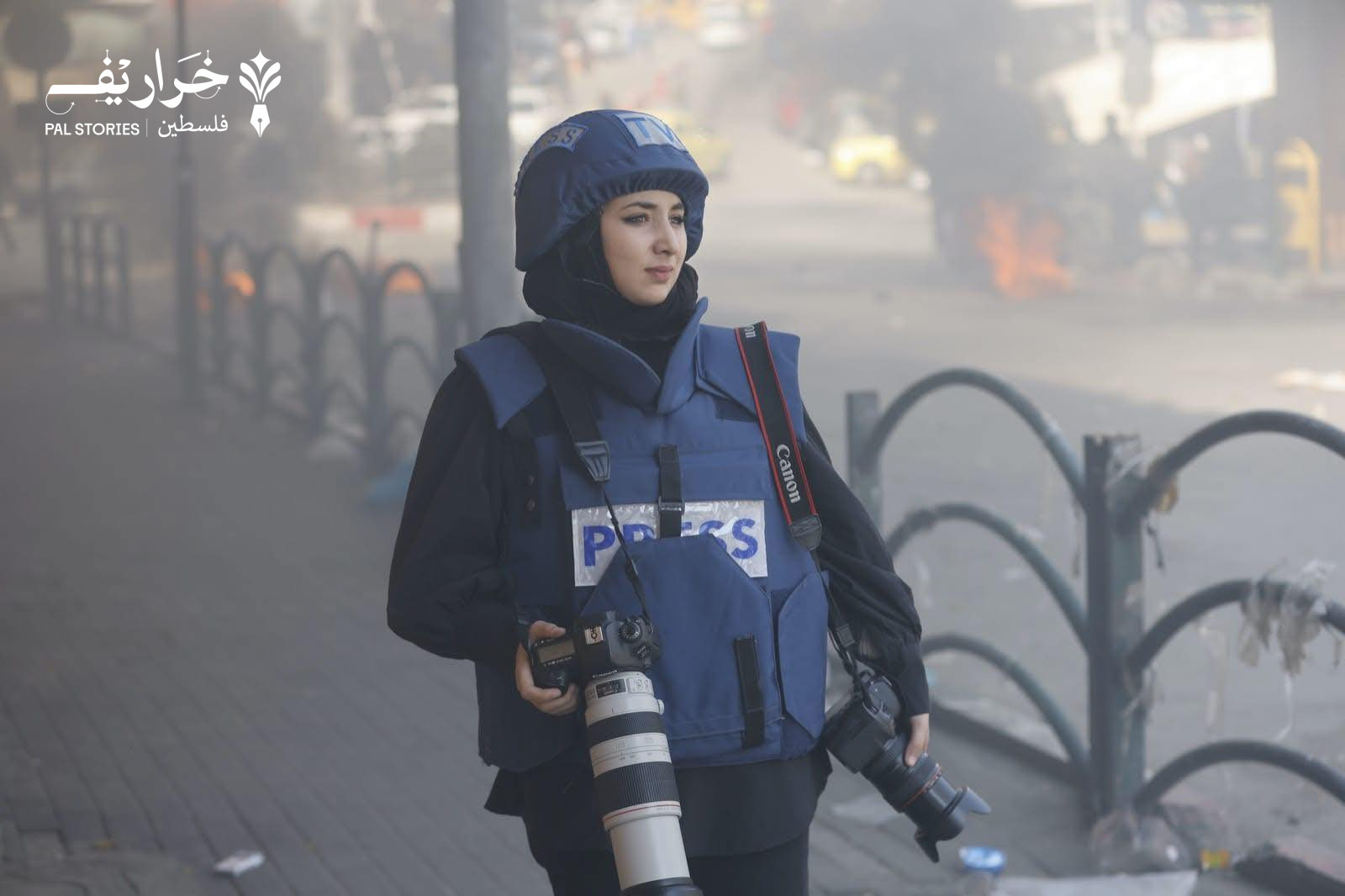
By: Wafa Arouri
Farah arrived a little late that day to the training hall at Watan Media Network in Ramallah. I was the trainer at the time, and as always, Farah’s smile filled her face—true to her name, joy in every sense of the word. She said, “Sorry I’m late, I’m coming from Hebron…”
I interrupted her, saying, “This time we’ll forgive you—because you’re very beautiful,” and we laughed together. From that day on, I kept calling Farah wherever I met her “the beautiful journalist.” If my memory serves me right, Farah joined that training while she was still a media student. The training was about feature storytelling, and we gave participants the opportunity to produce paid stories after it ended.
Farah surprised me. The beautiful journalist turned out to be incredibly talented as well. She produced a lovely visual story about a cat hotel in the city of Hebron—I’ll leave the link for you in the comments. She surprised me even more by appearing in the report herself and delivering a beautiful performance, even though that was not required. Although our production style at the time generally discouraged the journalist’s appearance on screen, I told the editor then, “Keep Farah in the report. Her performance is beautiful.”
We had asked each participant in the training to prepare a report, and Farah submitted two outstanding ones. I was always a witness to her passion for journalism, her love for field reporting, and her willingness—at times—to risk her life for it. Farah committed no crime to deserve being imprisoned for months, except that she loved this profession that we are all somehow afflicted with loving.
Today, in a message Farah wrote and that was shared by one of the lawyers of detainees, she said: “I’m upset with my colleagues. They didn’t demand my freedom. They didn’t do anything for me.” The weight of those words felt like a knife in my heart. How did we forget Farah?
I read her testimony in detail. I cried, and I was deeply saddened. Our beautiful girl endured immense suffering across different prisons, until she ended up in Damon Prison.
We failed you, Farah. We failed you, our beautiful journalist. The crimes of the occupation do not come one by one—we no longer know which of them to write about, and which to demand must stop.