Being a paramedic in Palestine means learning to live with blood, pain, and scenes that harden the heart. It means treating the wounded daily and, at times, transporting the martyrs. After 12 years in this demanding and dangerous profession, it was not surprising that Suhaib Samara decided to step away. He sought refuge in the Palestinian countryside, its mountains, plains, and valleys, in an attempt to heal his memory from everything he had witnessed over the years.
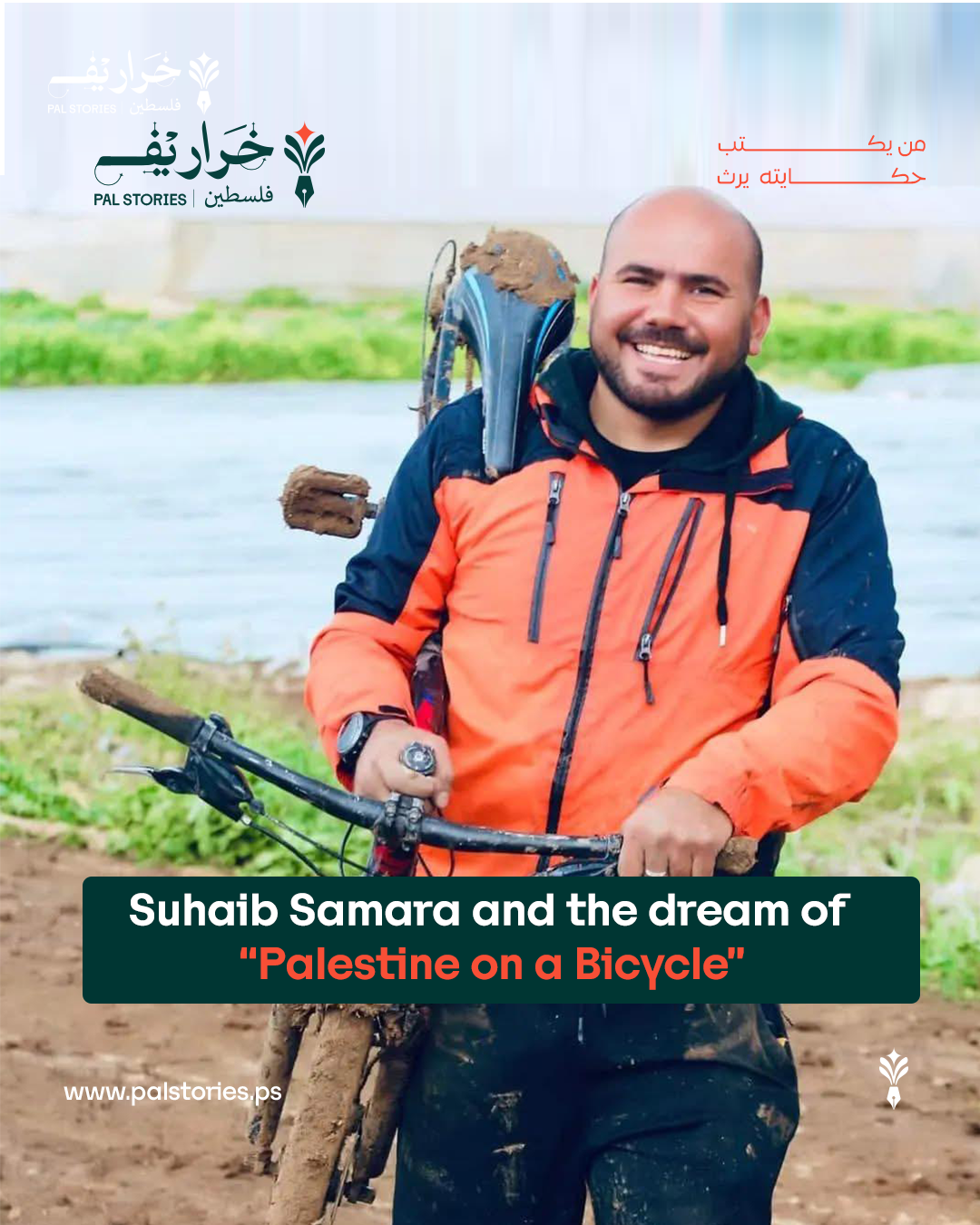
Since then, Suhaib has taken to his bicycle, setting off wherever the road allows. As the saying goes, “Walk the earth,” and Suhaib walked it, pedal by pedal, as much as he could.
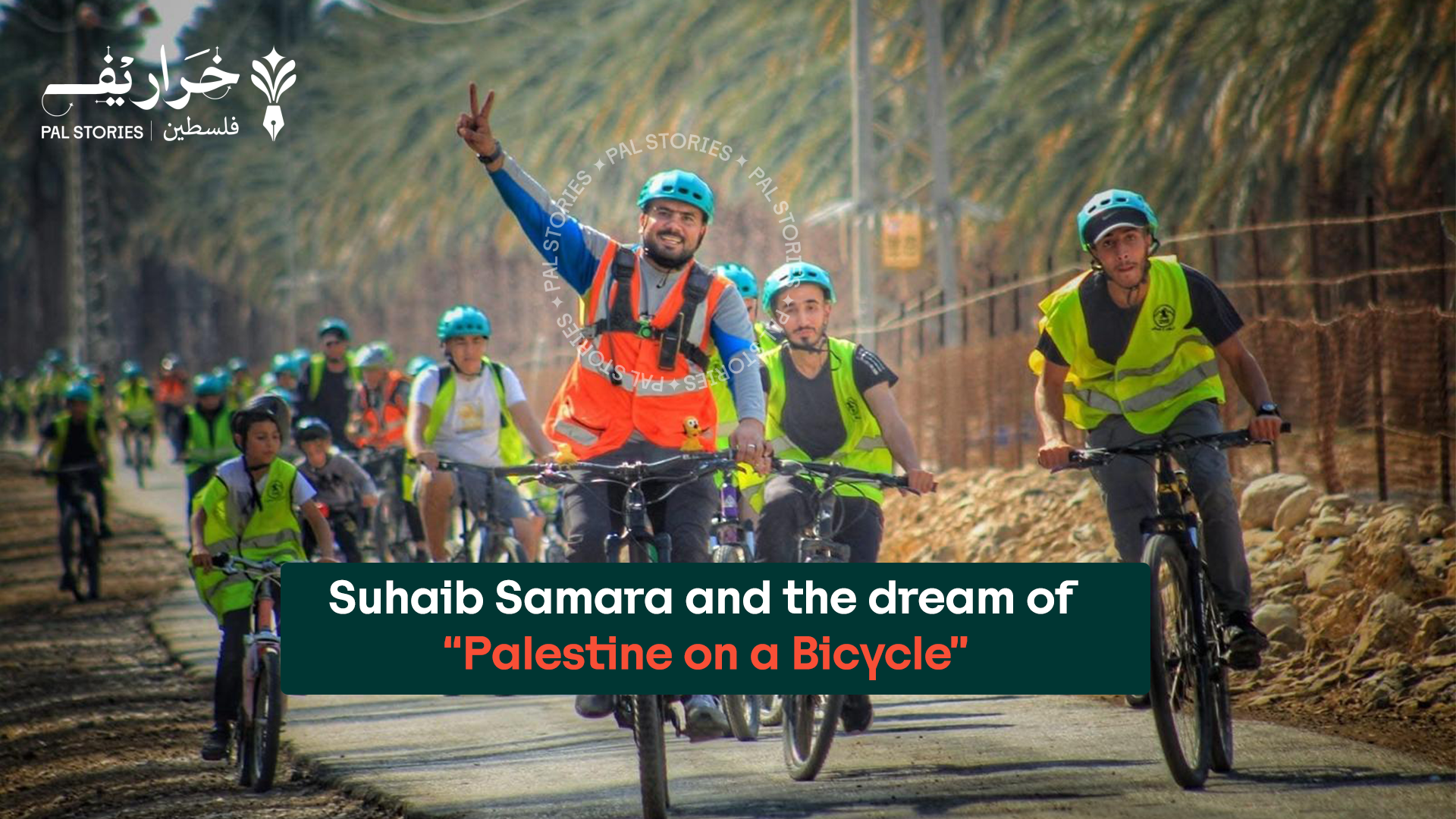
Samara, 35, is from the village of Bruqin in Salfit Governorate. He is the founder of the “Palestine on Bicycles” initiative and one of those who truly know and cherish the beauty of Palestine, constantly inviting others to experience their homeland up close.
How did the story begin?
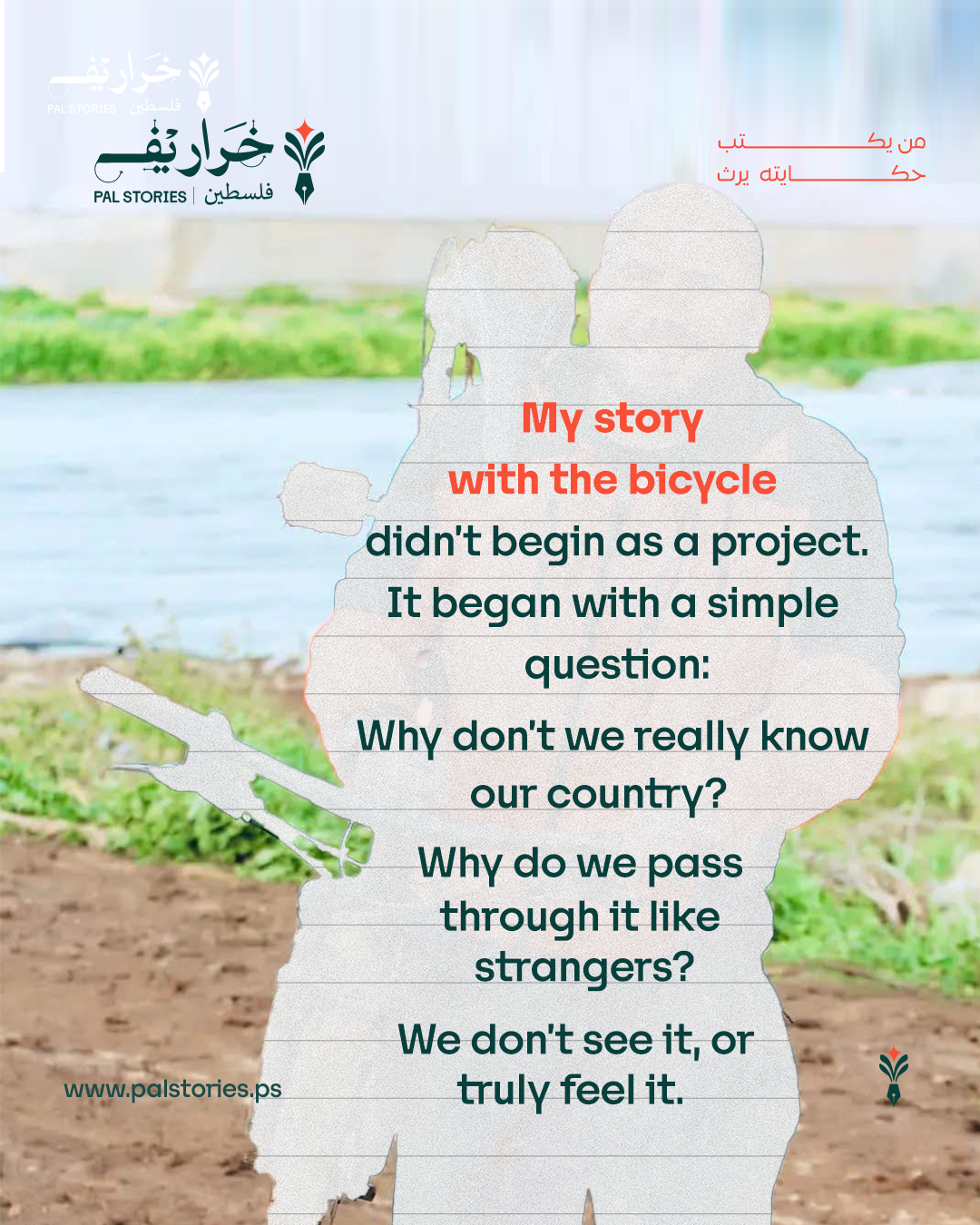
“My journey with cycling didn’t start as a project or an initiative,” Suhaib explains. “It began with a simple question: Why don’t we know our homeland anymore?”
He recalls cycling through Palestinian villages and cities and noticing how life had become dominated by cars, while very few people still walked, explored, or truly knew the narrow streets and hidden paths. Before “Palestine on Bicycles, we passed through our land like strangers, without seeing it or feeling it.”
From this realization, the idea of the initiative was born: a response to the need to reconnect with the land.
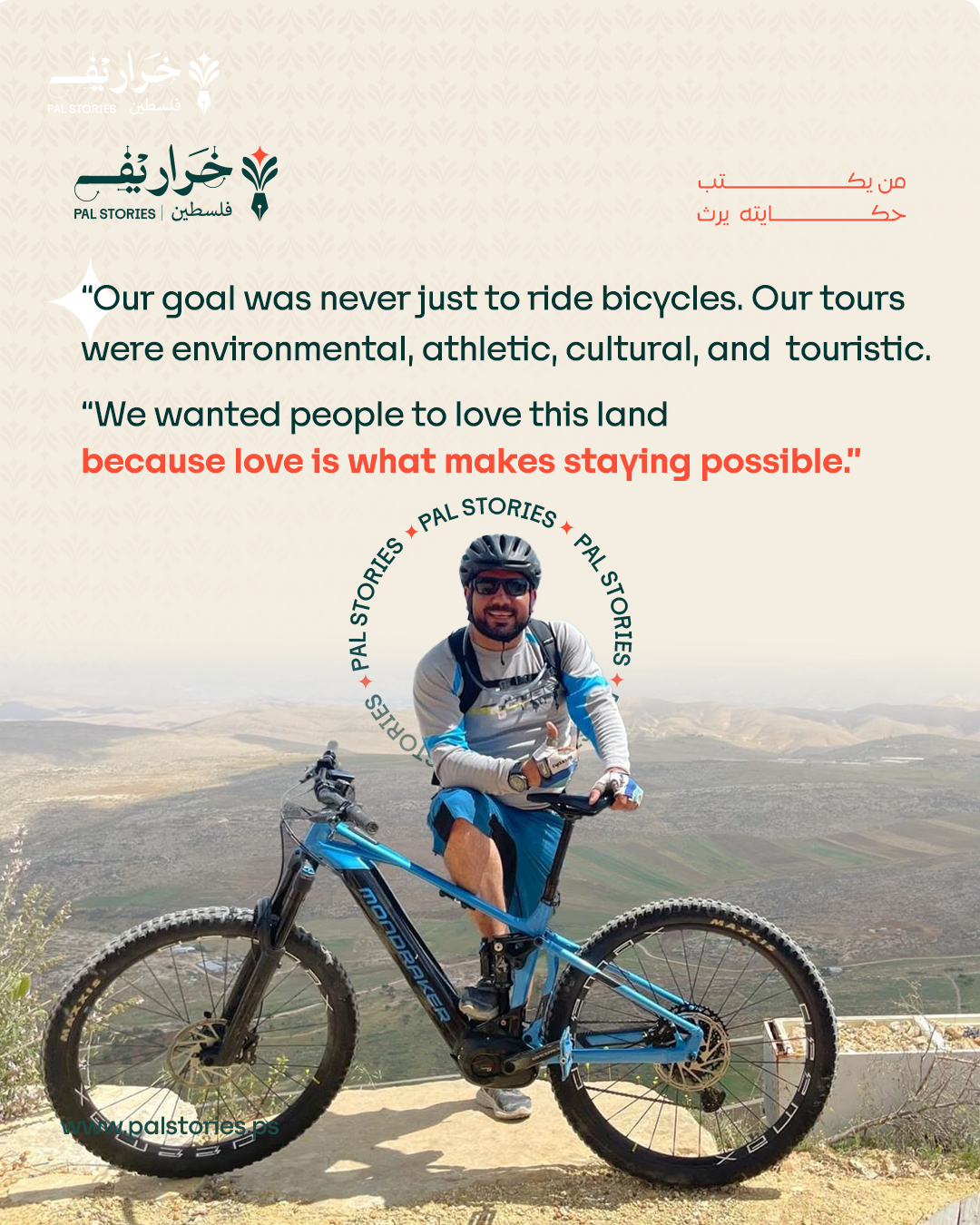
Before the war on Gaza, Suhaib purchased several bicycles and began inviting people to join him on exploratory rides and trails. The initial goal was simple, to introduce people to their land and promote cycling in Palestine, where it remains uncommon despite being an environmentally friendly, healthy activity that refreshes the spirit through movement, discovery, and human connection.
What began as a personal effort gradually took shape and was officially launched in 2015. With every tour, the idea deepened and the path became clearer.
“It’s not my trash, but it’s my homeland”
For Suhaib, cycling was never just a sport. He connected it to human and national values that strengthen belonging to Palestine. Among the many initiatives launched under the project was the campaign “It’s not my trash, but it’s my homeland,” which involved visiting different areas across historic Palestine and cleaning them of waste.
“We would go to these areas in groups on bicycles and encourage people to use them,” he says. The sight of cyclists riding through countryside, cities, and refugee camps inspired many young people to adopt bicycles in their daily lives.
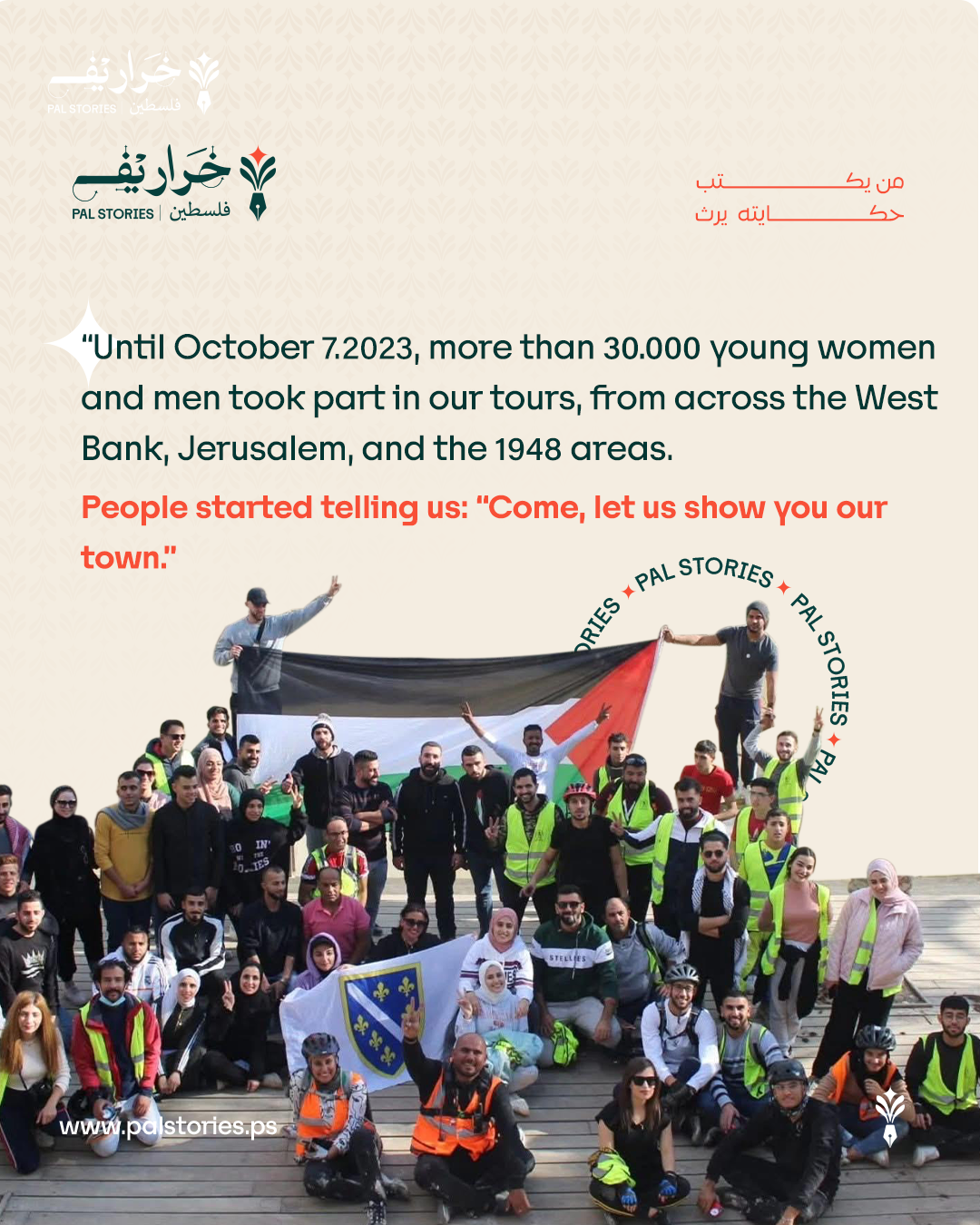
By 7October, 2023 more than 30,000 people from across Palestine, half of them women, had participated in Palestine on Bicycles tours. Over the years, the initiative built a broad network with universities, private companies, and civil society organizations. Suhaib and his fellow cyclists also represented Palestine at the Green Initiatives Conference in Italy, presenting the initiative on an international stage.
Closer to the people…
In the early days, Suhaib personally reached out to mayors and village councils to organize tours. Over time, the dynamic shifted. “People started calling us,” he says, “telling us, ‘Come and see our town.’”
Residents welcomed the cyclists warmly, opening their homes and fields. “We became a living example of social initiatives that strengthen human connections, promote physical activity, and encourage environmental awareness,” Suhaib explains.
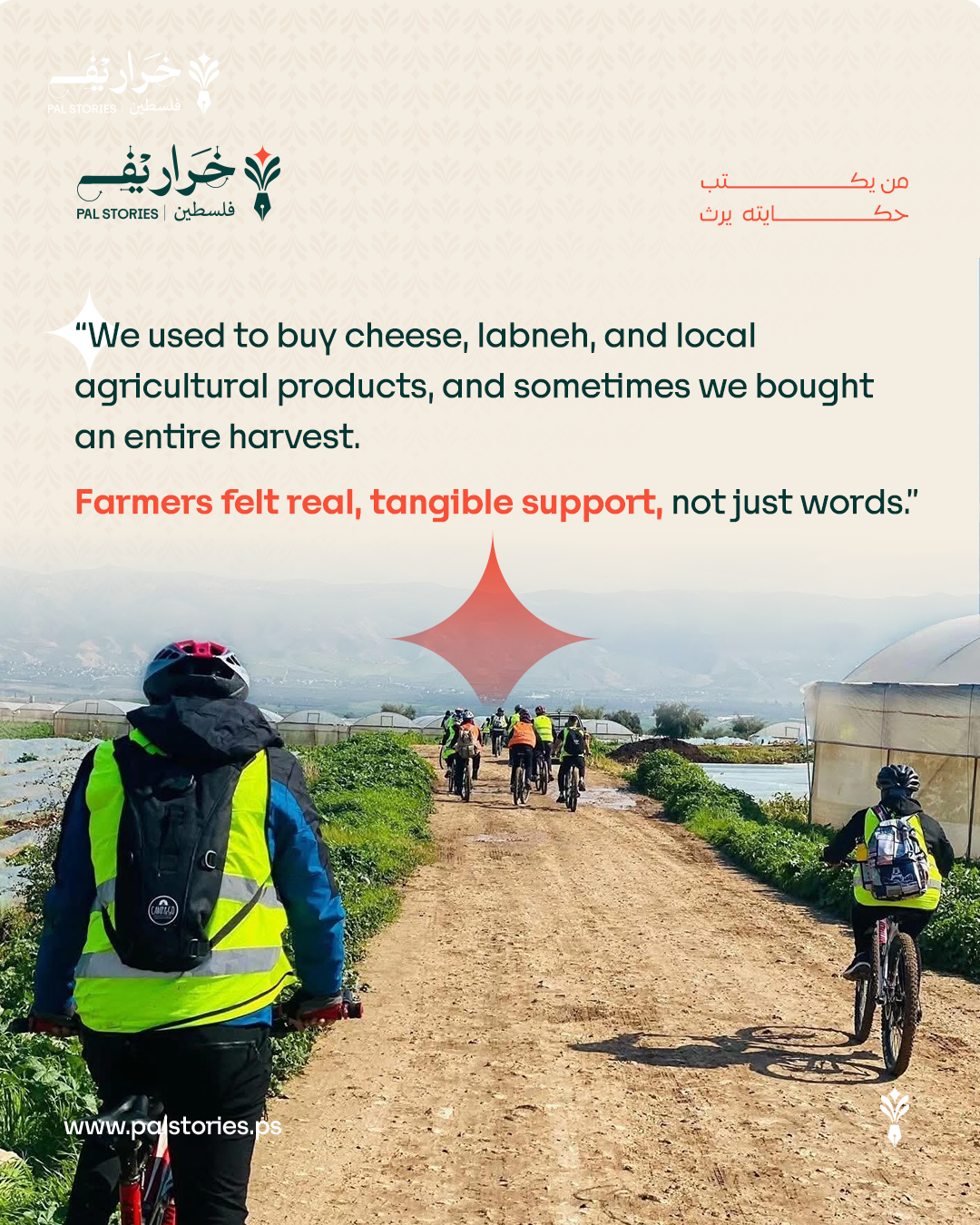
One of the aspects he is most proud of is the initiative’s commitment to supporting local products and farmers. “In every town we visited, we made a point of buying cheese, labneh, and agricultural produce. Sometimes we even bought an entire seasonal harvest. It was real, tangible support, especially during the olive harvest and other farming seasons.”
The tours often reached isolated and marginalized areas, including many Bedouin communities. Groups would depart from Ramallah, cycle through villages, participate in activities, and sometimes travel between multiple locations in a single tour. The initiative also provided bicycles for those who did not own one.
Breaking the barriers of occupation
Palestine on Bicycles carried powerful human and national messages, most notably the slogan “Know your homeland.” Alongside it was the slogan “One people,” which emphasized creating a shared, free space where young people from Jerusalem, the West Bank, and the 1948 areas could meet, cycle together, and dismantle the psychological barriers imposed by the occupation.
Despite its success, the initiative came to a halt after the outbreak of the war on Gaza. “We couldn’t pretend nothing was happening,” Suhaib says. “We couldn’t ignore the massacres and starvation in Gaza. That’s not who we are.”
He also points to the severe lack of safety in the West Bank since the war began, noting that organizing tours under such conditions would be extremely dangerous, especially amid escalating settler violence and intimidation campaigns.
They did not give up
This pause does not mean surrender. Today, especially after the cessation of the war, Suhaib is working with youth organizations to revive the initiative, resume some tours, and renew people’s connection with their land.
Despite the difficult reality, he is proud that Palestine on Bicycles succeeded in mapping a complete cycling route across the West Bank, from Jenin to Hebron, passing through tourist, religious, and historical sites.
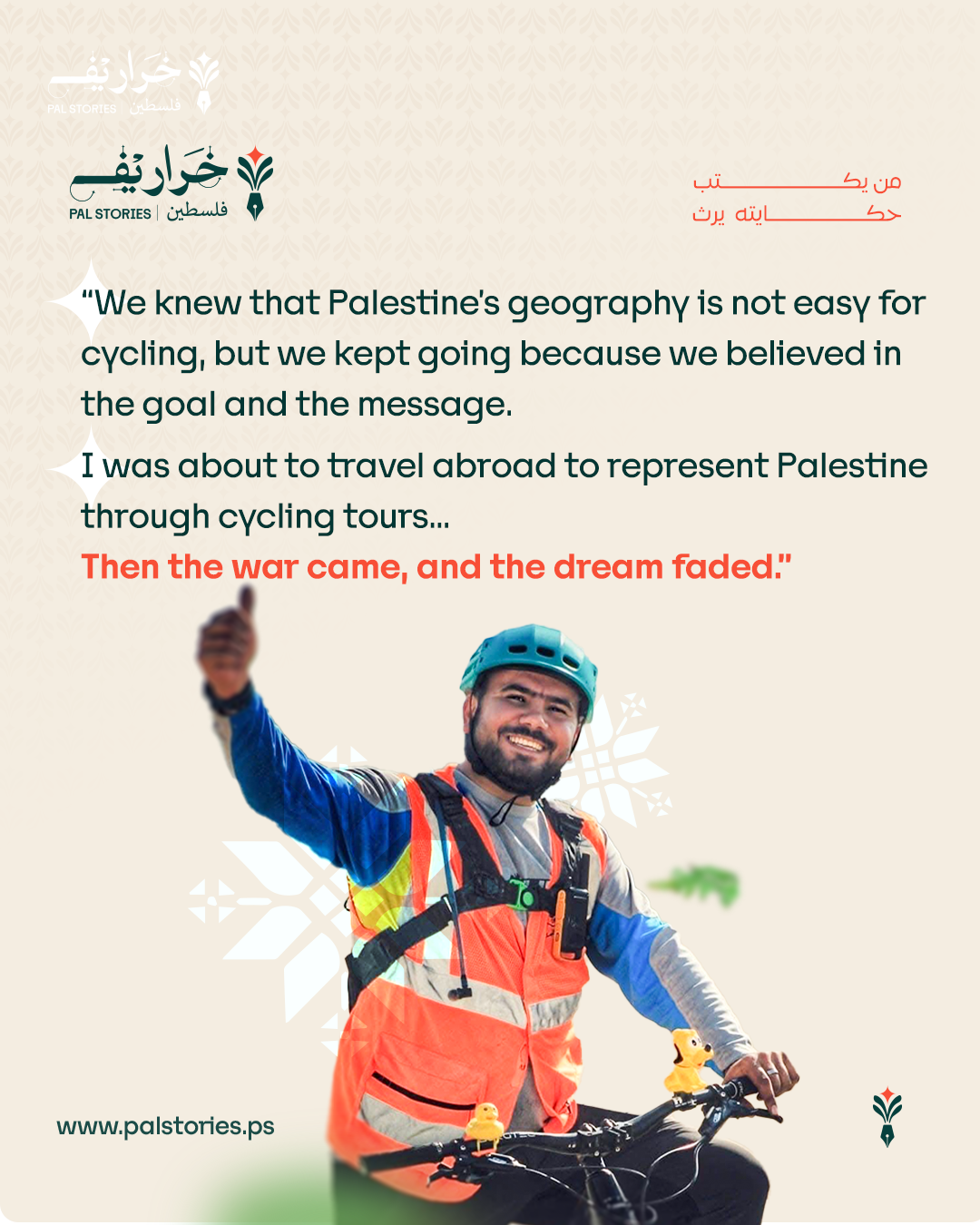
“We know Palestine’s geography is not easy for bicycles,” he says, “but we overcame that challenge because we believed in our goal and message: Palestine deserves our effort, and it is our responsibility to protect and preserve it, no matter the obstacles.”
Suhaib, who left his job as a paramedic to fully dedicate himself to this initiative, hopes for nothing more than stability, an end to settler attacks, and the chance for Palestine on Bicycles to flourish once again.