Her name is Maliha, an uncommon name in Palestine. After finishing my interview with her, I realized I had forgotten to ask about the story behind her name. In Palestine, families rarely choose their children’s names randomly; there is often a story attached to them. Perhaps that is why Fairuz once sang: “Our names… how hard our parents worked to find them… what did they think of us?”
As Maliha is around 50 years old, I assumed she had been named after her grandmother. She laughed at the question and replied, “My father loved his cousin but couldn’t marry her, and I was the last of the bunch, so he named me after her.”
This is how the story of Maliha Nassar begins, with a memory of love.
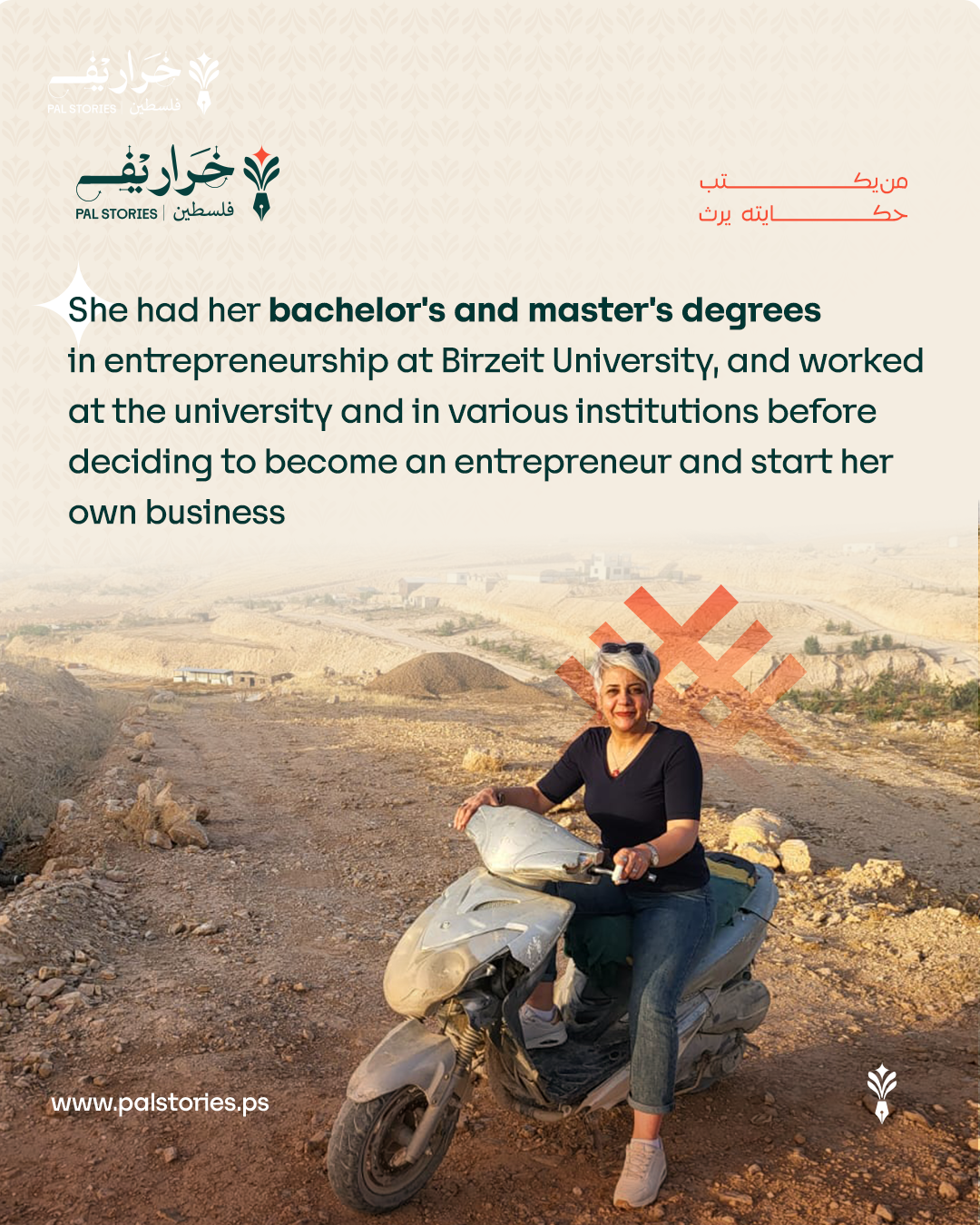
Maliha is an entrepreneur and businesswoman from Hebron. She studied business administration at Birzeit University, earning both a bachelor’s and a master’s degree. Over the years, she held several positions at the university and worked with several institutions and associations in Palestine. She also spent a few years working abroad.
However, institutional work proved neither stable nor fulfilling for her. Maliha worked in organizations concerned with women’s rights, but her experience left her with a firm personal conviction: many of these institutions do not genuinely empower women. On the contrary, strong women are sometimes resisted rather than supported. After her final experience in this sector, she decided to move into private business.
She launched several projects simultaneously. She opened a clothing store, established a honey-production apiary (after completing specialized training in apiary management), and opened a restaurant. At the same time, she was preparing for her doctorate and participating in courses with institutions such as AMIDEAST to improve her English.
An Entrepreneurial Idea from China to Palestine
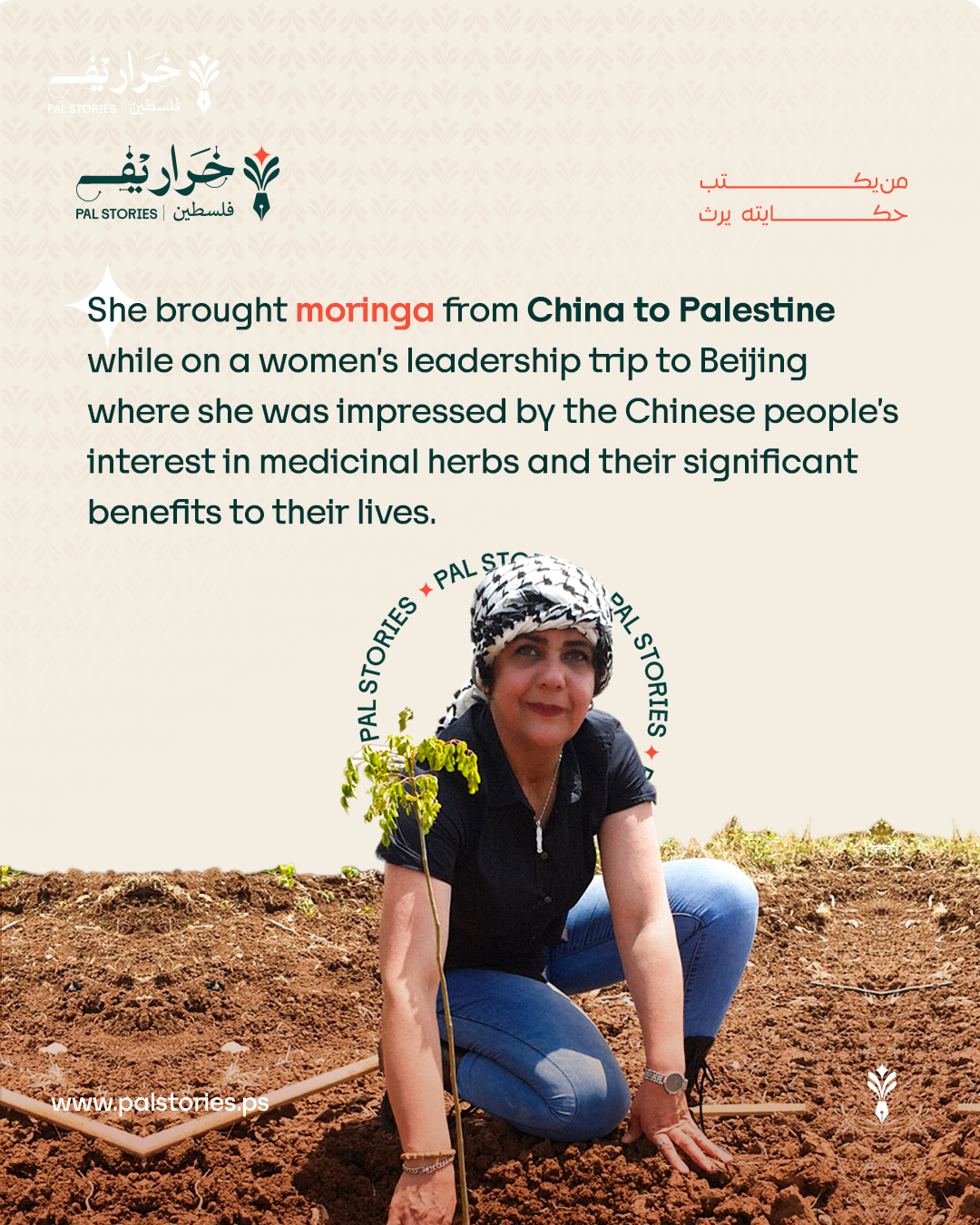
At the end of 2016, Maliha traveled to China to participate in a women’s leadership training at Beijing University. There, she was deeply inspired by entrepreneurial initiatives, particularly those related to agriculture and medicinal herbs. She observed women’s associations cultivating single herbs on a large scale and developing integrated projects that combined agriculture, tourism, and natural products.
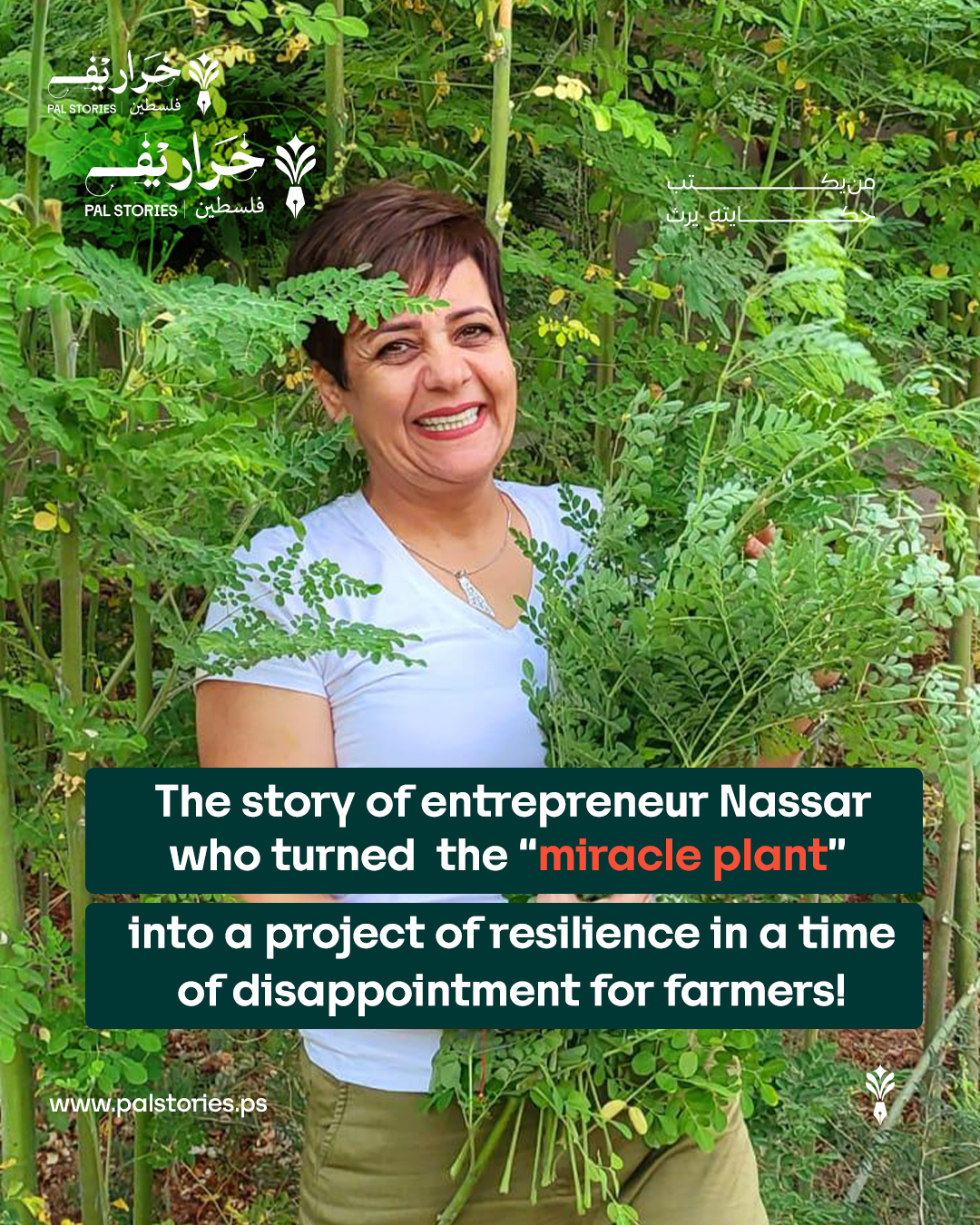
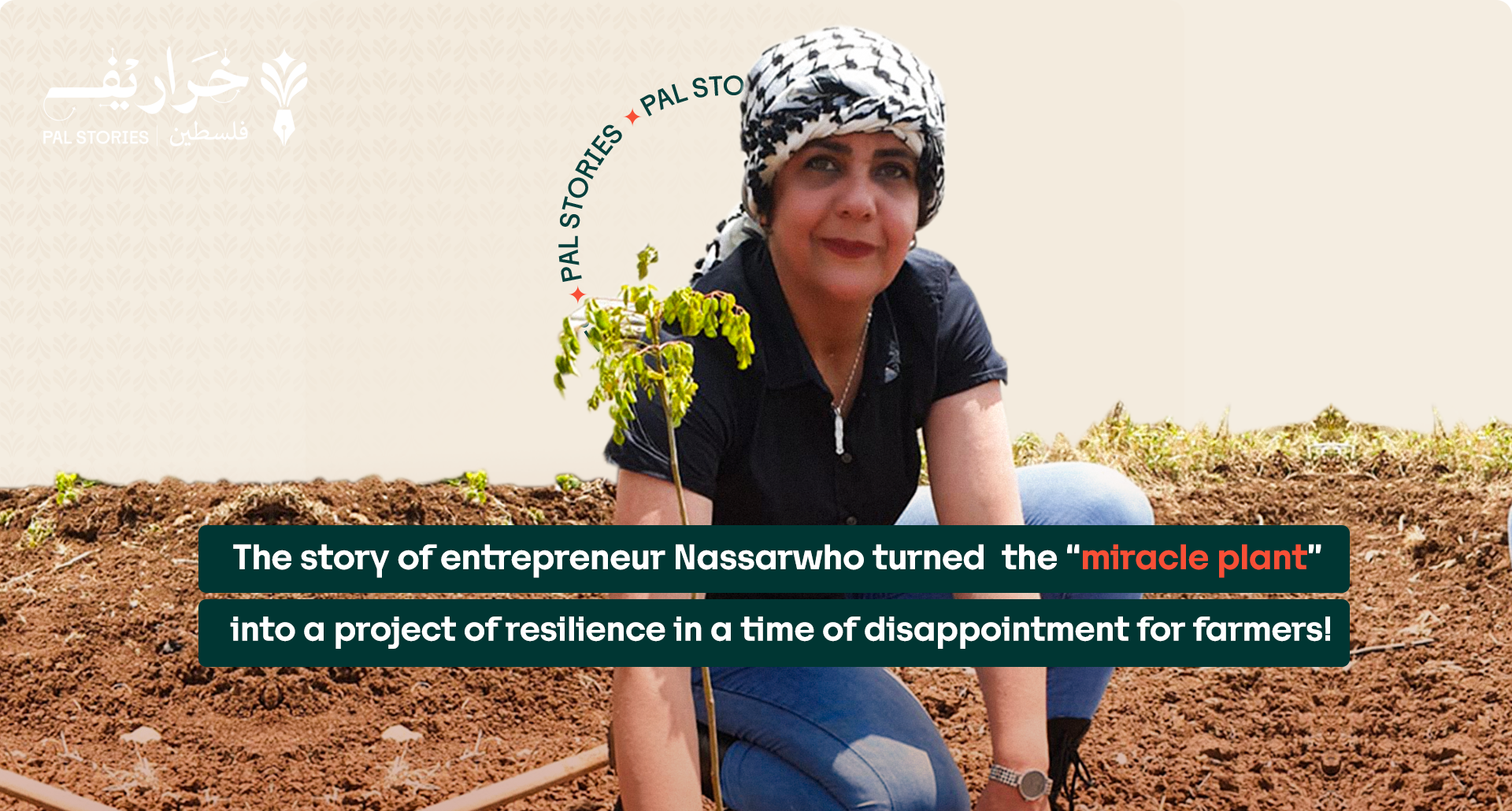
This experience left a strong impression on her, but it was her introduction to the moringa plant, known in China as “the plant of life” or “the miracle plant”, that became the spark for her current project. She returned to Palestine carrying the idea for a new entrepreneurial venture.
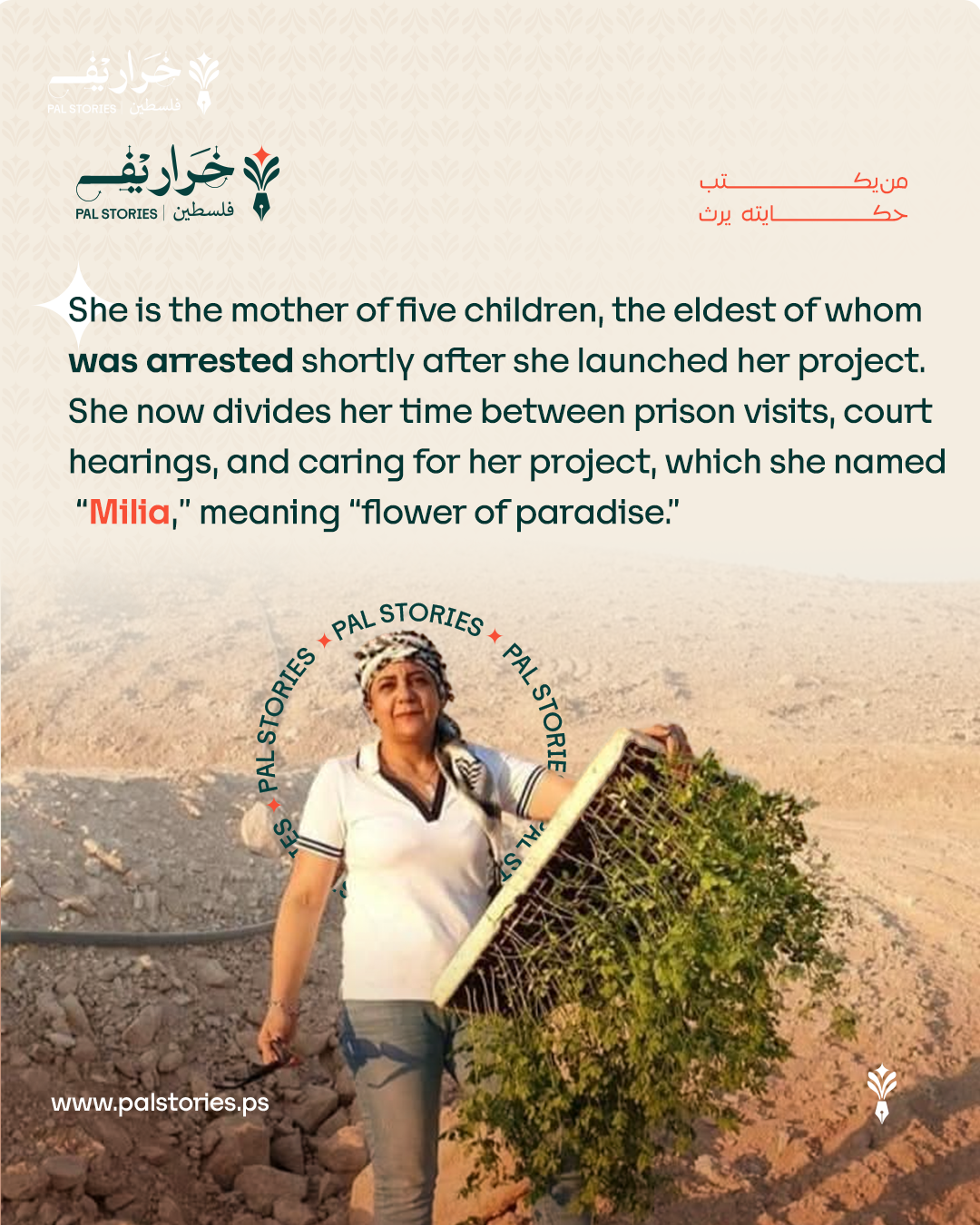
Maliha took her first steps toward implementation by officially registering the project with the Ministry of Economy under the name Melia, meaning “a flower from paradise.” Soon after, however, an unexpected event in 2017 caused a major shift in her life and personal plans. She experienced a late pregnancy with her youngest son, Youssef. She has four other sons, the eldest of whom is now 26 years old.
This late pregnancy altered everything. Maliha closed both her clothing and honey shops and remained at home for more than two years to care for her child. She reflects that life does not always unfold as planned, and that motherhood at this stage of her life was a profound challenge.
The Miracle Plant at the Heart of the Project
After this period, Maliha gradually returned to work, carrying with her the idea that had stayed alive since her time in China: cultivating moringa as the core of her project, alongside Palestinian medicinal herbs. She was particularly influenced by China’s culture of herbal care and linked it to the belief that a person’s connection to the land enhances both physical and mental well-being.
Initially, Maliha focused on organic medicinal herbs in their raw forms, dried or ground leaves. Her goal was to reconnect people with medicinal herbs and their benefits, especially those native to Palestine. She also introduced moringa, a plant native to India and South Africa, as well as another herb, ashwagandha. She brought its seeds from Egypt and shared them with a local farmer who is currently experimenting with planting and cultivating the crop.
Maliha strongly believes in the high nutritional and medicinal value of moringa, associating its use with the longevity of societies that rely on herbal medicine, such as the Chinese. While the project prioritizes Palestinian herbs, it also incorporates selected global herbs that can be grown locally.
She designed the Melia project in three phases. The first phase focuses on raw medicinal herbs. The second involves producing therapeutic capsules made entirely from herbs, without manufactured supplements. The third phase aims to introduce natural skincare products, including creams with a very high percentage of natural ingredients.
Enormous Challenges and the Arrest of Her Eldest Son
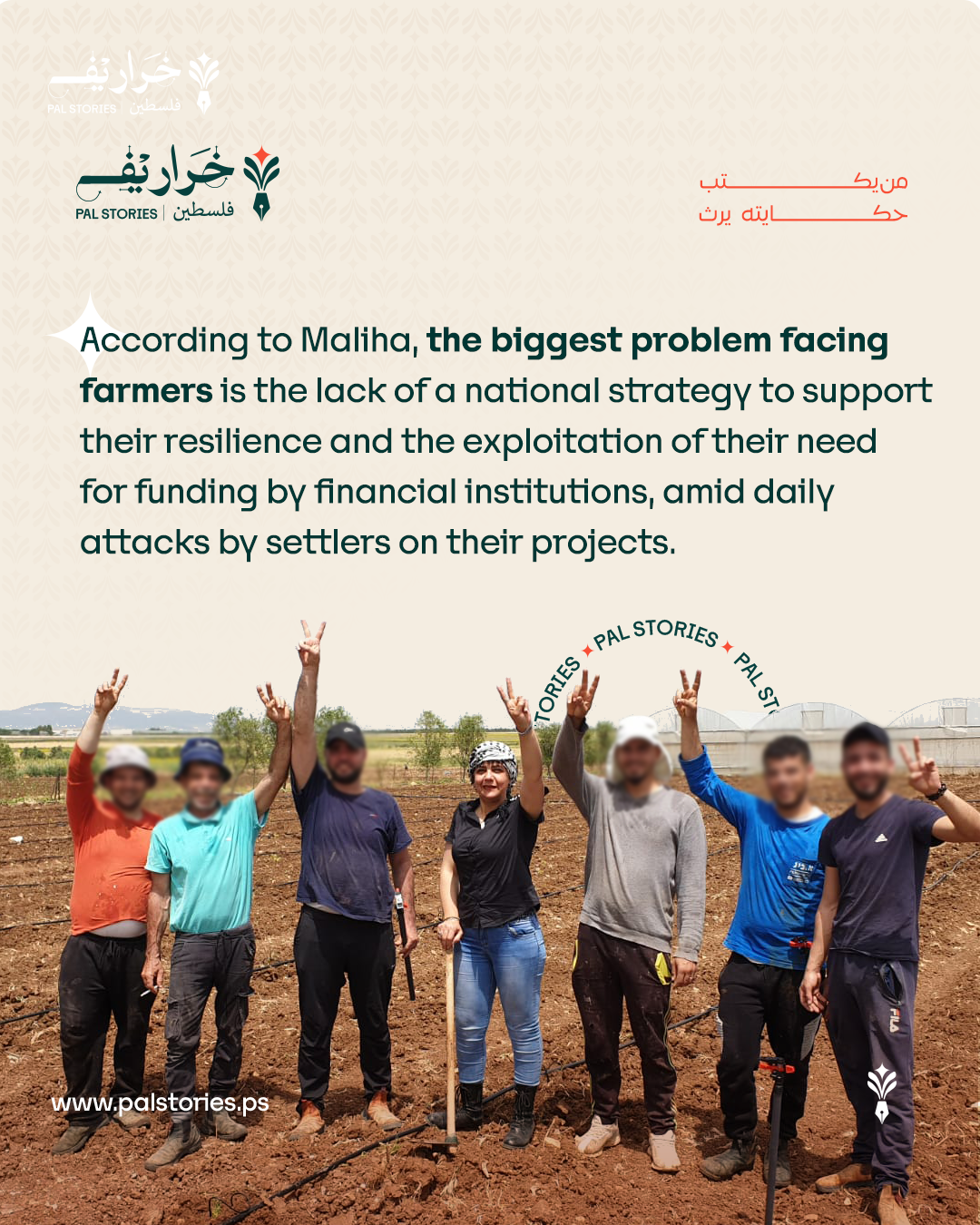
In a country under occupation, where settlers control large areas of land, restrict agricultural initiatives, and where war in Gaza has cast its shadow over life in the West Bank, Maliha faced immense challenges from the outset. The absence of a national agricultural support strategy further complicated her efforts, forcing her to adjust her plans and accelerate certain steps.
She decided to enter the cosmetics line directly and contracted a specialized company to produce three products: a facial mask, a moisturizing cream, and a nourishing cream, all leveraging the powerful properties of moringa.
Amid these challenges, the occupation arrested her eldest son, Saleh, who had been assisting her with the project. Maliha had to suspend her work and spend years moving between courts and prison visits. Her son remained in detention for three years.
Despite lacking formal agricultural experience, though her father was a farmer and she herself has always loved the land, Maliha embarked on the risky journey of cultivating moringa. She rented land in Jenin and worked for two years alongside an agricultural engineer. Later, she rented land from the Ministry of Awqaf in Jericho, which she cultivated independently.
She sought specialized agricultural training from various institutions, but support was limited. Instead, she relied on the expertise of local farmers in Jericho and consultations with agricultural engineers. Over time, she realized that combining farming, production, and marketing was exhausting. She therefore adapted her model: today, farmers produce for her, while she handles purchasing, drying, packaging, and storage. Some herbs are sourced through cooperatives.
The War and Its Shadow over the Project
Maliha does not sell her products through a private storefront. Instead, she distributes them through specialized shops and fulfills online orders when necessary. Although her production structure includes farming, drying, packaging, and storage, the war has severely disrupted expansion plans. Introducing production machinery has become nearly impossible, especially as continuity is now tied to export capacity.
She explains that she can no longer safely access some of her land, particularly areas near settlement outposts. On several occasions, settlers detained her, and her crops were uprooted. Moringa is a delicate plant, and at one point she was forced to hire others to harvest it to avoid danger. Around 100 kilograms were collected, but much of it arrived damaged.
Maliha occasionally works with university students on an hourly basis, benefiting from their assistance while also mentoring them. Still, financial challenges remain severe. Although she has a clear vision, strong determination, and unwavering commitment, financing continues to be a major obstacle. Lending institutions, she says, are unforgiving, charging high interest rates, showing no flexibility during crises, and ignoring the deterioration of economic conditions.
Lack of Real Support and Financing Policies: The Core Problem
While Maliha criticizes harsh market policies and financial institutions that fail to account for war and disaster, she also challenges donor organizations that provide small, fragmented grants distributed across large numbers of women entrepreneurs to satisfy donor metrics rather than ensure sustainability. For this reason, she has stopped participating in many exhibitions and workshops, which she feels offer symbolic rather than practical support.
She believes many promising entrepreneurial projects fail not because of weak leadership, but because of the absence of real support and a coherent national vision. Funds are often injected without long-term planning, leaving beneficiaries to face the consequences alone.
Despite everything, Maliha continues to invest in her personal development, enrolling in new training courses approximately every two years. Most recently, she completed a Training of Trainers course in entrepreneurship, aiming to share her experience with others. She also received a grant from the FAO, despite contributing a substantial amount of her own resources, and is now working to purchase machinery and expand her international export network.
In her view, the problem is not only a lack of funding, but also the absence of a clear governmental strategy to support people’s resilience on the ground. As she puts it: “We will not get rich from agriculture, but it helps us remain resilient.”
Maliha calls for genuine support rather than slogans, for institutions that prioritize beneficiaries over donors, and for policies that enable people to remain on their land despite seizures, restrictions, and constant harassment by settlers and occupation forces.
Her project is not a conventional success story, but rather a story of resilience and leadership rooted in the land and shaped by a harsh reality. It is driven by determination, knowledge, and the belief that agriculture is not a luxury, but an act of resistance and survival.